How a Vibrating Bowl Sorts Parts by Shape
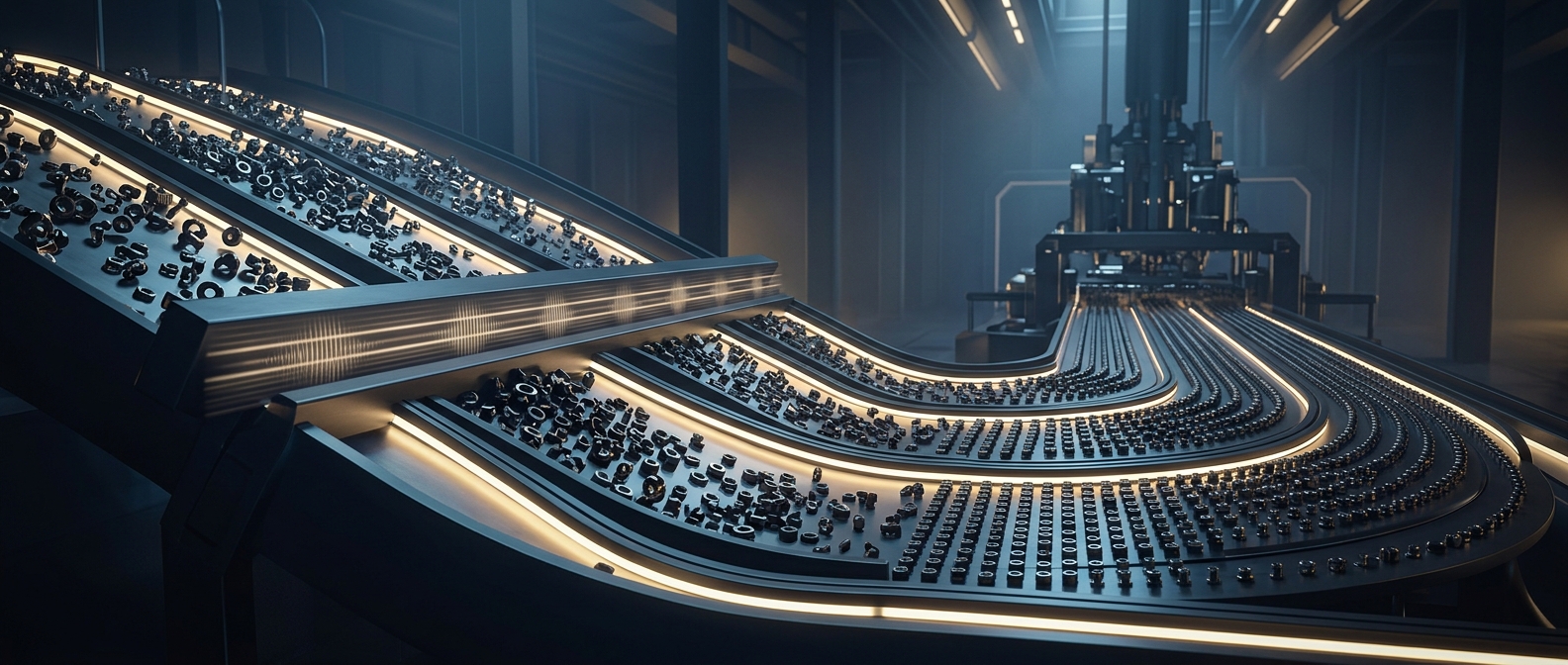
A vibratory bowl feeder turns a pile of loose components into a steady, orderly stream for an assembly machine. Its bowl vibrates in a carefully controlled motion, making parts hop or slide in tiny steps. Because the bowl’s track rises in a spiral, those steps carry parts up toward an exit rather than simply scattering them around.
The track is more than a ramp. Its width, edges, and built-in guides are shaped for the particular part being fed. As a screw or other component moves along, these features steer it into the required position—perhaps with its head up and its threaded end pointing forward. The feeder does not identify parts electronically; the geometry of the track makes correctly oriented pieces continue and catches pieces that do not fit the path.
Why the Wrong Ones Go Back
A guide may let a correctly positioned part pass while tipping, dropping, or otherwise diverting a misaligned one. That piece falls back into the bowl, where vibration gives it another chance to reach the track in a different orientation. This repeated sorting is useful because a bowl receives parts in bulk, with no need to place each one individually before feeding begins.
The design is tailored to the component: a track that handles one screw reliably may not orient a different screw or a washer. Once the stream reaches the exit, the next machine can pick up parts one at a time without pausing to arrange them. In a fast production line, the bowl’s simplest trick is making chance do the first pass and the track’s shape do the sorting.