How a Rotating Pocket Controls Powder Flow
A pile of powder tends to leave a container in uneven bursts: it can bridge over an opening, then suddenly collapse through it. A pocketed rotor replaces that open-ended flow with a sequence of small, repeatable loads.
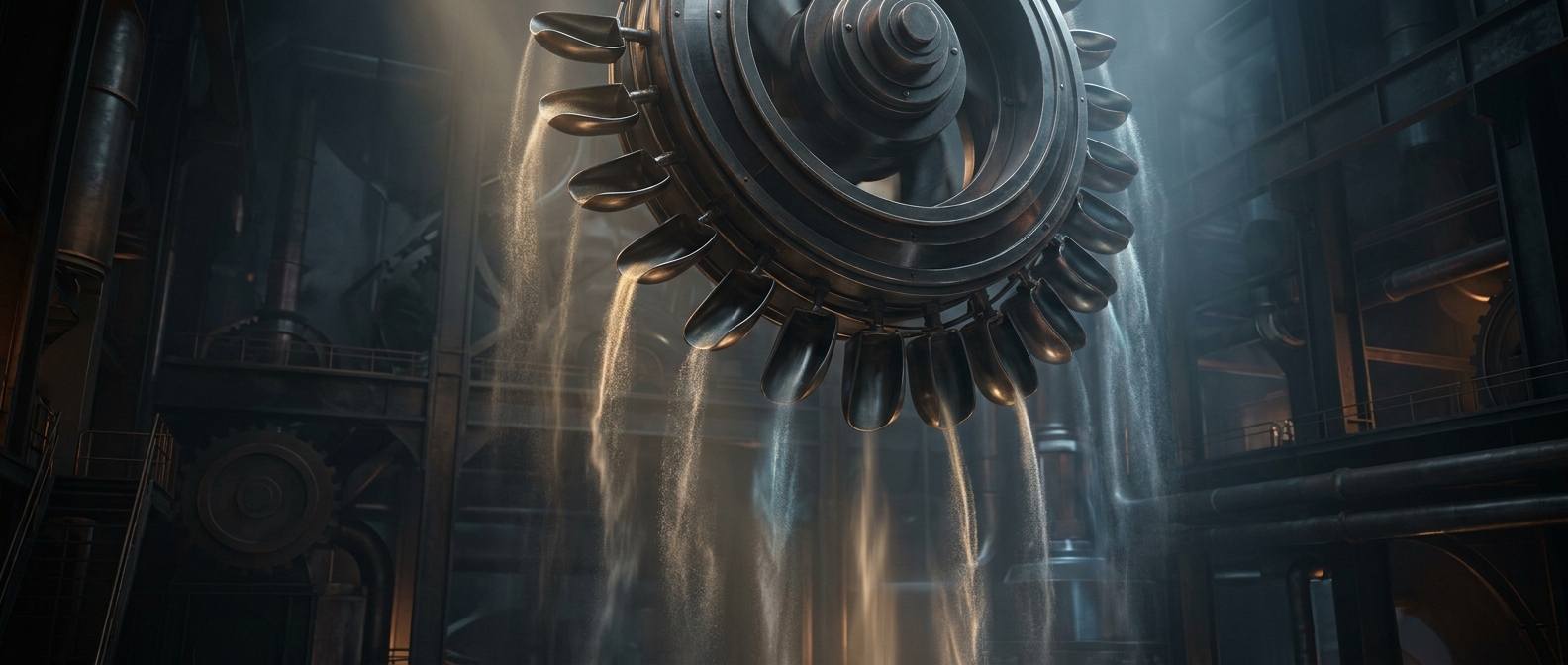
As the metal drum turns, its pockets collect powder from the supply side and carry it around. When a pocket reaches the discharge point, its orientation lets the powder fall out. The next pocket follows, so the outlet receives a succession of small doses rather than one uncontrolled heap.
A Simple Way to Tune the Feed
Two features set the basic delivery rate: how much each pocket holds and how quickly the rotor turns. Larger pockets carry more material per pass; faster rotation brings pockets to the outlet more often. That makes the mechanism useful when powder needs to be fed steadily into another process or onto a moving surface.
The feed is metered, not perfectly uniform grain by grain. Powder can pack, cling, or flow differently depending on its texture, so the pocket shape and the material itself affect how consistently each dose empties. Even so, the rotor creates a practical rhythm: the machine controls the release by controlling how much material arrives at the outlet, and when.