An island without the usual checks
St. Matthew Island offered reindeer abundant food and few of the pressures that ordinarily limit a herd. With no large predators to thin their numbers, the animals could keep reproducing as long as forage remained plentiful. That combination let a small introduced herd expand rapidly—but it also hid a problem: the island’s food supply could not grow as fast as the herd.
Lichen grows on a different timetable
Much of the reindeer’s winter diet was lichen, a slow-growing organism that can take years to recover after heavy grazing. Reindeer do not simply eat the visible tips; as grazing intensifies, they can remove so much growth that the pasture’s ability to feed animals declines. The herd was spending a renewable resource faster than the island could renew it.
For a time, the population boom could continue because the animals were drawing down stored forage. But a large herd needs food every day, and a severe winter makes that demand harder to meet. Once the reindeer had depleted much of their pasture, there was little reserve to carry them through poor conditions. The winter turned a gradual ecological imbalance into a sudden collapse.
A population can cross its limit before it looks threatened
Ecologists call the number of animals an environment can sustain its carrying capacity. It is not a fixed head count: it changes with food, weather, and the condition of the land. On St. Matthew, the herd overshot what the island could support, and the damaged forage base could not quickly rebound.
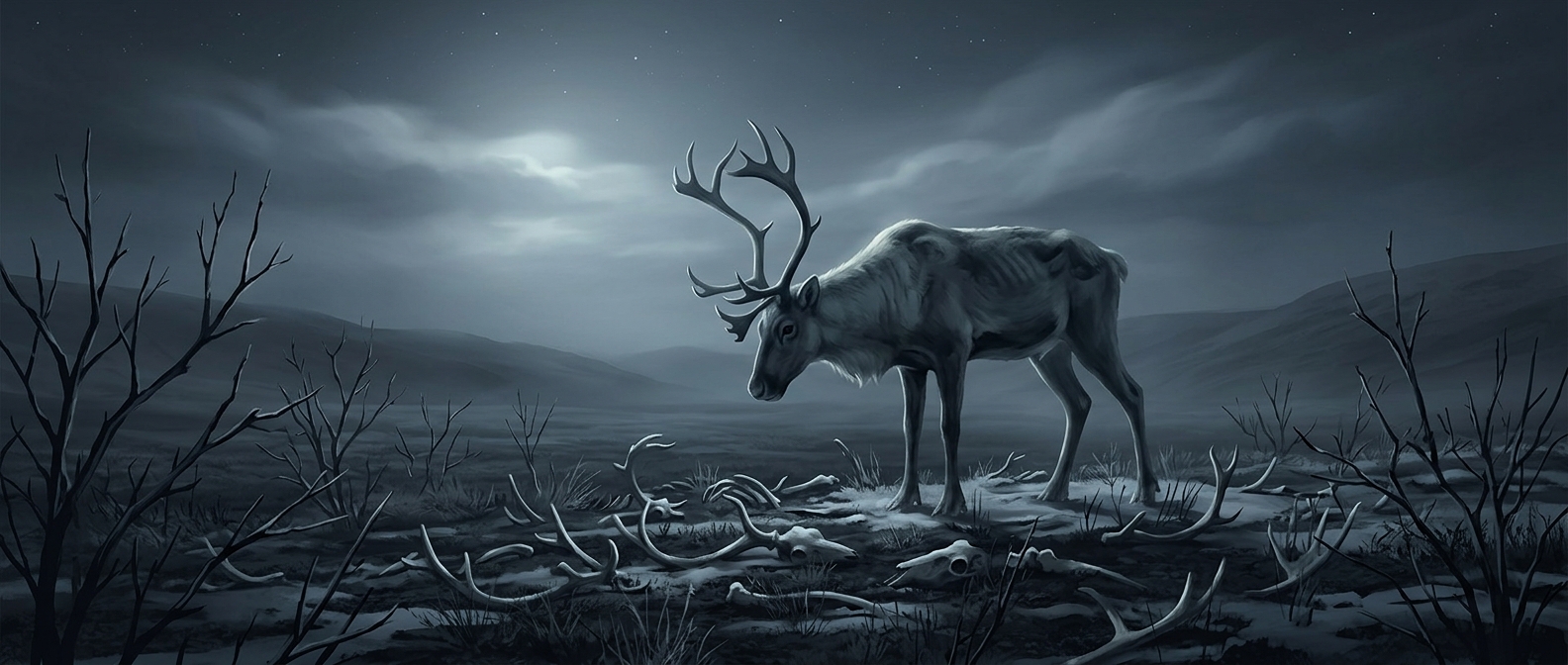
The last male’s sterility meant the tiny remnant could not rebuild the herd through breeding. The episode’s lasting lesson is that a population can appear successful while quietly consuming the conditions that make its success possible.