A gut built for eucalyptus
A koala’s digestive system has to do more than grind up leaves. Eucalyptus is fibrous and contains compounds that can be harmful, while offering relatively little usable nutrition. Adult koalas rely on microbes living in the hindgut to ferment plant material and help process parts of this difficult diet.
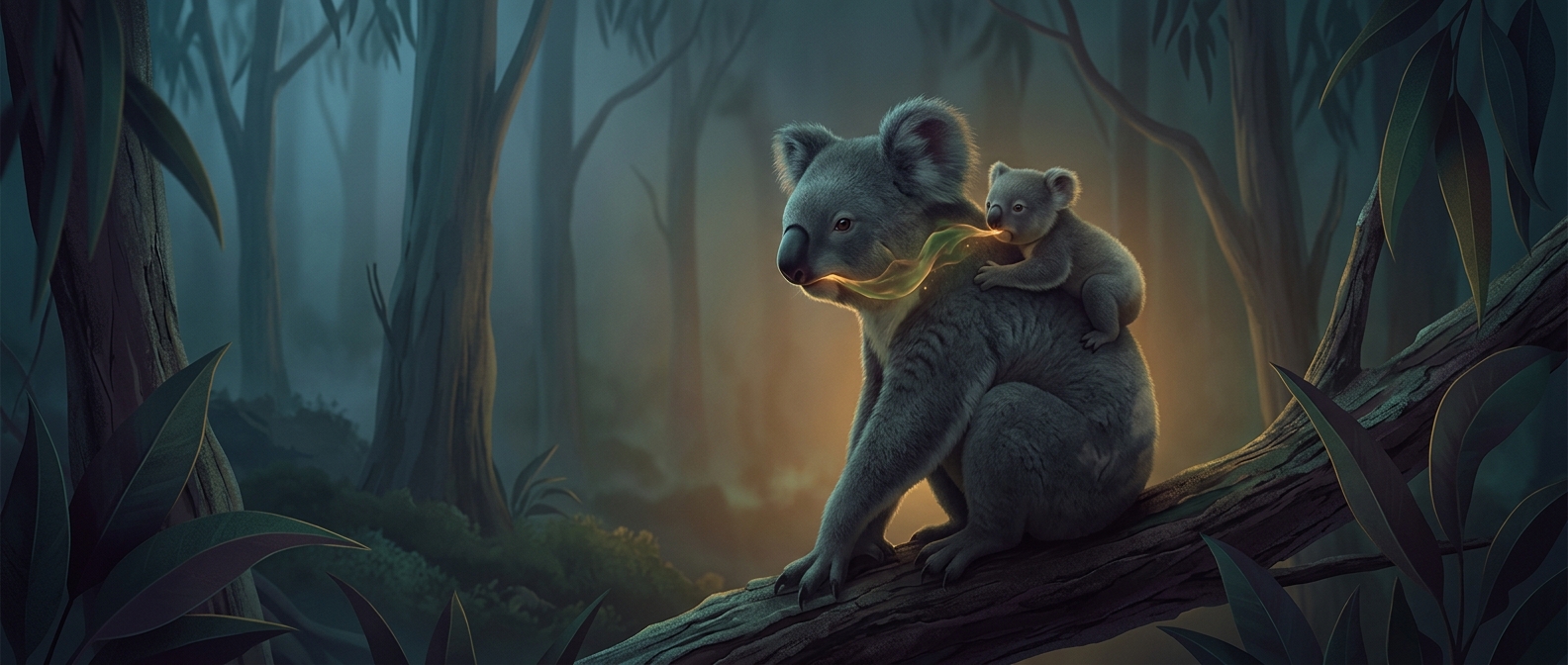
A joey begins life on its mother’s milk, so it does not yet have the microbial community needed to make eucalyptus a workable food. As it approaches weaning, the change from milk to leaves creates a problem: the young animal needs the right gut partners before it can depend on the adult diet.
Pap bridges the transition
The mother’s pap is a soft, specialized fecal material that carries microbes from her digestive system. By eating it, the joey takes in some of the organisms that help an adult koala use eucalyptus. This is microbial handoff: a young animal acquires useful members of its gut community from an established one.
The timing matters. Pap is part of the shift toward leaves, not a substitute for the joey’s ordinary early nourishment. Once the microbial community is established, the young koala is better equipped to ferment the fibrous food and cope with its chemical defenses.
That makes the behavior less bizarre than it first sounds. For a koala, learning to eat leaves is not only a matter of developing the right teeth or appetite; it also means acquiring an unseen digestive workforce from its mother.