Why Some Cheetahs Accepted чуж skin
A skin graft puts tissue from one animal onto another. The recipient’s immune system checks the donor cells for signs that they belong to the body; if the cells look sufficiently foreign, immune defenses can attack the graft. Some of those recognition signals are controlled by genes involved in presenting molecules to immune cells.
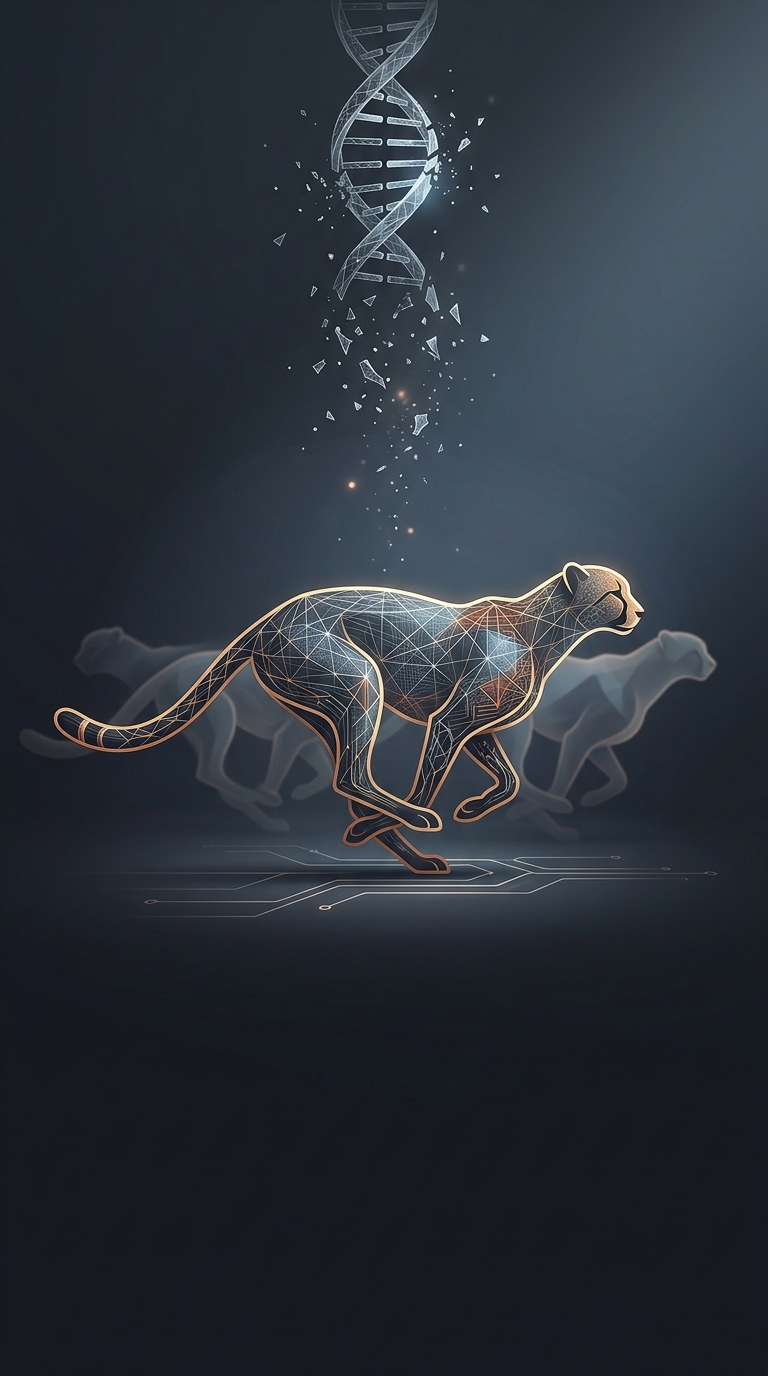
In a small set of experiments, cheetahs accepted skin from other cheetahs that would ordinarily be considered unrelated. The likely explanation is that the animals had unusually similar versions of important immune-recognition genes. With fewer genetic differences between individuals, a donor’s tissue may look less foreign to a recipient.
What a Population Bottleneck Leaves Behind
A population bottleneck occurs when a species’ numbers shrink sharply. The survivors carry only some of the genetic variation that existed before the decline. If their descendants make up most of the later population, many animals can end up sharing gene variants that would be less common in a more diverse species.
That history helps explain the graft results, but it does not make cheetahs interchangeable. The experiments involved a limited number of animals; they do not show that every unrelated pair would accept a graft. Nor does a successful graft mean the animals are genetically identical. They can differ at many parts of their genomes while still sharing key immune-recognition variants.
The Risk of Having Fewer Options
Low genetic diversity matters beyond transplantation. When a new disease or environmental change arrives, a varied population is more likely to include individuals with traits that help them cope. If many animals share similar biological vulnerabilities, fewer may be well equipped to withstand the same challenge.
The graft finding is therefore a striking sign of how similar some cheetahs can be—not evidence that their immune systems are broadly unable to reject foreign tissue. Their speed is not what made that similarity, either: the result reflects population history, and it points to a quieter danger of a reduced gene pool—fewer different ways for the species to respond when circumstances change.