How One Embryo Becomes Four
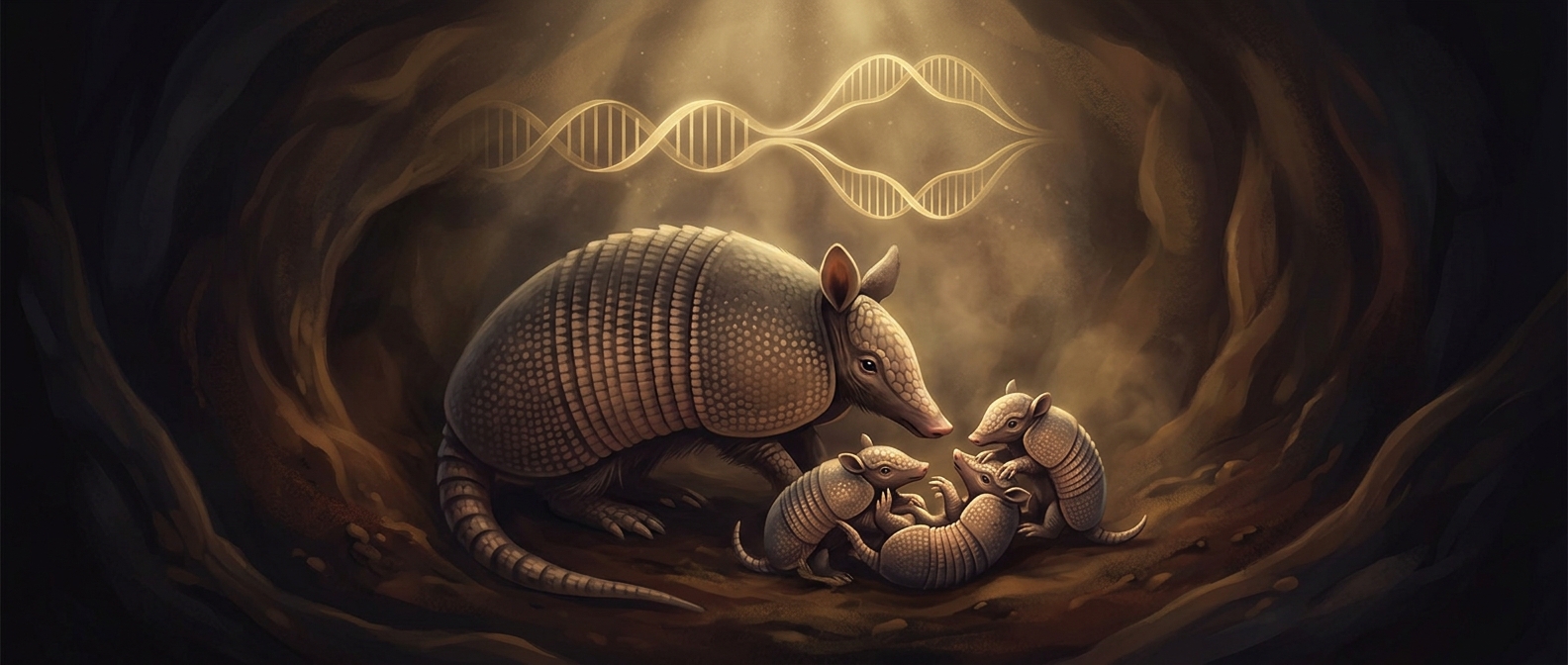
In most mammals, a fertilized egg develops into one embryo. In the nine-banded armadillo, that early embryo separates into four, and each part continues developing as a pup. This process is called polyembryony: several embryos arise from a single fertilized egg.
The four pups therefore begin with the same inherited genetic material, much as identical human twins do. They are not four eggs fertilized separately; they are four developmental branches of one original embryo. Because they share the same genetic starting point, they have the same genetic sex.
A Biological Matching Set
The split happens early enough for each embryo to develop into a separate offspring. The result is a litter of siblings unusually alike in their inherited DNA—not simply a group of pups that happen to resemble one another. As with other genetically identical siblings, differences can still emerge as they grow, because their surroundings and experiences are not identical.
This pattern is a distinctive feature of the nine-banded armadillo, not a general rule for mammals or even for every armadillo species. Its striking consequence is that one successful fertilization can produce a whole litter with a shared genetic origin: four pups, but only one starting egg.