How an Anaconda’s Eggs Hatch Before Birth
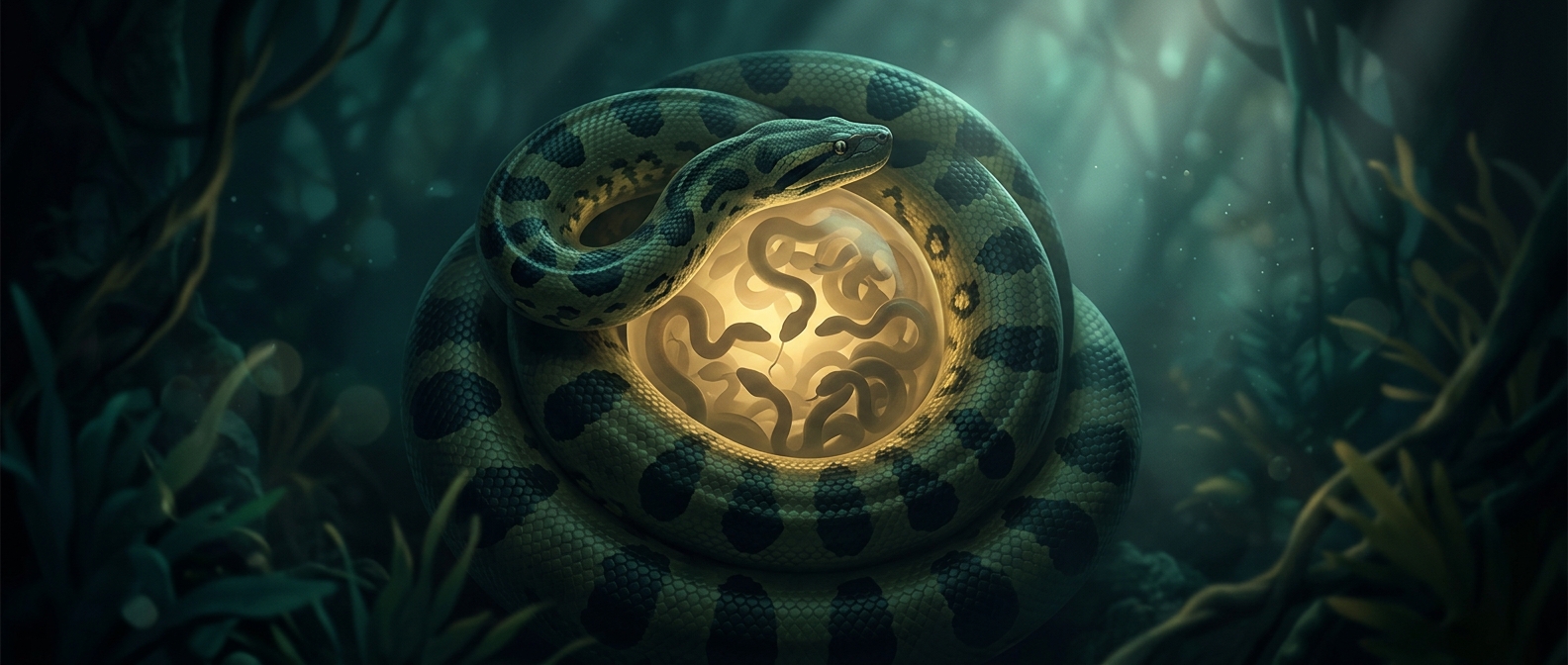
A green anaconda’s young develop inside eggs retained within the mother’s reproductive tract. Rather than laying those eggs in a nest, she carries them as the embryos grow. The eggs hatch before the young leave her body, so what observers see is a live birth: small snakes emerge already free of their shells.
Nourished by the Egg, Not a Placenta
The key distinction is how the embryos get their nutrients. Each embryo relies on the stores packed into its egg, including its yolk. It does not receive nourishment through a placenta, the organ that connects a developing mammal to its mother’s blood supply. The mother provides a protected place for development, but the egg supplies the embryo’s food.
This arrangement is called ovoviviparity: eggs are kept inside the parent until they hatch, and the offspring are born live. It combines an egg-based start with the timing and appearance of live birth.
Why the Difference Matters
“Live birth” describes how the young enter the world; it does not necessarily mean they developed like mammals. In anacondas, the shell is part of the embryo’s early development, even though it is never laid in a nest. By the time the babies emerge, hatching has already happened inside the mother—and the first thing they encounter is the outside world, not a shell to break through.