Why a lion’s day is built around stillness
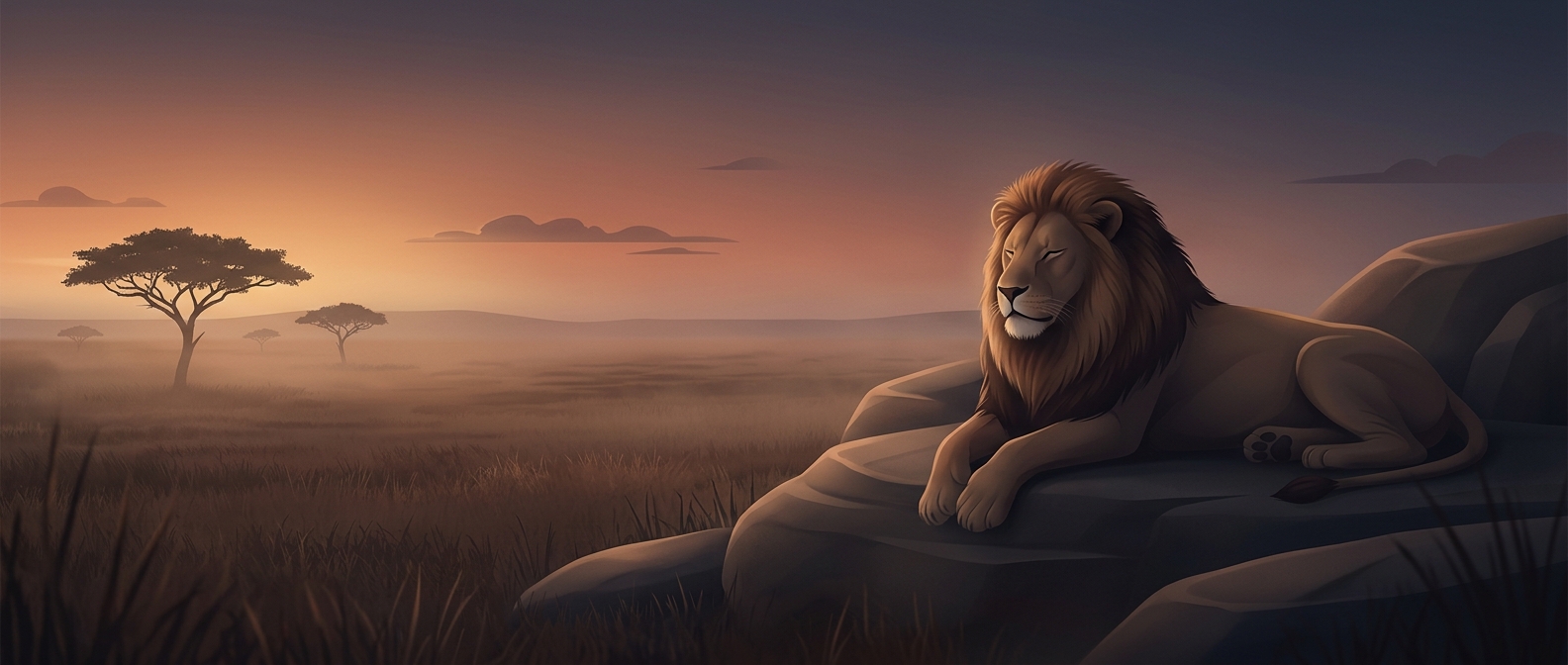
A lion’s long rest is part of an energy budget. A large predator must spend substantial effort accelerating, wrestling prey down, and sometimes defending a meal from competitors. Those efforts arrive in short, intense bouts; unlike a pursuit hunter, a lion generally cannot keep running at full speed for long. Resting between bouts helps conserve energy for the next opportunity.
Heat and timing shape the schedule
Lions are most active when conditions and visibility favor movement, often around dusk, at night, or near dawn. In the heat of the day, moving less also limits the effort of staying cool. The hours that look like inactivity are therefore tied to when hunting and other demanding tasks are more practical—not simply to a preference for sleep.
Rest is not the same as being unaware
A resting lion may doze, shift position, groom, or watch what is happening nearby. That flexibility matters in a social group: animals can recover while remaining responsive to other lions, potential threats, and changes around a carcass. The payoff is not constant readiness to chase, but conserving scarce energy until a brief burst of action is worth the cost.