How a Badger Turns a Carcass Into a Cache
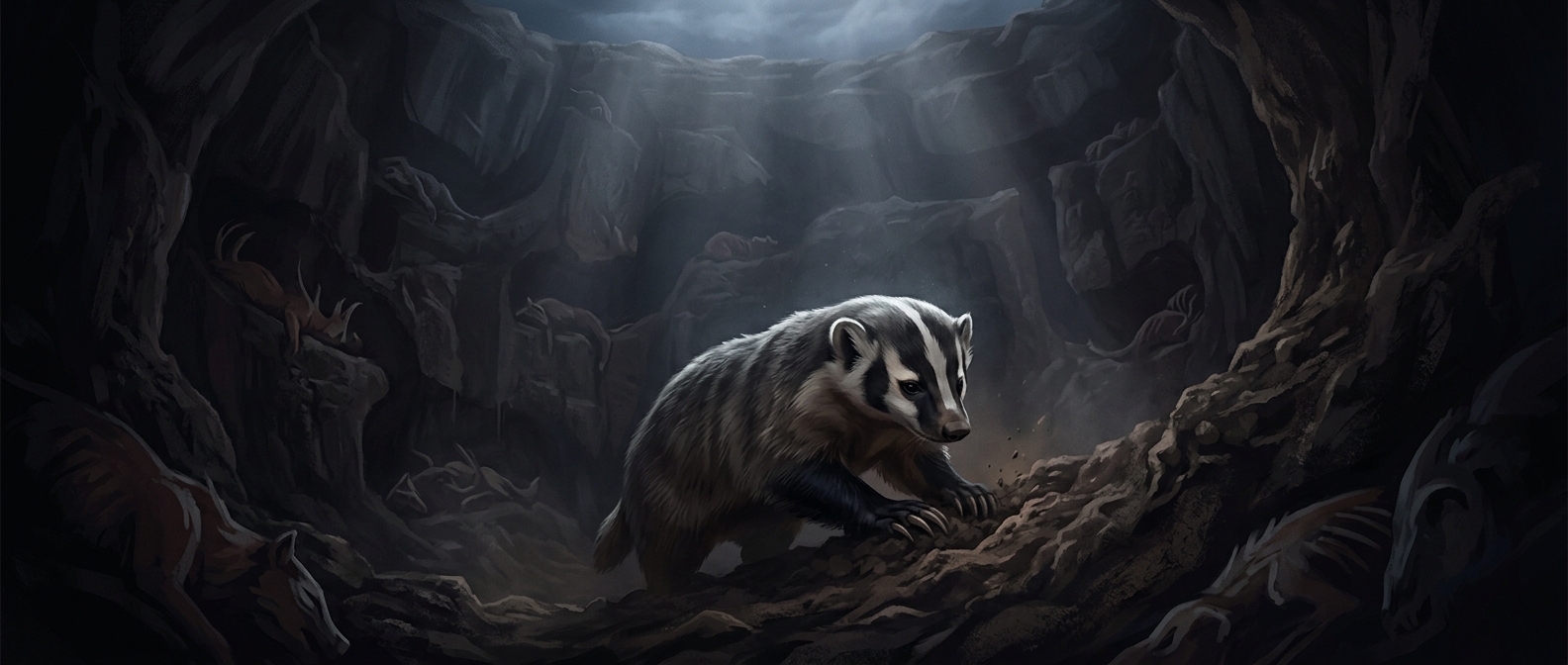
An American badger does not need to drag a deer away to hide it. Instead, it can excavate beneath the carcass. As the soil gives way, the heavy body settles into the hollow; the badger then pushes earth over it. The result is a buried food store rather than a meal that must be eaten on the spot.
Why Digging Beats Dragging
Badgers are built for digging, with strong forelimbs and long claws that can move soil efficiently. A deer, by contrast, is far too heavy for one badger to haul any distance. Digging under the carcass changes the problem: the animal moves the ground around the food, and gravity helps lower the food into place.
Covering the carcass also makes it less exposed to other scavengers and slows access to the meal. The buried food can be revisited over time, letting the badger feed in portions instead of trying to consume a large carcass at once. This behavior is called caching: storing food for later use.
A Meal That Stays Put
A cache does not make the carcass last indefinitely, and burial is not a guarantee that no other animal will find it. But it gives the badger a practical way to keep a large food source nearby without carrying it away. The striking part is the scale of the solution: faced with prey much heavier than itself, the badger can turn a hole into a pantry.