A moving target can start the feeding sequence
Cane toads often hunt by waiting for small animals to move within reach. Their vision is especially useful for detecting motion, so a quick twitch can prompt a strike before the toad has carefully assessed what the object is. The response is fast because hesitation could mean losing a real insect or other prey.
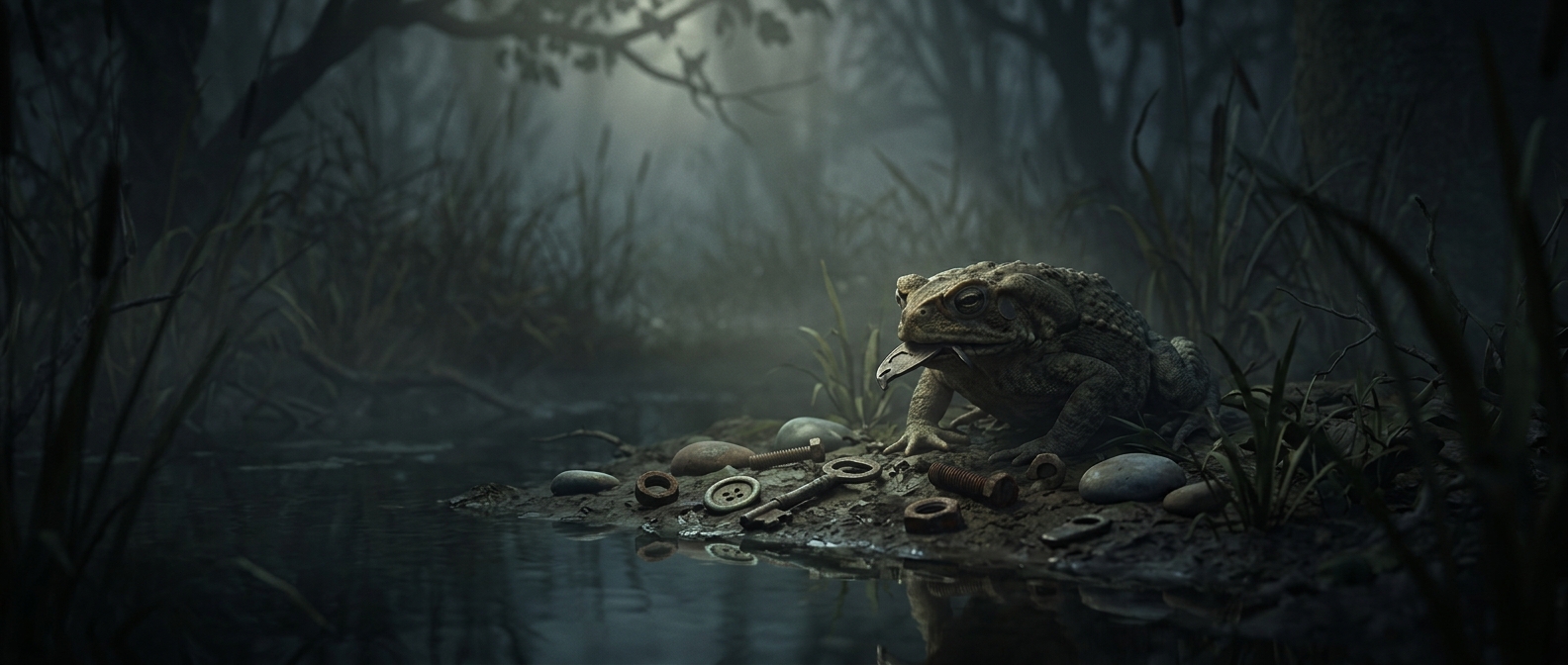
That does not mean motion is the toad’s only cue, or that every moving object is automatically swallowed. But once an object is close and seems catchable, the toad may lunge and take it into its mouth—even if it is a cigarette butt or a toy rather than food.
Little room for inspection after the strike
Toads have no teeth for chewing. They generally seize small prey with a rapid tongue strike and swallow it whole, making the initial decision unusually consequential: there is no careful biting or tasting before the object goes down. A stimulus that resembles prey in movement can therefore carry the sequence from detection to swallowing before its true nature becomes clear.
The same simple rule that makes a toad an effective insect hunter can misfire around human litter. A tiny moving target may be treated as a meal, while an inedible object can end up in the digestive tract simply because it passed the first test—looking catchable.