How a risky dispersal became a “suicide” scene
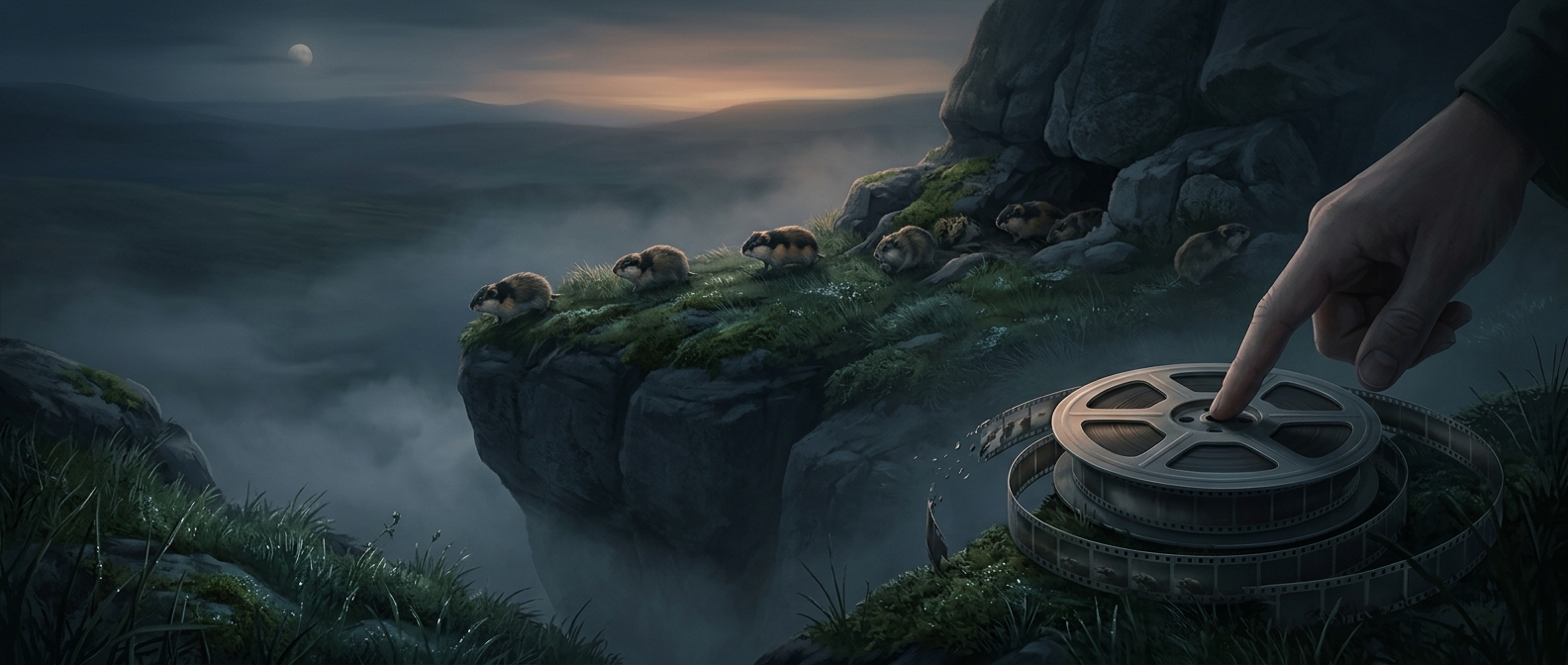
When lemming populations grow, some animals disperse—moving away from crowded areas in search of food and space. This movement is not a coordinated march toward death. It is a response to changing conditions, and the animals’ routes depend on the landscape they encounter. Rivers and other bodies of water can become hazards: lemmings may attempt to cross and drown, but that danger does not mean they are choosing mass suicide.
What the movie made viewers believe
The famous cliff-jumping footage was staged rather than filmed as a natural event. By presenting lemmings plunging together as part of a dramatic sequence, the film turned a limited, hazardous behavior into an apparent mass ritual. The image was easy to remember—and its dramatic force helped the false story outlast the distinction between genuine animal movement and a scene arranged for the camera.
The real story is less theatrical: population growth can push animals into unfamiliar territory, where some journeys end badly. A dangerous crossing is a consequence of dispersal, not evidence that lemmings intend to die.