A Leaf Pile That Generates Its Own Heat
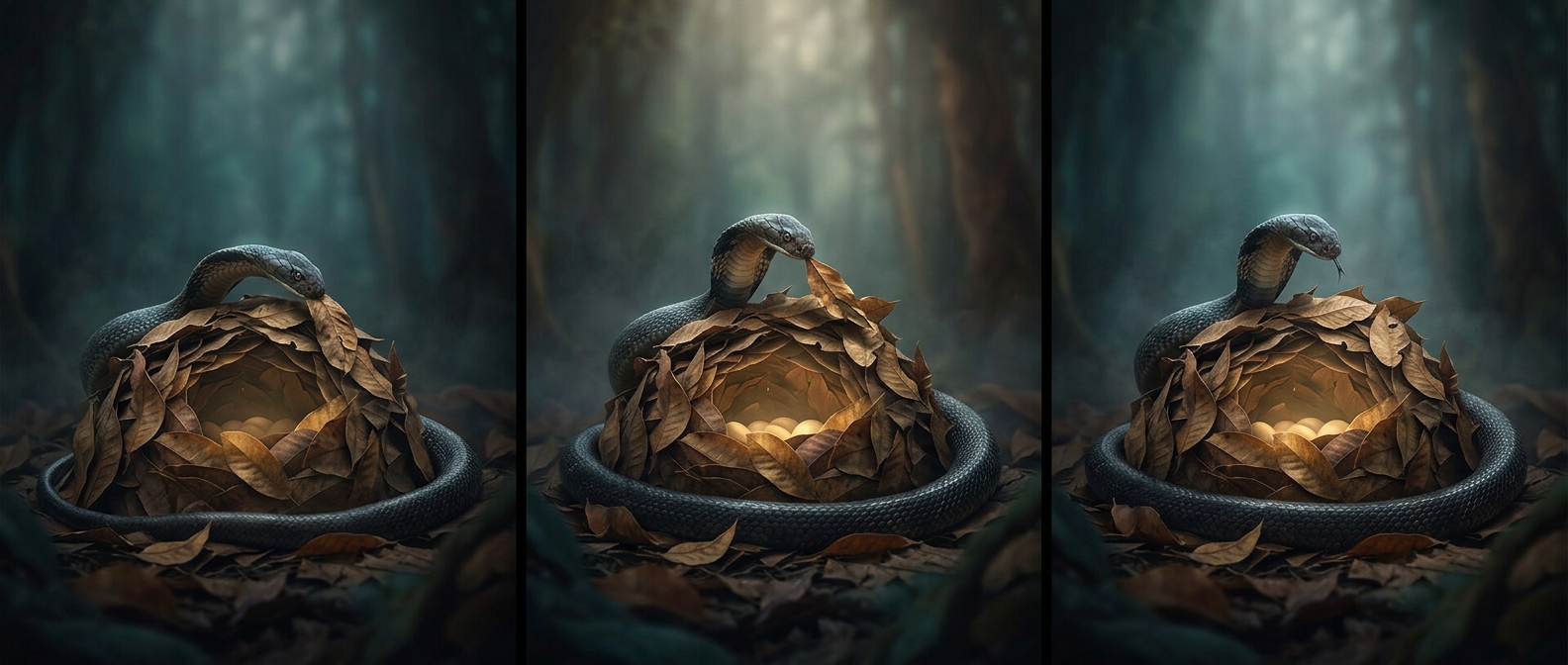
A king cobra does more than hide its eggs under fallen leaves. The female gathers vegetation into a mound and places the clutch in a chamber beneath it. As microbes and other decomposers break down the damp plant material, they release heat—much as a compost heap does. The mound also slows heat loss and shields the eggs from rapid swings in temperature.
That warmth is not precisely controlled like an incubator. It depends on the pile’s size, moisture, and condition, and the surrounding weather still matters. But a thick layer of decomposing leaves can create a more stable, protected place for eggs than bare ground can.
Guarding the Nursery Has a Cost
Building the mound takes effort, and the eggs remain vulnerable to predators, flooding, and unsuitable temperatures. The female stays nearby to defend the nest, an unusual investment among snakes, most of which leave their eggs after laying them. Her presence helps protect the clutch while the leafy cover supplies insulation and, through decomposition, some warmth.
The result is a small but striking chain of cause and effect: the cobra’s nest is not warm because the mother broods the eggs with her body. It is warm in part because the plant matter she piles above them is breaking down.