Why a Grizzly Might Give Up a Meal
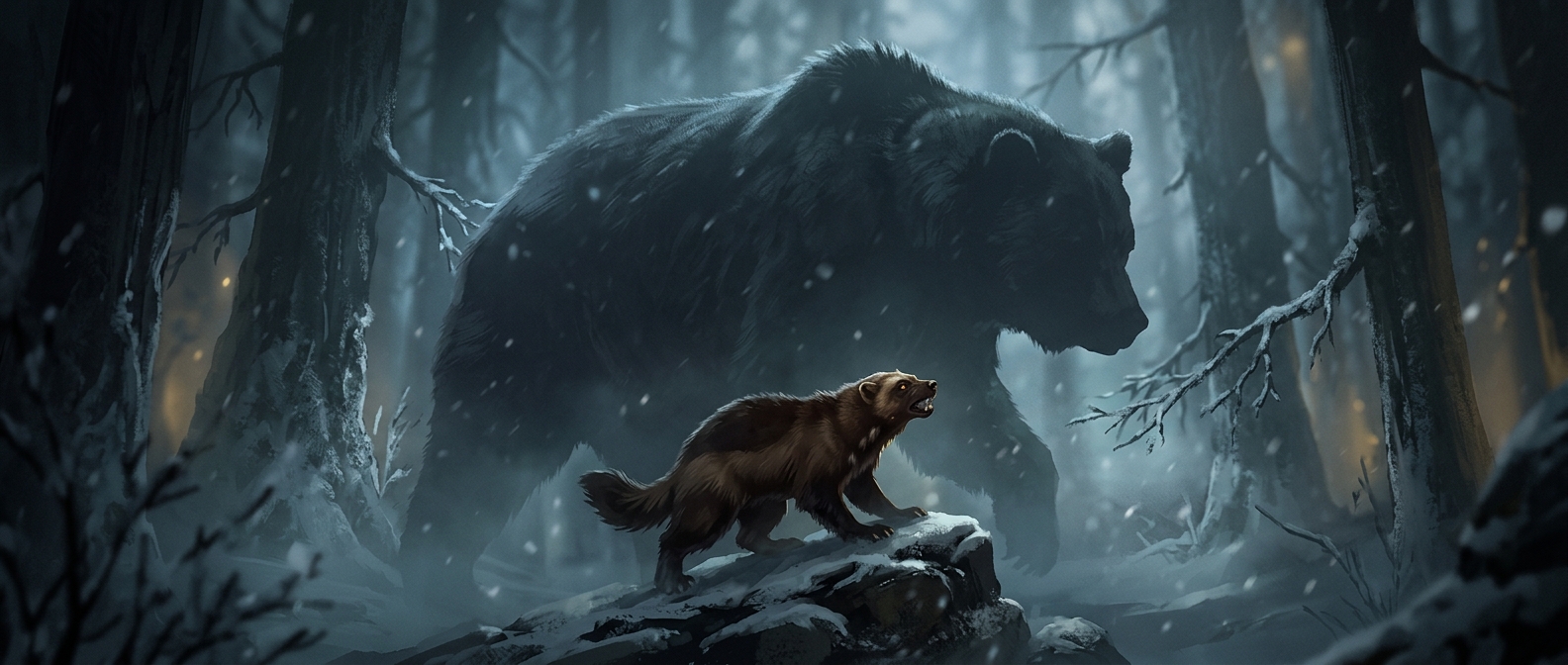
A wolverine does not have to overpower a grizzly to drive it from a carcass. In a contest over food, the bear may simply decide that defending the meal is more trouble than it is worth. A wolverine’s jaws and claws make it a capable, determined opponent at close range, so even a much larger animal may choose to back away rather than risk an injury.
A Costly Fight Over a Carcass
For a scavenger, a carcass is a valuable but temporary opportunity: other animals can arrive, and the food will not remain available indefinitely. The wolverine’s advantage is not sheer size; it is the threat it can pose while defending access to food. The grizzly, meanwhile, has little reason to fight if it can find another meal and avoid getting hurt.
That calculation can make the smaller animal appear to have “won.” But the bear’s retreat is a choice about risk and reward, not proof that the wolverine could defeat it in a sustained fight.
An Exception, Not a Showdown
Such confrontations are exceptional, not routine battles between wolverines and bears. The striking point is the mismatch between the animals’ size and the outcome: a smaller scavenger can hold its ground when the larger competitor decides the carcass is not worth the hassle.