Why a Secretary Bird Hunts on Foot
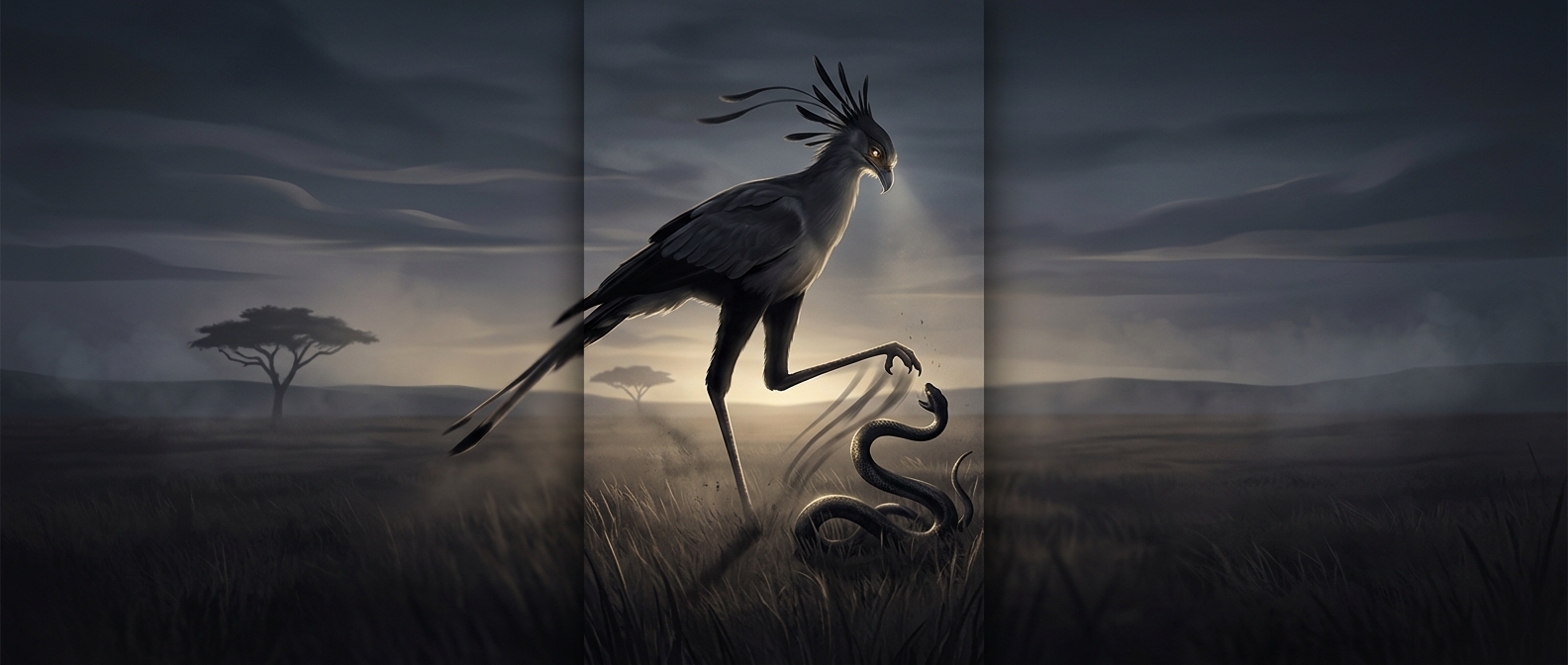
A secretary bird’s long legs do more than keep its head away from a snake’s bite: they let it attack without committing its whole body to a close grapple. The bird can watch the snake’s movements, adjust its position, and bring a foot down while keeping its vulnerable face farther from the strike zone.
Its lower legs are covered in tough scales, which offer some protection from bites. They are not a guarantee against injury, so distance and timing matter as much as armor. The bird’s legs also give it room to make repeated, targeted blows rather than rely on one risky grab.
A Hunt Built Around Timing
The bird has to respond to a moving target. A snake can coil, lunge, or change direction, so the secretary bird tracks it and aims for the head, where a blow can disrupt its ability to strike back. Once the prey is subdued, the bird can use its beak to handle or eat it.
This is a different solution from the close, beak-first attack many birds use. The secretary bird turns leg length into a safety buffer: it can deliver force at the far end of its body while keeping its eyes and head back. That reach is useful against more than snakes, too; the bird hunts other small animals on foot across open country. The same long-legged posture that makes its hunting unusual also lets it cover ground while scanning for prey.