How a Bear Turns Urea Back Into Building Material
When the body breaks down protein, it produces nitrogen waste. The liver packages much of that nitrogen as urea, which normally travels through the blood to the kidneys and leaves in urine. During hibernation, a bear goes for months without eating or drinking—and largely without urinating—so simply discarding nitrogen would also mean losing a useful raw material.
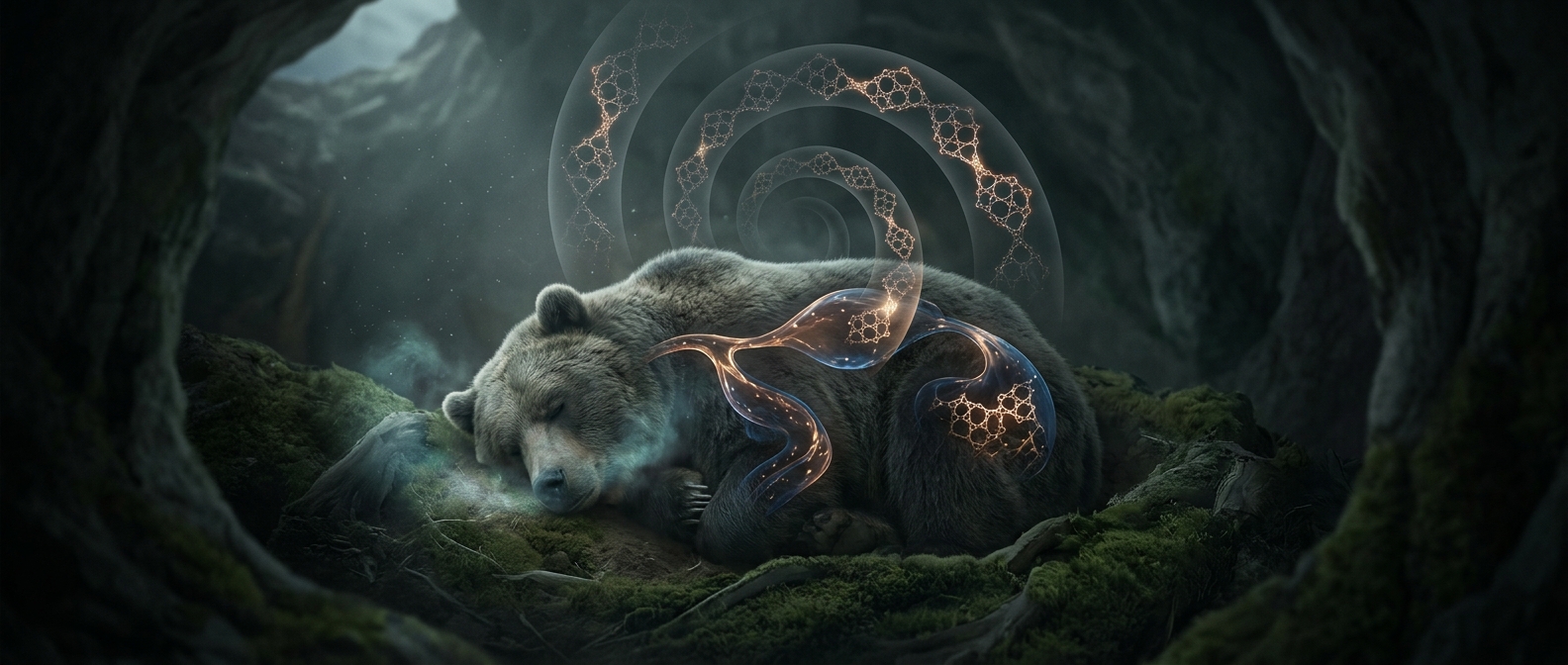
Instead, some urea moves from the bear’s circulation into its digestive tract. There, gut microbes equipped with enzymes that break down urea release its nitrogen in forms they can use. Microbes can incorporate that nitrogen into compounds, including amino acids—the small units cells assemble into proteins. Some of this microbial material can then be absorbed by the bear.
Why the Recycling Matters
The bear is not making protein from nothing: the nitrogen originally came from its own tissues or earlier food. But reclaiming it reduces the need to draw as heavily on the body’s protein stores while there is no new food coming in. That helps limit the loss of muscle and other lean tissue over a long winter fast.
The process depends on a partnership. The bear supplies urea to the gut; microbes do chemical work the bear’s own cells cannot do as efficiently. A closed kitchen does not mean a closed supply of building materials: the hibernating bear can recover some nitrogen that would otherwise be waste and put it back into circulation.