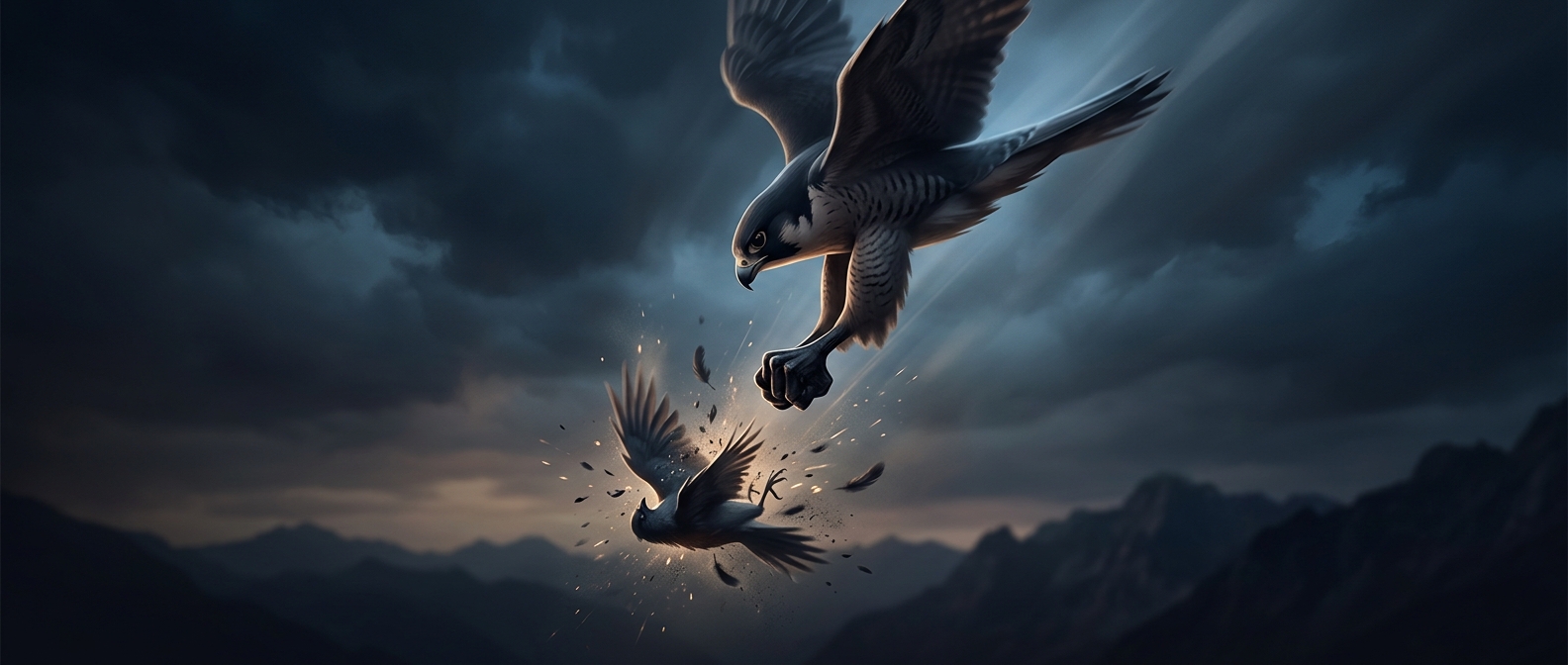
Why a Peregrine Hits Before It Grabs
A peregrine falcon’s high-speed dive, called a stoop, gives it a powerful way to reach prey—but not an easy way to make a delicate catch. The target may be twisting or changing direction, and the falcon is moving too fast to match its flight instantly. Reaching straight for a secure grip could leave the bird poorly positioned or let the prey escape between its talons.
The Strike Creates a Second Chance
Instead, the falcon uses its feet to hit the prey in midair. The blow can stun or kill the animal, or knock it off course. That moment changes the problem: the falcon no longer has to seize a nimble, actively maneuvering target in one precise motion. It can adjust its flight and take hold as the prey falls or loses control.
The feet are still essential to the capture. Peregrines have strong toes and sharp talons for gripping prey, but a grip is most useful once the falcon can reach the target securely. The initial strike separates the job of disrupting the prey from the job of holding it.
A Risky Maneuver, Split in Two
This is not a guaranteed sequence. A target may recover, escape, or require another attempt. But striking first can reduce the demands of a split-second grab during the dive. The falcon turns one difficult aerial maneuver into two simpler tasks: interrupt the prey’s flight, then secure it.