The Horned Lizard’s Eye-Socket Escape Trick
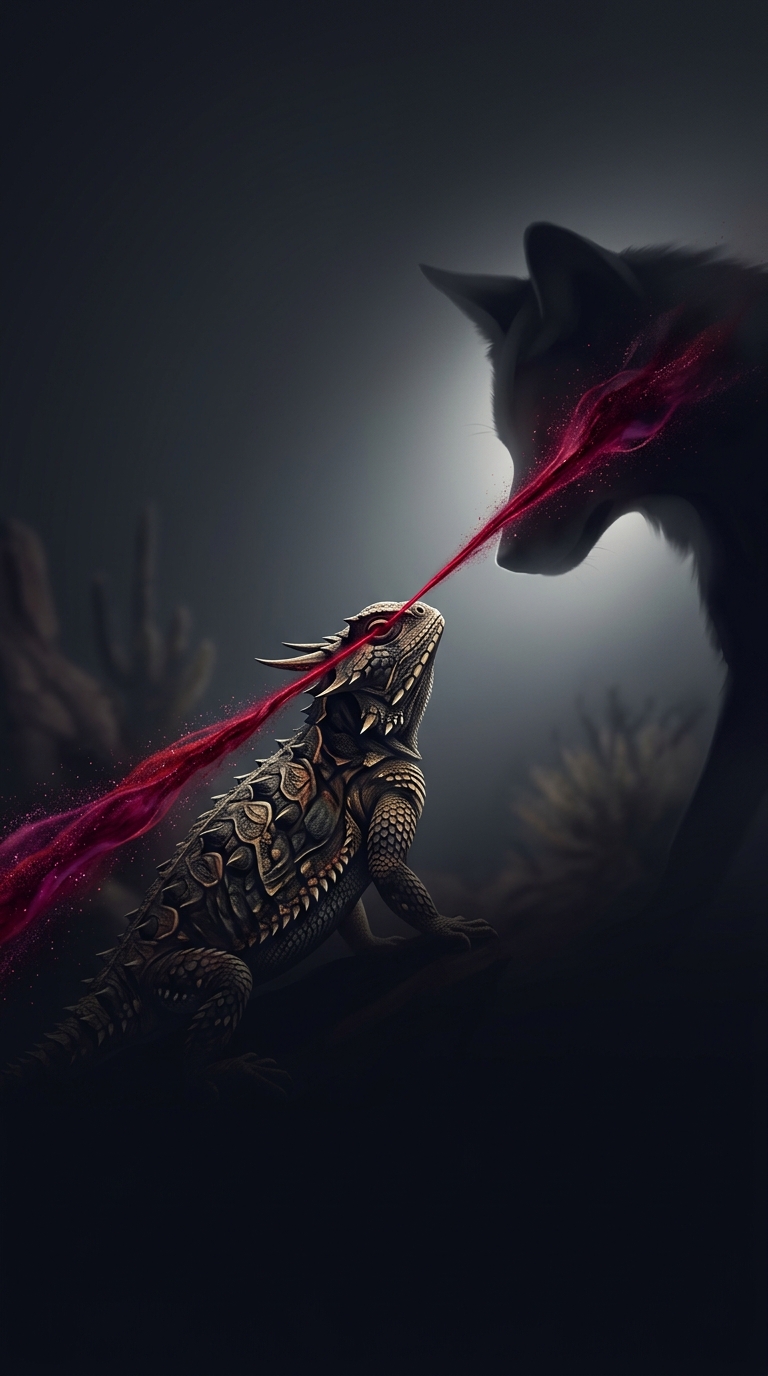
A horned lizard’s blood spray is not produced by a gland or spat out from its mouth. It comes from a pocket of blood around the eye called an orbital sinus. When the lizard is cornered, muscles in its head interfere with the normal return of blood from that area. Pressure rises until a thin membrane gives way, releasing blood through the skin near the eye.
The mechanism turns a vulnerable spot into a last-resort defense: a predator lunging for the lizard’s head can be met with a sudden spray, giving the reptile a chance to break away. It is a specialized response, not something every horned lizard uses in every encounter.
Why the Taste Matters
The spray’s effect is more than surprise. Dogs and coyotes are especially likely to find the blood unpleasant, which may make them hesitate or abandon the attack. That matters because these canids are among the predators most likely to pursue a small lizard on open ground.
The defense fits into a broader escape strategy. Horned lizards can also rely on camouflage, spines, and a flattened body that makes them difficult to swallow. Blood-squirting is the dramatic option when those measures have not ended the encounter—and its usefulness depends on giving the predator a reason to back off long enough for the lizard to get away.