A Body Built for Two-Way Traffic
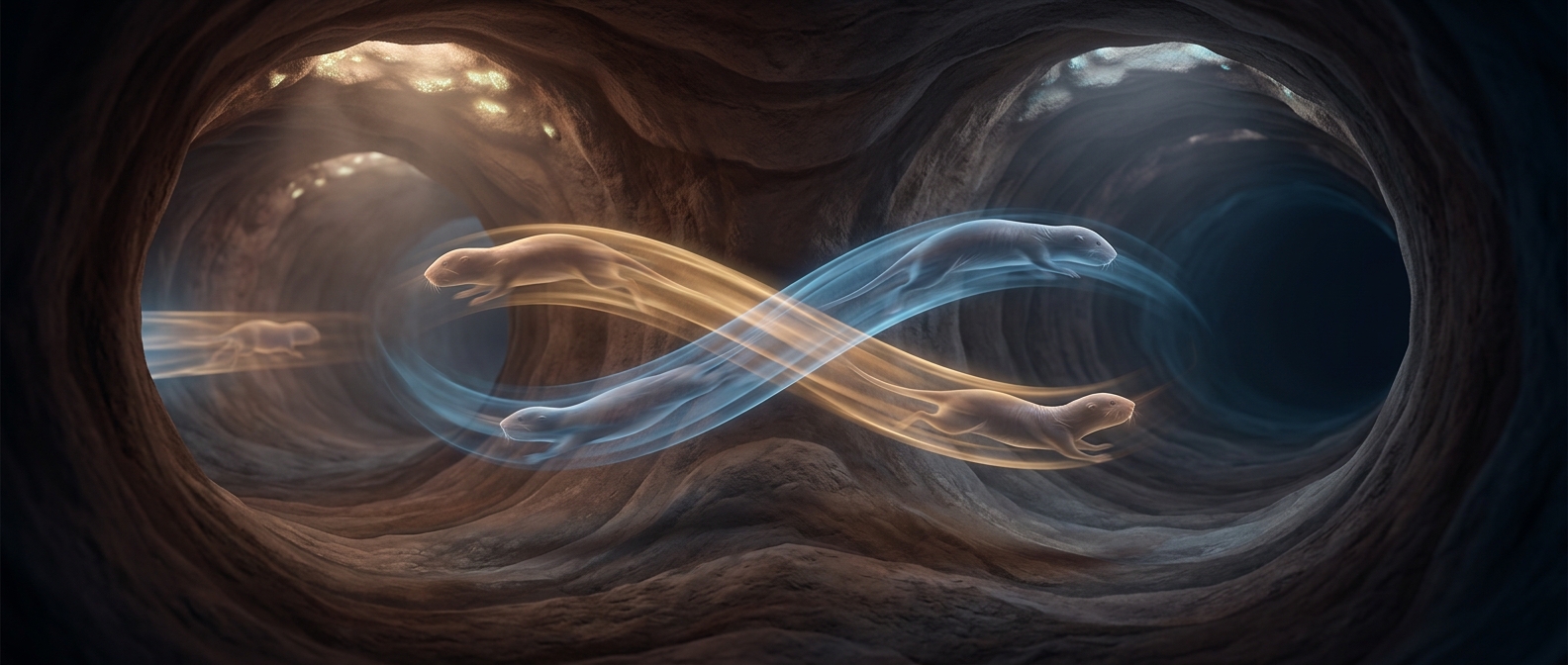
In a naked mole rat’s underground world, a corridor may be too tight for a U-turn. Instead of stopping to pivot, the animal can move backward through the passage at about the same speed as it moves forward. Its limbs keep working against the tunnel floor, while sensory hairs on its tail provide information from the end that now leads the way.
Those hairs help the rat detect contact as it backs through a confined space. That matters in a burrow where walls are close on both sides and sight offers little help: the animal needs to know what its body is brushing against without turning around to inspect it.
Why Loose Skin Helps
A narrow tunnel leaves little room for a body to twist or lift away from an obstacle. Naked mole rats’ loose skin can shift over their bodies, helping them squeeze through cramped passages in either direction. Their ability to reverse turns a tight corridor from a dead end into a usable route.
The payoff is practical. In a branching burrow, a rat can back out of a crowded section or continue down a passage without spending time and space turning around. For an animal commuting through tunnels too narrow to maneuver in, moving backward is not an awkward backup plan—it is part of getting around.