A feeding strategy shaped by a dry island
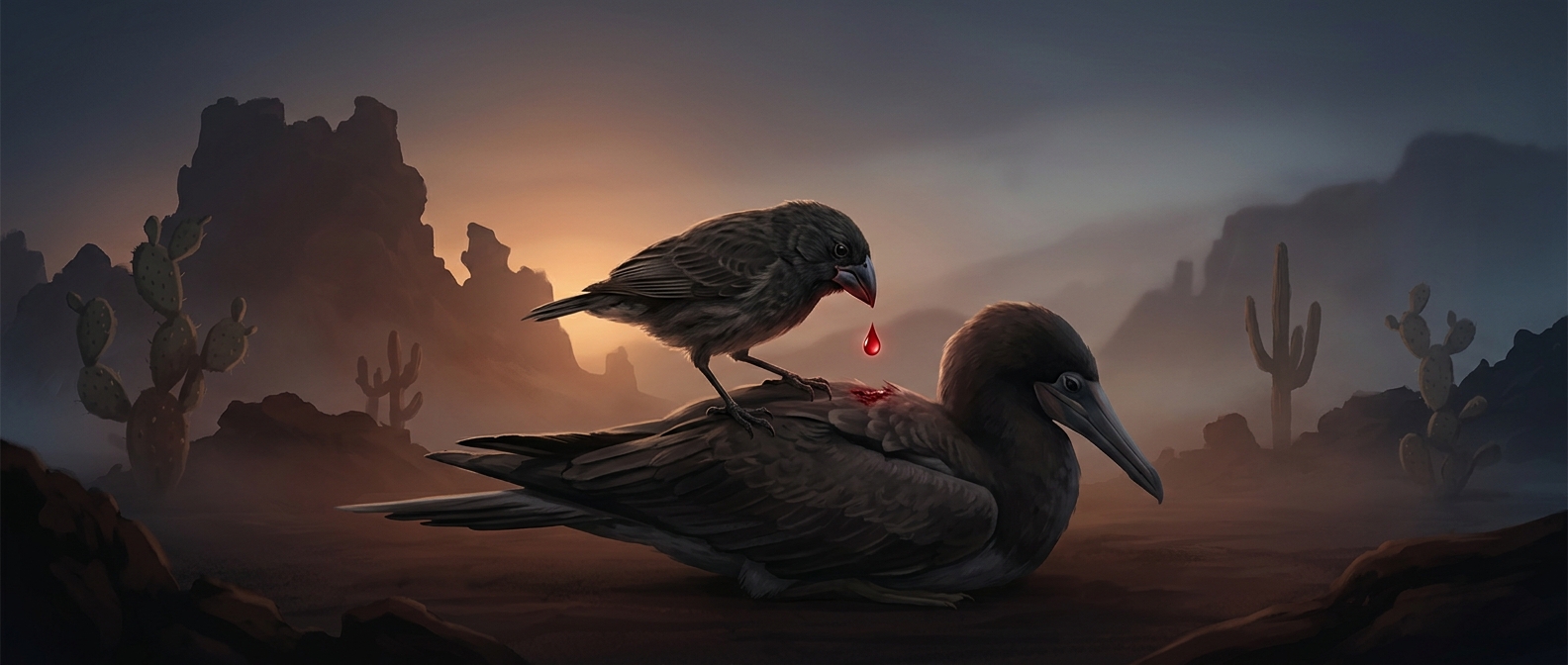
On the Galápagos islands of Wolf and Darwin, the sharp-beaked ground finch lives alongside large colonies of seabirds. When rain is scarce, ordinary sources of food and moisture become harder to find. The finch has an unusual fallback: it pecks at the skin of nesting seabirds, including boobies, and drinks the blood that wells up.
Blood provides both water and nutrients, making one feeding act useful in two ways when the landscape offers little else. The finch may also break into seabird eggs, another concentrated food source. These are opportunistic meals, not evidence that the bird depends on blood year-round.
A temporary niche, not a permanent diet
The behavior works because seabird colonies bring potential food close together in one place. A finch can approach a much larger bird and take small pecks, rather than hunt prey across a barren island. When other foods become available, it returns to them.
That flexibility is the important part: the finch is not a specialized blood-drinker in the way its nickname might suggest. It is a small bird able to exploit an unusual resource during a bottleneck. In a drought, a seabird colony can serve as both pantry and water source until conditions improve.