Why Tiddlywinks Became a Serious Game
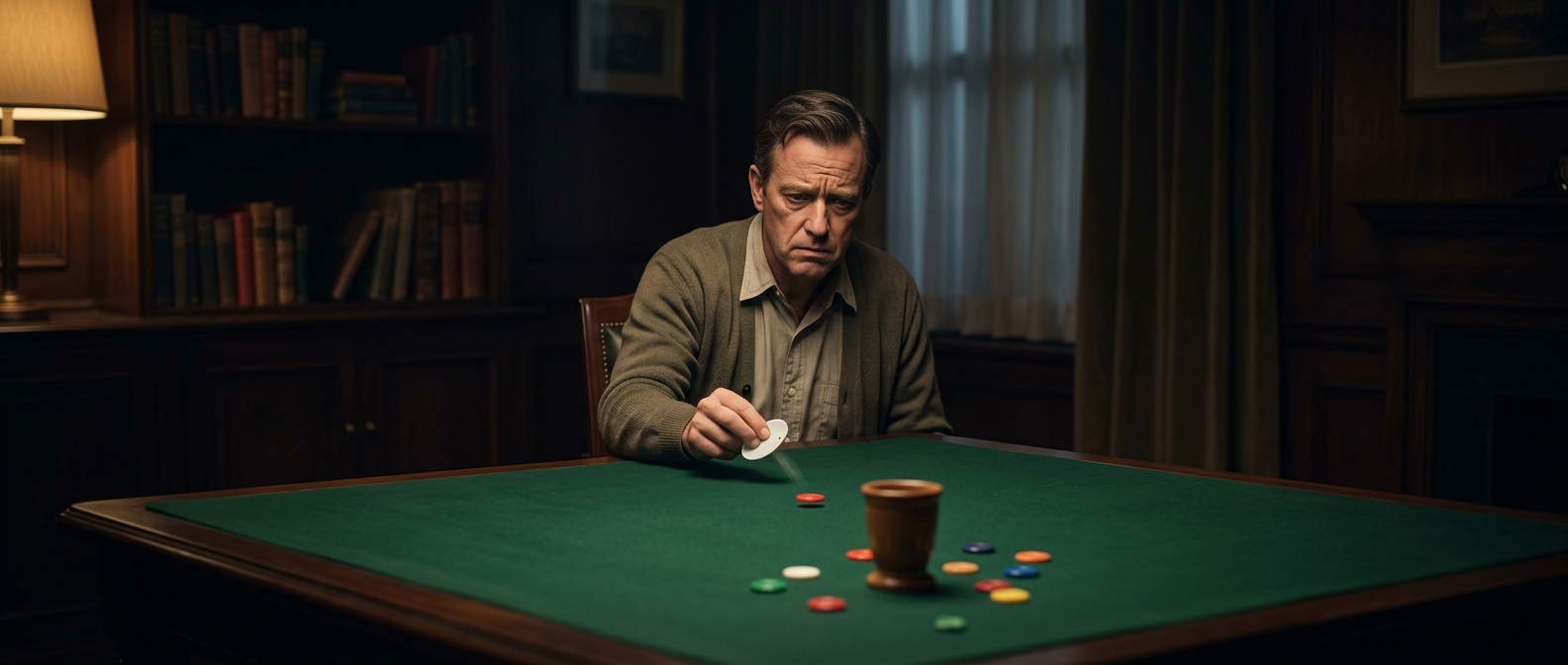
Tiddlywinks looks simple: flick a small colored disc, called a wink, toward a cup. But players do not push a wink with a finger. They press the edge of a larger disc, the squidger, onto it. That pressure bends the wink against the surface; when it slips free, it springs forward. A tiny change in where or how the squidger presses can send the wink skimming, hopping, or nowhere useful at all.
That sensitivity turns a casual flick into a problem of touch. Players must judge the angle, force, and position of each shot, while accounting for the other winks already on the playing surface. The challenge is not merely to get a disc into the cup, but to choose a shot that improves the whole position.
The Strategy Hidden in the Flick
A player can pot a wink, but can also land one on top of an opponent’s. This move, called squopping, pins the covered wink and makes it harder to play. The opponent may then try to free it, cover another wink, or find a route to the cup. A successful shot can therefore change both players’ options at once.
Pile-ups make the game especially demanding: a flick meant to move one wink may disturb several others. Skilled play depends on controlling those interactions, not simply on aiming accurately. The same small discs that make the game look harmless create its most consequential decisions.
From Parlor Game to University Contest
That blend of delicate technique and tactical interference helps explain why adults took Tiddlywinks seriously enough to form elite university societies in the 1950s. Its equipment was modest, but mastery was not: each turn called for precise physical control and a plan for what an opponent could do next. A game that begins with a flick can quickly become a contest over who is allowed to make the next useful one.