A chemical fingerprint in the planet’s light
Uranus’s atmosphere is mostly hydrogen and helium, but smaller amounts of other gases leave detectable marks in the light that escapes from it. When sunlight reflects off the planet—or when the atmosphere emits its own heat—some wavelengths are absorbed more strongly than others. A molecule absorbs particular wavelengths according to its structure, creating a pattern of dark or bright features called a spectrum.
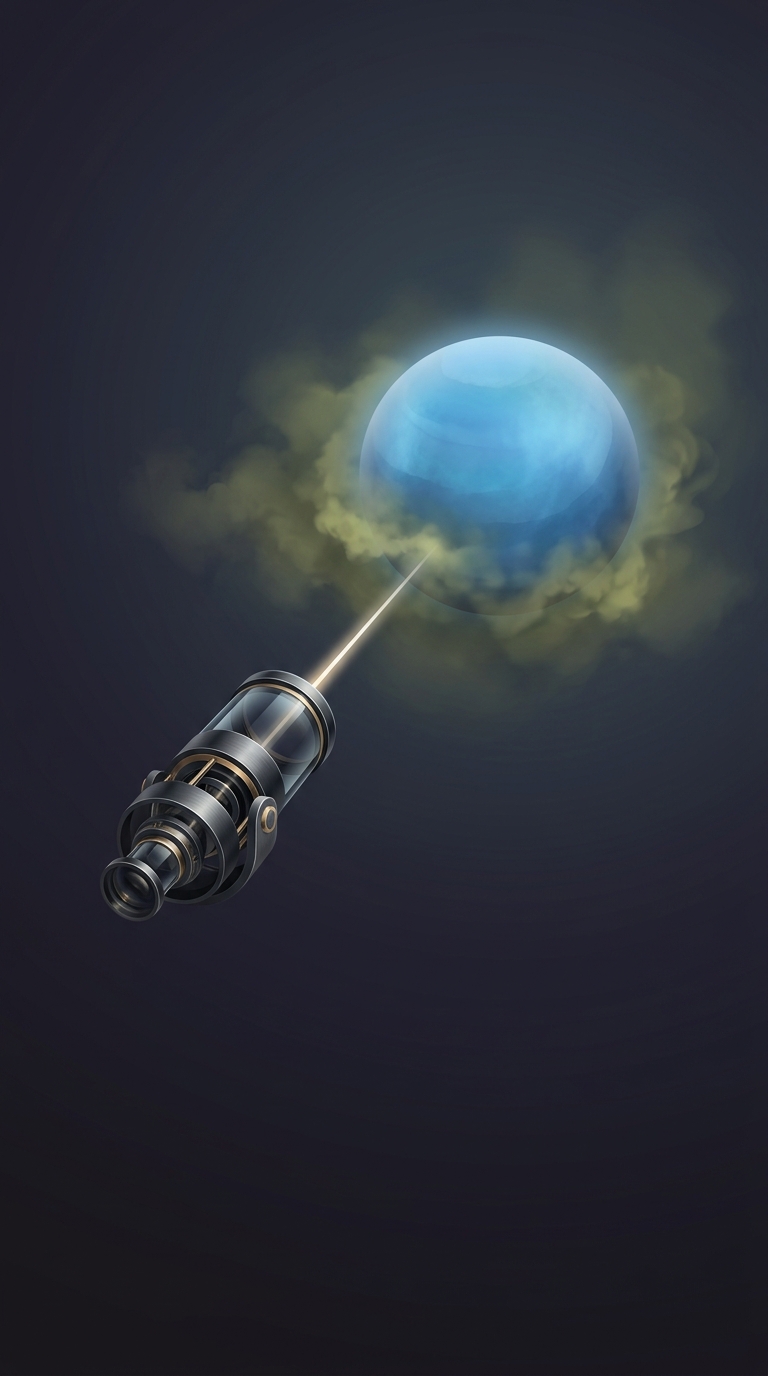
By matching those features to hydrogen sulfide’s known spectral pattern, scientists can identify the gas without collecting a sample. The measurement is a remote chemical reading, not a direct test of what the air would smell like.
The odor belongs to a layer, not the whole planet
The detection concerns Uranus’s upper atmosphere, where instruments can observe light passing through or reflecting from gases. It does not mean the planet is made of hydrogen sulfide, or that every layer has the same composition. Hydrogen sulfide is a trace ingredient against an atmosphere dominated by lighter gases, but even a relatively small amount can be chemically recognizable.
On Earth, hydrogen sulfide is associated with the sharp odor of rotten eggs. Applying that familiar description to Uranus is an inference from the gas’s identity—not a report from anyone who has smelled the planet. A spectrum can reveal a familiar smell’s chemical cause from billions of miles away, even when no nose could safely or physically get near it.