stackyFACTS
Science

The Sun spins at different speeds

HERE’S THE INTERESTING PART

Because the sun is a chaotic ball of plasma instead of a solid rock, it spins completely out of sync with itself. Its equator rotates once every twenty-four days, while its poles drag their feet and take up to thirty-five days, creating a tangled, messy magnetic field in the process.
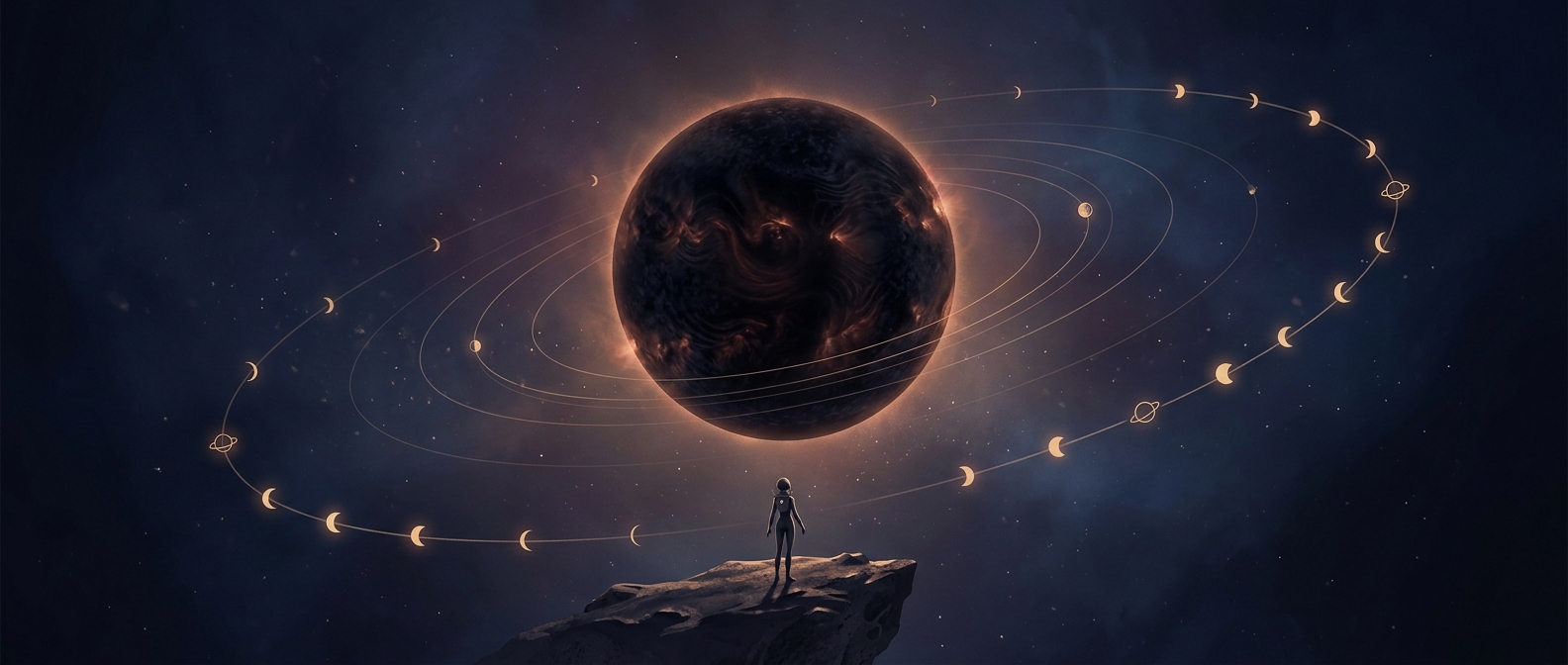
The Sun spins at different speeds
STACKY / Science
One discovery leads to another.

Keep exploring facts in this topic.

Science →
STACKY FOR IPHONE

A bigger world.
One discovery
at a time.

Keep discovering with Stacky. Interesting facts in an app that is always within reach.

Download on the App Store
ONE MORE DISCOVERY?

Keep exploring

All in this topic →
Solar eclipses require precise celestial alignment
Science

Solar eclipses require precise celestial alignment

We are incredibly fortunate that the universe enjoys playing optical illusions. For the sun to be completely blocked, the vastly smaller satellite must be…

Discover more
Why comets have two tails
Science

Why comets have two tails

Why settle for one dramatic exit when you can throw a double-barreled tantrum? As these frozen debris clusters approach a star, they do not just disintegrate…

Discover more
Uranus genuinely smells like rotten eggs due to the massive concentration of hydrogen sulfide in its upper atmospheric layers.
Science

Uranus genuinely smells like rotten eggs due to the massive concentration of hydrogen sulfide in its upper atmospheric layers.

Uranus genuinely smells like rotten eggs due to the massive concentration of hydrogen sulfide in its upper atmospheric layers. Astronomers used sophisticated…

Discover more
Venus is the only planet in our solar system that spins clockwise on its axis, a phenomenon astronomers refer to as retrograde rotation.
Science

Venus is the only planet in our solar system that spins clockwise on its axis, a phenomenon astronomers refer to as retrograde rotation.

Venus is the only planet in our solar system that spins clockwise on its axis, a phenomenon astronomers refer to as retrograde rotation. While Earth and all…

Discover more
Jupiter acts as a massive cosmic vacuum cleaner for the solar system, using its immense gravitational field to suck up or deflect dangerous asteroids and comets away from Earth.
Science

Jupiter acts as a massive cosmic vacuum cleaner for the solar system, using its immense gravitational field to suck up or deflect dangerous asteroids and comets away from Earth.

Jupiter acts as a massive cosmic vacuum cleaner for the solar system, using its immense gravitational field to suck up or deflect dangerous asteroids and…

Discover more
Earth's quasi-moon won't leave its neighborhood
Science

Earth's quasi-moon won't leave its neighborhood

Our planet is the lonely protagonist of the solar system, but it turns out we have a slightly creepy stalker. Kamoʻoalewa is an asteroid roughly the size of a…

Discover more
StackyMore discoveries in the app
Download on the App Store