How warm air makes nitrogen boil
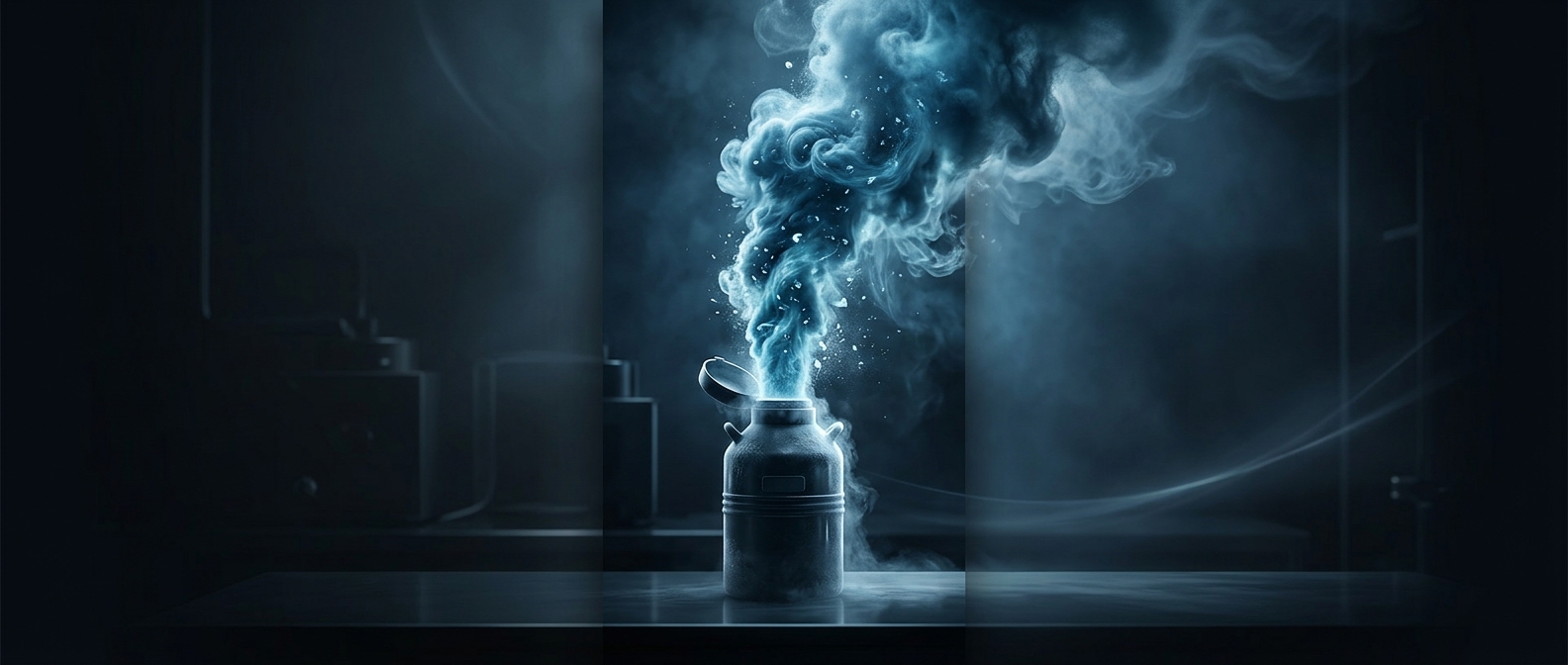
Liquid nitrogen sits far below the temperature of the surrounding room. Heat therefore flows from the warmer air and nearby surfaces into the liquid. At its boiling point, nitrogen can absorb that energy and turn into gas; the incoming heat keeps the liquid boiling even though the room itself feels cool to us.
The change from liquid to gas takes substantial energy. That energy comes from the surroundings, which is why liquid nitrogen can rapidly chill objects it touches—and why it continually produces gas in an open container. The nitrogen is not burning: it is simply changing state as it absorbs heat.
Why the gas forms a white cloud
Nitrogen gas is invisible. The white plume appears when the very cold gas chills nearby humid air. Water vapor in that air condenses into tiny liquid droplets, much like the mist that forms when warm, moist breath meets cold winter air. Those droplets scatter light, making the plume visible.
As the droplets warm and evaporate, the cloud fades. So the dramatic white trail is a temporary sign of heat moving into the nitrogen and moisture gathering out of the air—not a cloud of visible nitrogen. The same process also explains why the plume can drift and change shape: its motion depends on the surrounding air, while its droplets disappear as they warm.