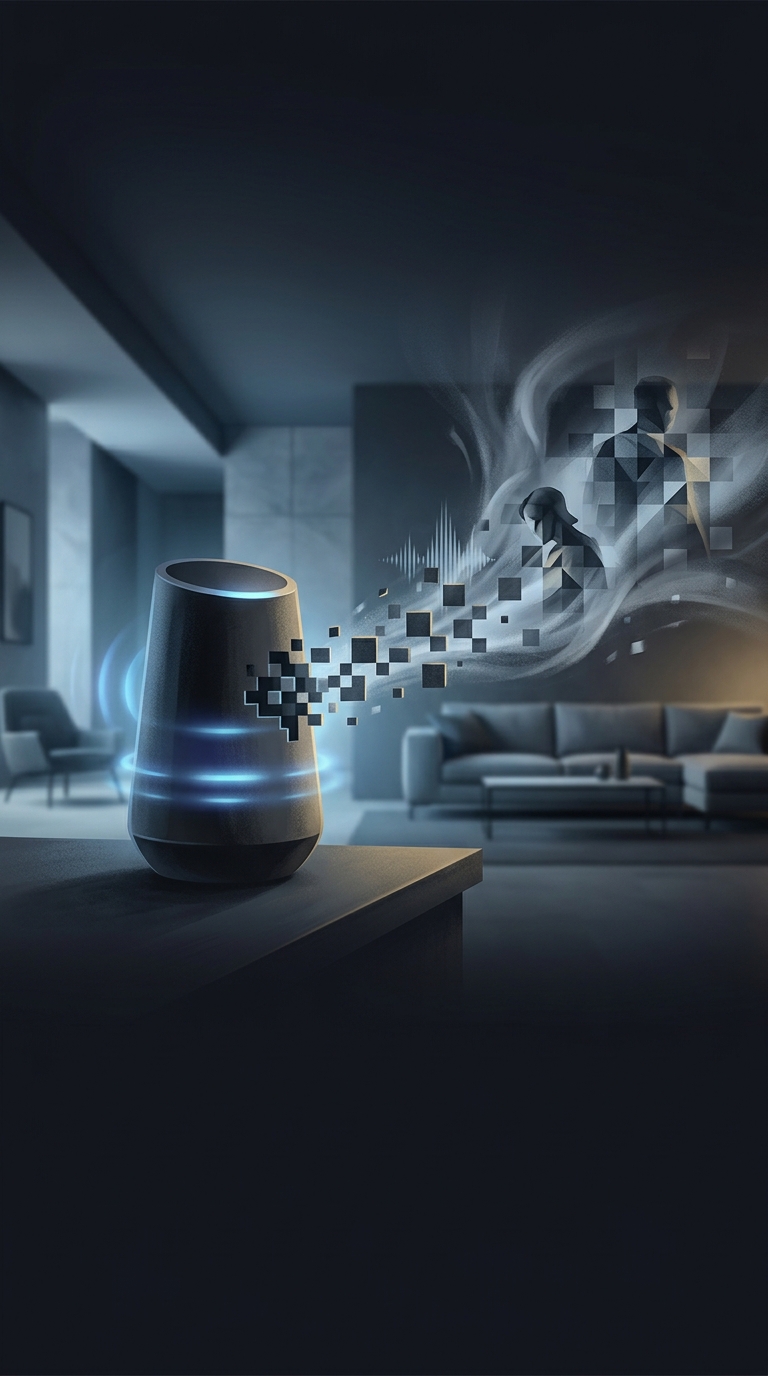
The rolling buffer behind a smart speaker’s listening
A smart speaker does not need to save a whole room’s audio to recognize its wake word. Instead, it can keep a brief, constantly refreshed slice of microphone input in volatile memory—working memory that disappears when it is overwritten or power is lost.
That slice behaves like a loop. New sound enters; once the buffer is full, the oldest sound is replaced by the newest. A passing conversation, a television, or silence all move through the same process. The device is not choosing particular everyday sounds to erase: the routine overwriting is part of how it listens continuously without keeping an endless recording.
What happens when it hears the wake word
A small recognition system analyzes the incoming audio for a chosen phrase. If it detects one, the speaker can treat the surrounding audio as a request and send it on for further processing, depending on the device and its settings. If it does not detect the phrase, the short-lived audio continues to be overwritten.
This is different from deleting a saved recording. The rolling buffer is temporary working space; saved voice recordings, where a device makes them, are a separate kind of data with separate controls. The exact behavior varies by product, so the buffer mechanism alone does not reveal what a particular speaker stores or uploads.
The surprising tradeoff is that a device can be listening all the time without retaining every moment: it keeps just enough recent sound to decide whether to respond, while the older sound vanishes as new audio arrives.