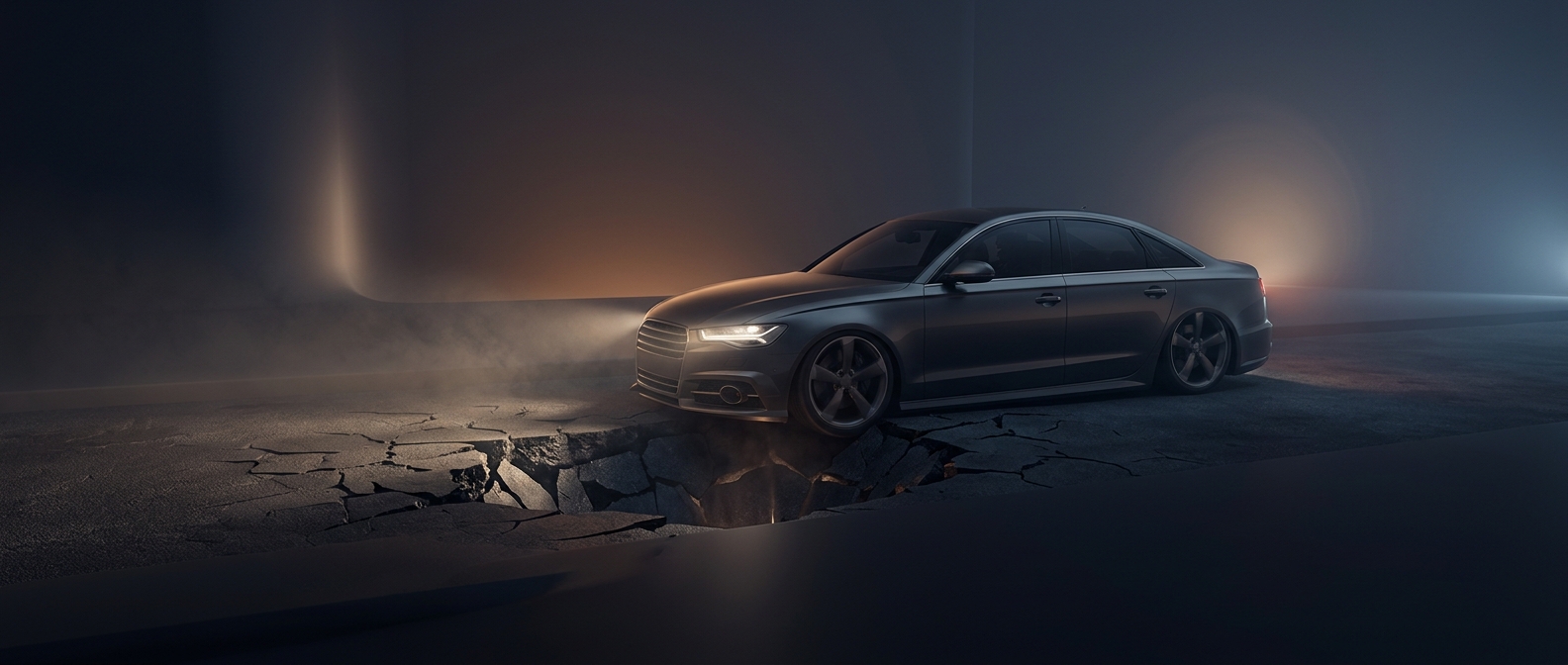
The wheel needs room to move
A car’s suspension is designed to let a wheel move upward over a bump while the body keeps moving relatively smoothly. That upward movement is called compression travel. Lowering the car reduces the space available for it: the suspension starts closer to the point where it can no longer compress safely.
A pothole can use up that remaining room quickly. Once the suspension nears its limit, a bump stop—a rubber or foam buffer meant to prevent metal parts from colliding—may engage. If the wheel still has to move, the impact is transmitted more abruptly through the suspension and into the body. The result can feel less like a controlled bounce and more like a sharp jolt.
The tire is part of the cushion
The tire also deforms as it rolls over an edge, absorbing some of the blow before it reaches the wheel. Low-profile tires have shorter sidewalls, so they generally have less material and distance to flex than taller tires. That leaves the tire with less ability to soften a sudden hit.
The two effects compound: less suspension movement to absorb the wheel’s rise, and less sidewall flex to soften the initial strike. A pothole that a taller, softer setup can take in stages may feel like one abrupt удар in a lowered car.
Why the same hole can feel different
The severity depends on more than ride height. Pothole shape, driving speed, tire pressure, and the car’s suspension setup all affect how much force reaches the cabin. A sharp-edged hole is especially jarring because the tire has little time or distance to climb its edge gradually.
Lowering does not make every rough patch unbearable; it changes the margin for absorbing a sudden one. That is why a seemingly modest pothole can produce a hard thump—and, in extreme cases, leave the tire or wheel vulnerable to damage.