The transition is an engineering problem
A road vehicle can roll down a riverbank, but it cannot simply keep behaving like a car once the ground disappears. In water, the hull must displace enough water to support the vehicle’s weight. Its seals keep water out of the body, while its shape helps it float rather than sink under the load of passengers and equipment.
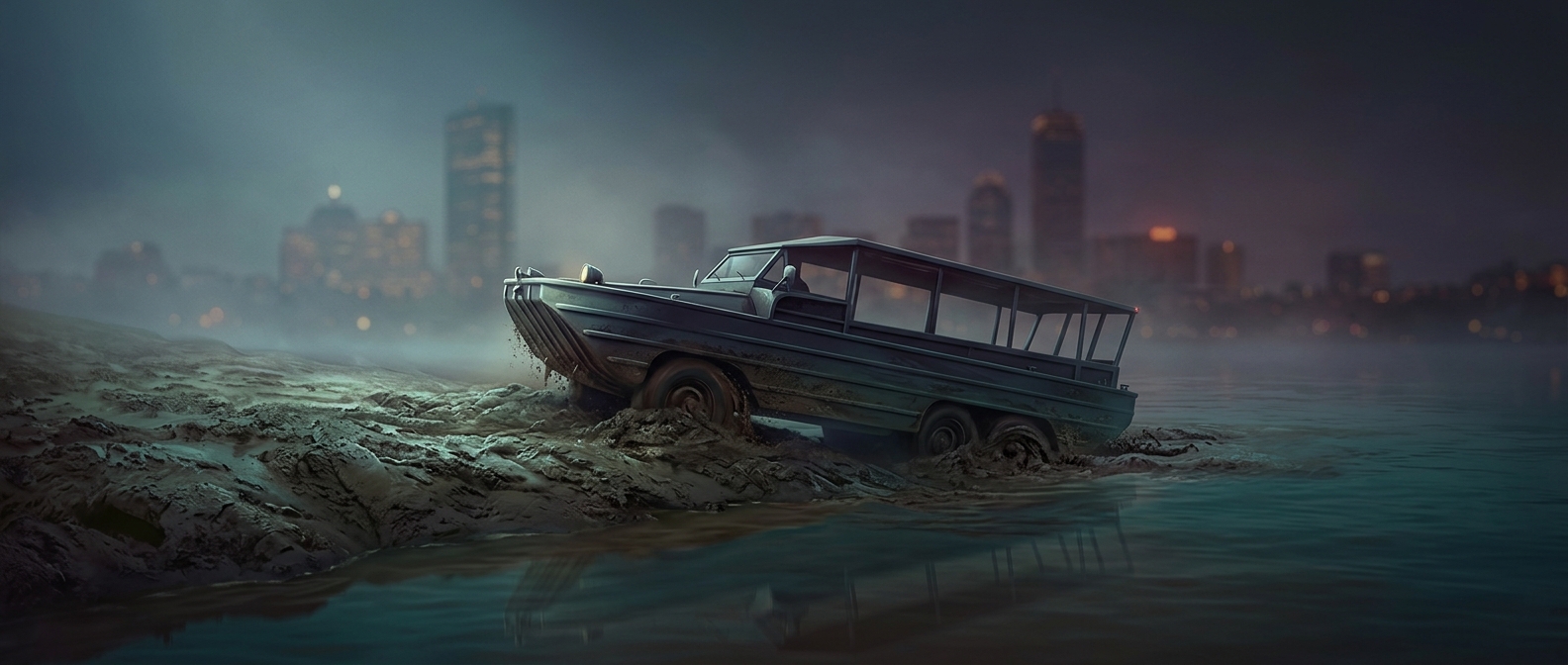
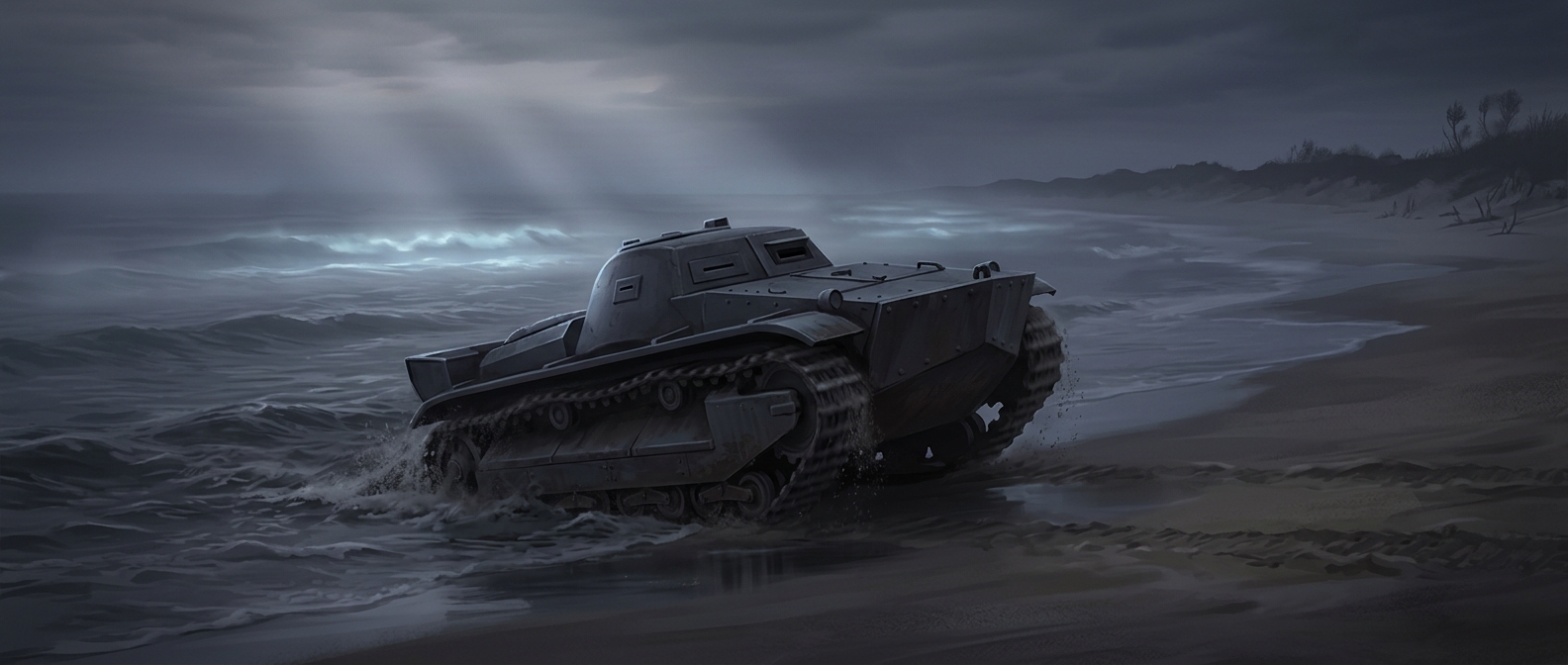
The changeover is usually deliberate: the driver enters the water at a suitable, gradual ramp, where the vehicle can float clear of the bottom. The wheels that carried it over land are no longer enough to move it effectively, so a propeller provides thrust. Steering then depends on directing that thrust or using water-flow controls, depending on the design.
One vehicle, two compromises
Every feature that helps on one surface can be a liability on the other. Wheels and road suspension add weight and can create drag in the water; a hull that floats well is not shaped like an efficient car body. Seals, water-resistant components, and the machinery for water propulsion add complexity that ordinary road vehicles do not need.
That makes amphibious vehicles useful where the boundary between road and water is itself an obstacle: for example, when a route crosses a flooded stretch or reaches a shore without a dock. They avoid the need to transfer people and cargo into a separate boat, but they are not necessarily as quick on roads as a conventional vehicle or as capable in water as a purpose-built boat.
The striking part is not that the vehicle turns into something else. It is that its design carries the compromises of both worlds—and the bank becomes the point where one set of compromises takes over from the other.