Kubb turns a simple lawn into a changing battlefield
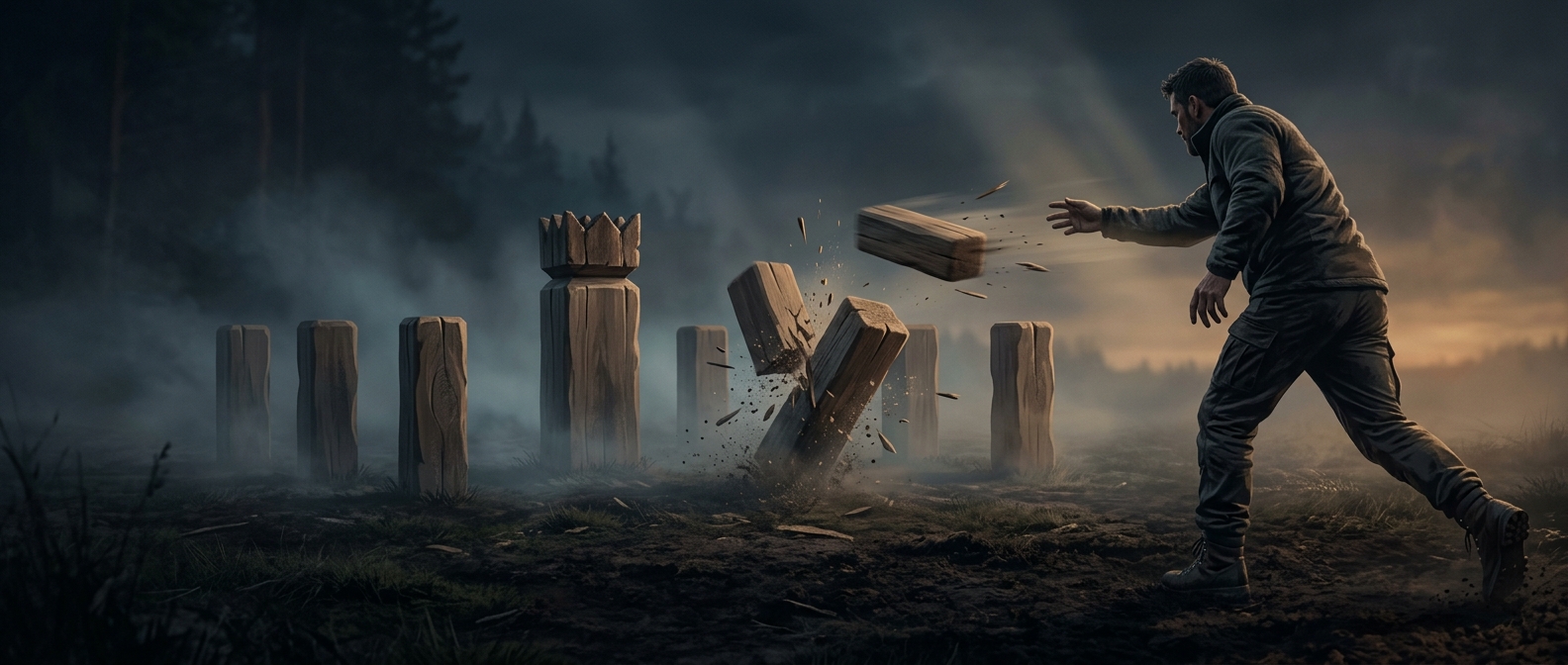
Kubb is played by two teams with wooden batons, a central king and smaller wooden blocks called kubbs. Each team begins behind a baseline, with kubbs arranged along the opposite end of the field. Players throw batons underhand, aiming to topple those blocks—not to hit them with a flying stick from the side.
The game’s defining twist comes after a kubb falls. The opposing team throws it back into the other half of the field, where it is stood upright as a field kubb. That gives the next team a nearer target, but also changes where it must concentrate its throws.
Why knocking down blocks is only half the task
A team generally has to topple all the field kubbs in its half before it can attack the kubbs on the far baseline. So a wild throw can create extra work: leave a field kubb standing, and the baseline targets remain out of reach. A well-placed return throw can help by landing a kubb where it is easier to hit—or hurt by scattering targets across the field.
Only after clearing the opposing kubbs can a team try to topple the king in the center. Knock it down too early, and the team loses. The king therefore makes the final throw a risk, not a victory lap.
Timber makes the tactics tangible
Because the targets and batons are solid wood, each throw has a physical consequence: a clean hit sends a block clattering over, while a miss leaves the layout—and the pressure—intact. The pieces are simple, but the rules make placement matter as much as force. A game that begins with two neat rows of blocks can end with a scattered field of targets and one upright king waiting in the middle.