Two surfaces turn one bag into two shots
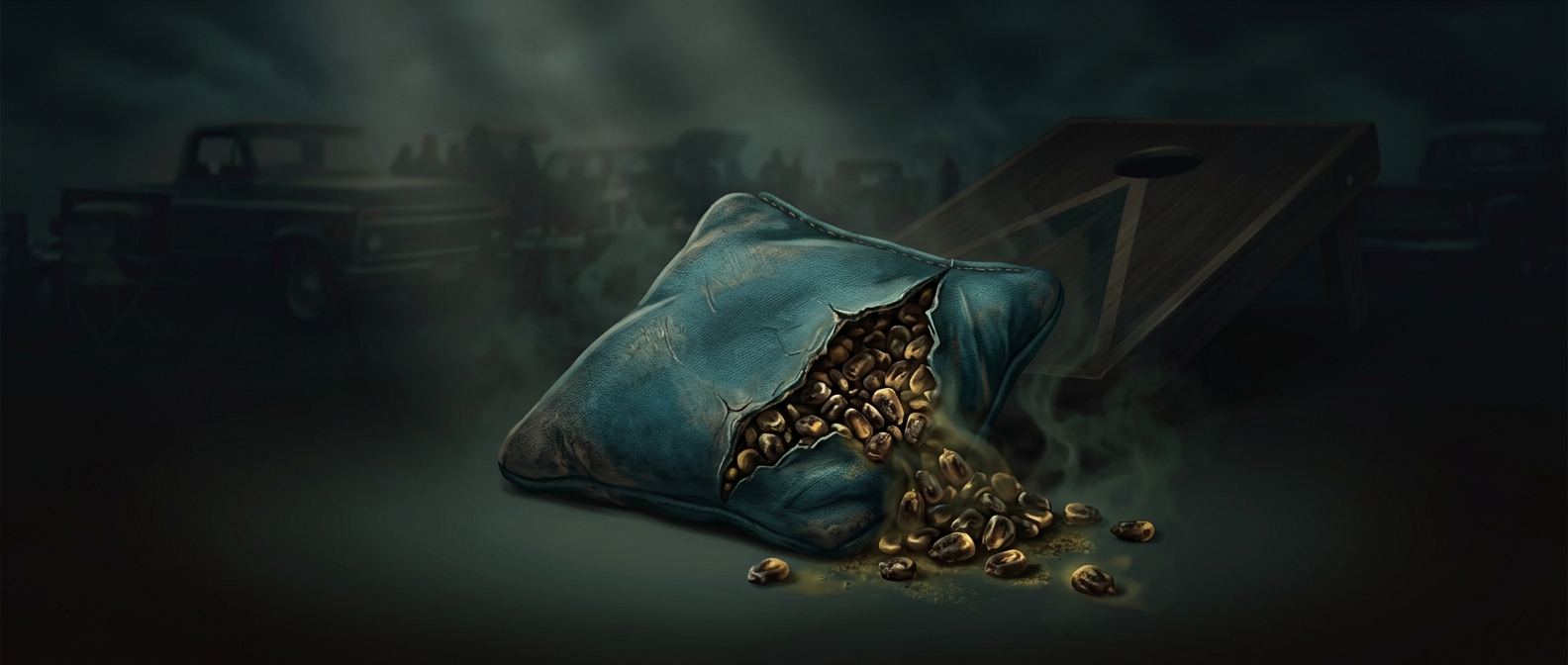
A cornhole bag is not just a pouch of filler: its two faces let a player choose how it behaves after landing. That matters because the board is both a target and a playing surface. A bag may need to travel all the way to the hole, stop in scoring position, or interfere with an opponent’s next throw.
The landing changes the plan
A player can send the slick face down when a bag needs to keep moving. That can help it pass a bag sitting in the way or slide toward the hole. Turning the grippier face down makes the landing more controlled: the bag is likelier to stay where it hits, making it useful as a blocker or as a bag positioned near the hole.
The choice is not simply “fast” versus “slow.” A sliding bag can miss its intended spot, while a bag that grips too soon may stop short. Players judge the layout, pick a landing point, and try to deliver the face that suits that shot. The throw’s arc and force still matter; the fabric does not do the work by itself.
A small design choice, repeated every turn
Because the faces offer different friction, players can respond to the board as it changes. One throw may open a path; the next may need to occupy that path or stop an opponent from using it. The same bag can serve both purposes, so choosing which side meets the board becomes part of the strategy—not just a detail of how the bag is made.