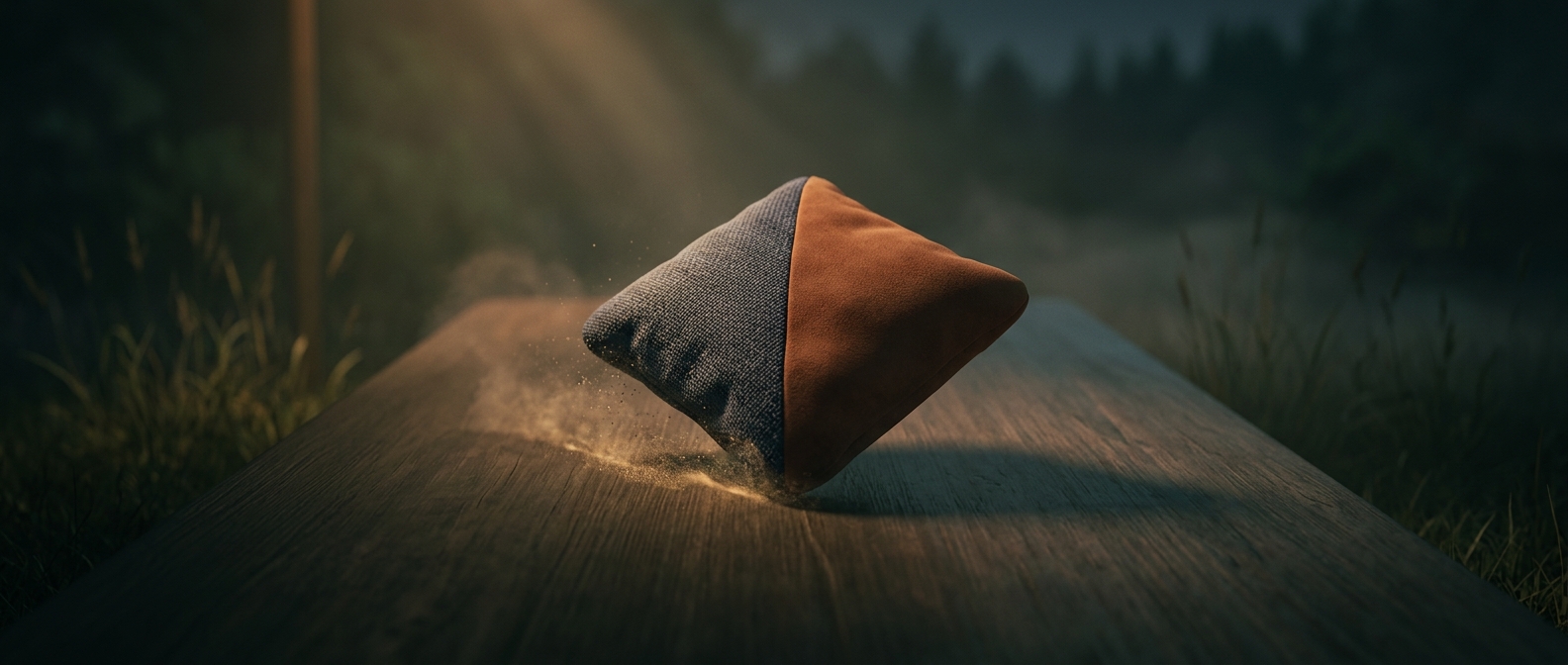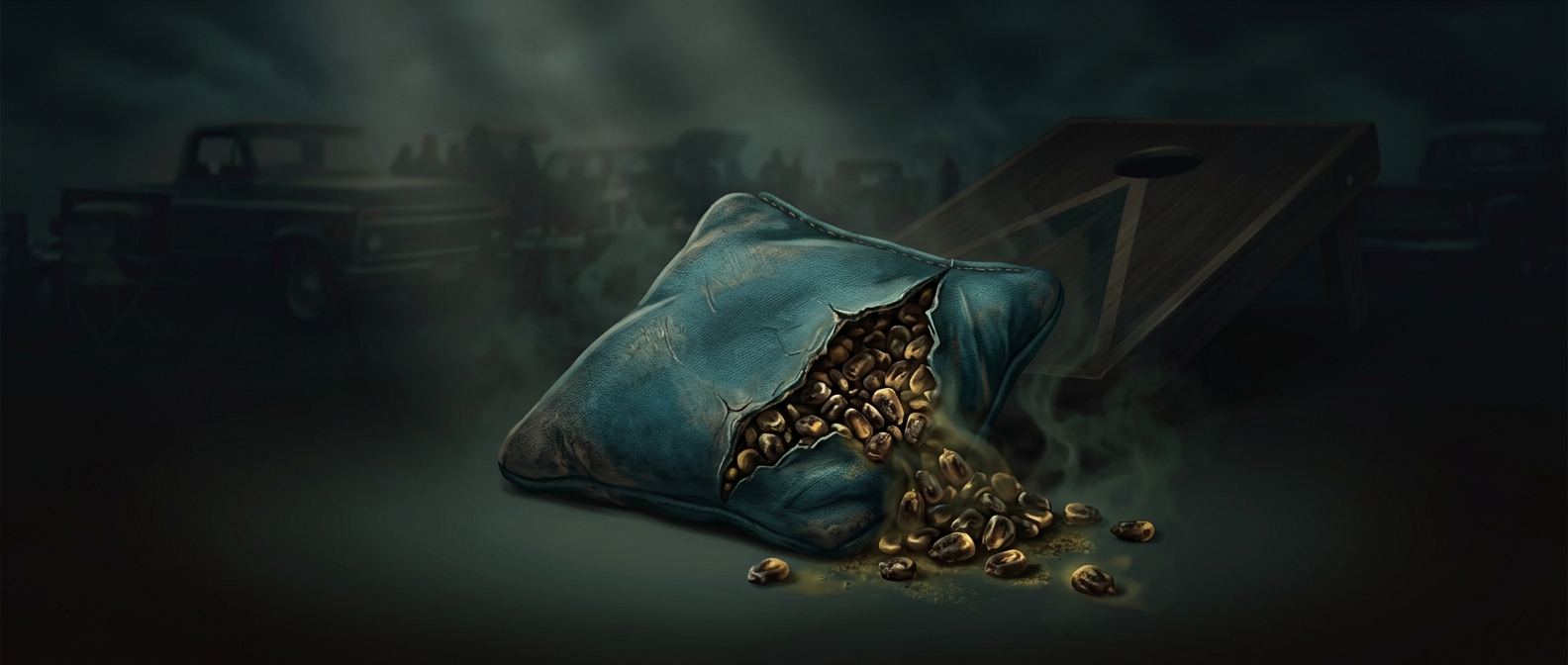
When a Game Bag Became a Seedbed
Traditional cornhole bags were not just named for corn: many were literally sewn shut around dried kernels. Dryness kept the filling stable, but a cloth bag is not a sealed container. Left in damp air or on wet ground, it could take on moisture. If kernels remained viable, that moisture could start germination; if conditions stayed wet, the filling could instead spoil.
A Small Storage Problem With a Wildlife Audience
The trouble was not that rats were drawn to the game itself. Corn is food, and a bag with a split seam—or kernels spilled during play—could leave an edible scent and meal behind. A forgotten set in a shed or garage made the problem more likely: the bags sat undisturbed, while rodents could reach the grain.
That made the filling a practical consideration, not merely a matter of how the bags felt in flight. Keeping corn-filled bags dry and checking their seams helped protect both the equipment and the place it was stored. A familiar backyard game could, in the wrong conditions, turn its own supplies into a pantry for pests.