How Chalk Lines Hold on Rough Asphalt
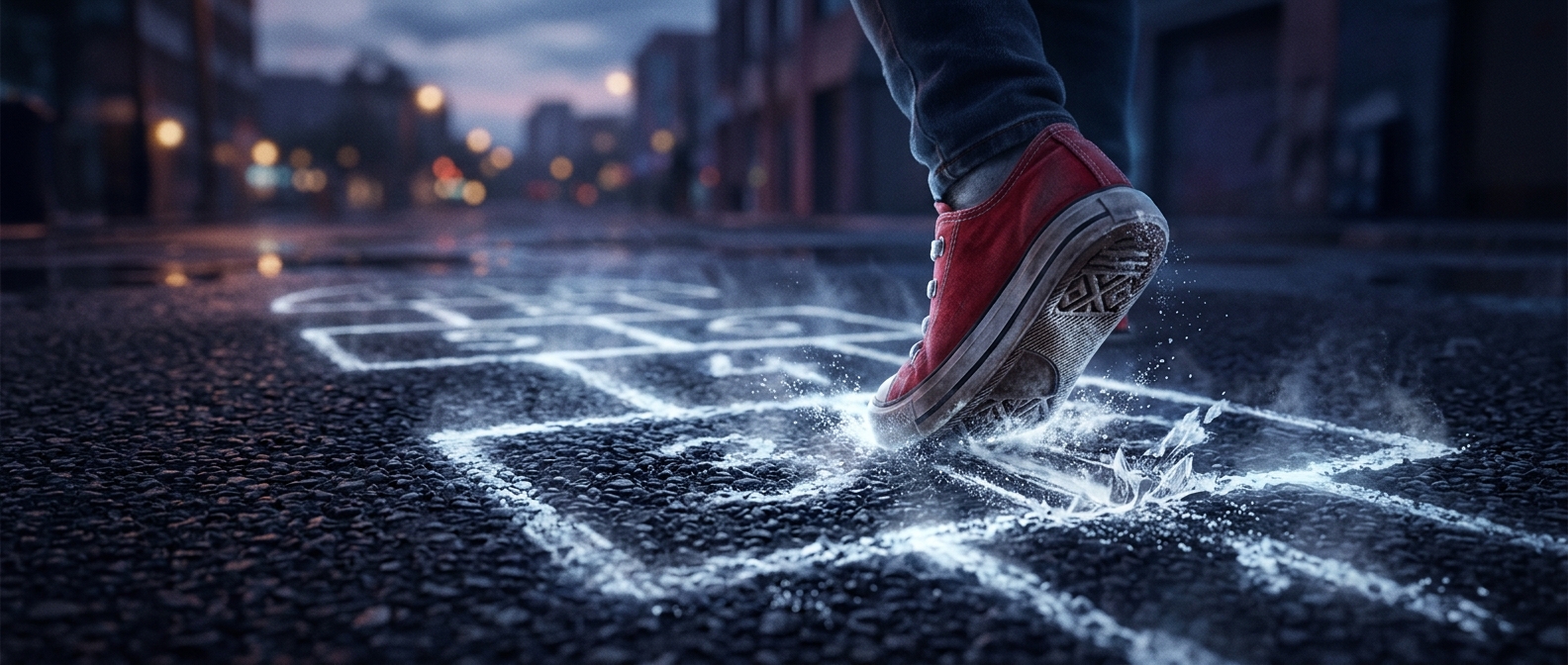
A hopscotch line survives because chalk does not need to bond chemically with the pavement. Calcium sulfate chalk is brittle: when pressed and dragged across asphalt, it sheds fine particles. The pavement’s uneven surface gives those particles tiny hollows and ridges to lodge in, helping the mark remain visible after the chalk is lifted.
A Tradeoff Between Crumbling and Marking
That crumbling is useful. A hard, smooth stick might leave little material behind, while chalk that breaks down readily can spread a broad, pale stripe in a single pass. But the same roughness that catches the powder also wears down the stick, and footsteps, wind, or rain can loosen the particles again.
The result is a temporary game board made from two ordinary materials: chalk supplies the visible lines, and asphalt’s texture helps hold them in place. Each hop can scuff the boundaries, so players may need to redraw a square before the grid disappears.