A wooden core built for repeated impact
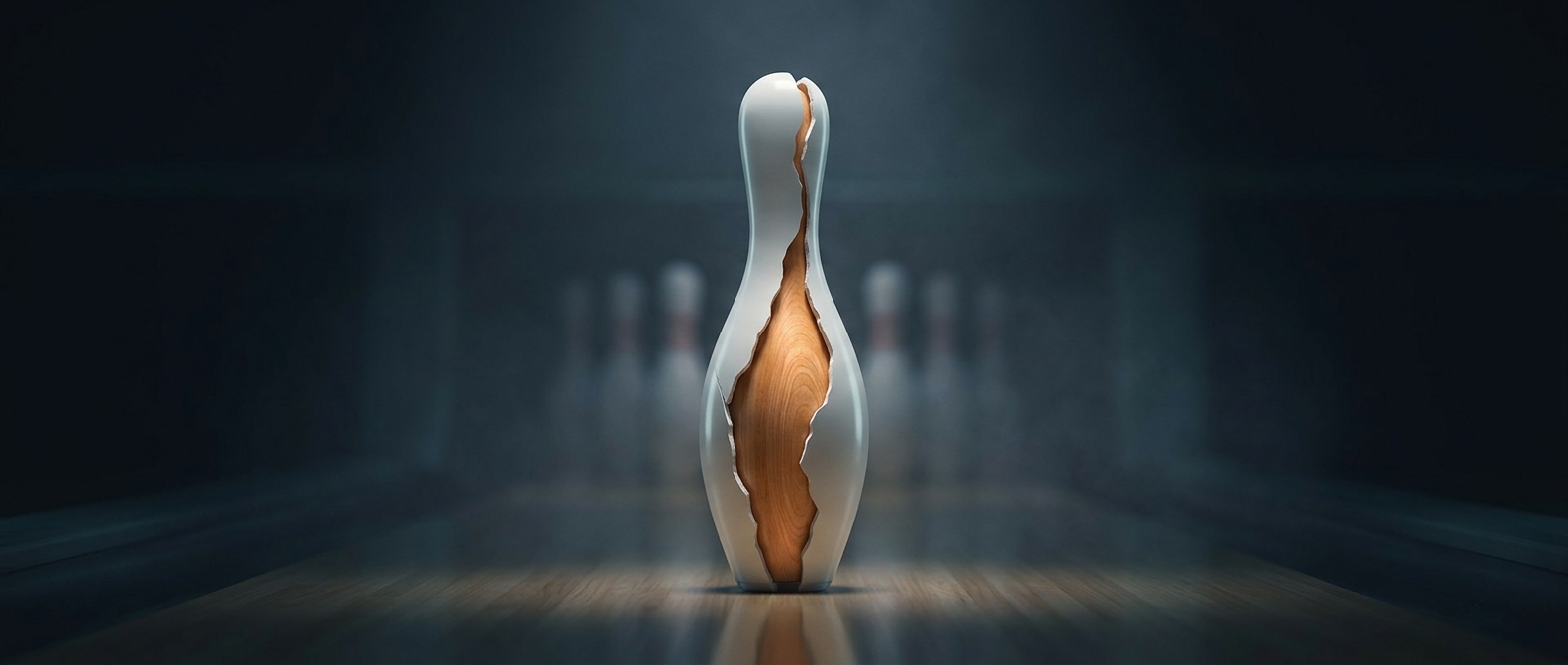
A bowling pin has to be heavy enough to stand firm, yet able to take hit after hit from fast-moving balls and flying pins. Maple provides the dense wooden body that gives the pin much of its mass and strength. The core is shaped into the familiar narrow-necked form, which helps a pin fall when struck while remaining stable on the lane.
Why cover the wood?
The glossy exterior is a protective plastic coating, not the pin’s main structure. It shields the maple from scuffs, chips, and wear as pins collide with one another and the lane machinery. It also gives the outside a durable, consistent finish, so ordinary wear does not immediately expose the wood beneath.
That pairing is a practical compromise: the maple supplies the solid body; the coating takes the surface abuse. Pins can be inspected and refinished when their outer layer wears, rather than treating the visible glossy shell as evidence that the pin is hollow or made entirely of plastic.
The impact is the point
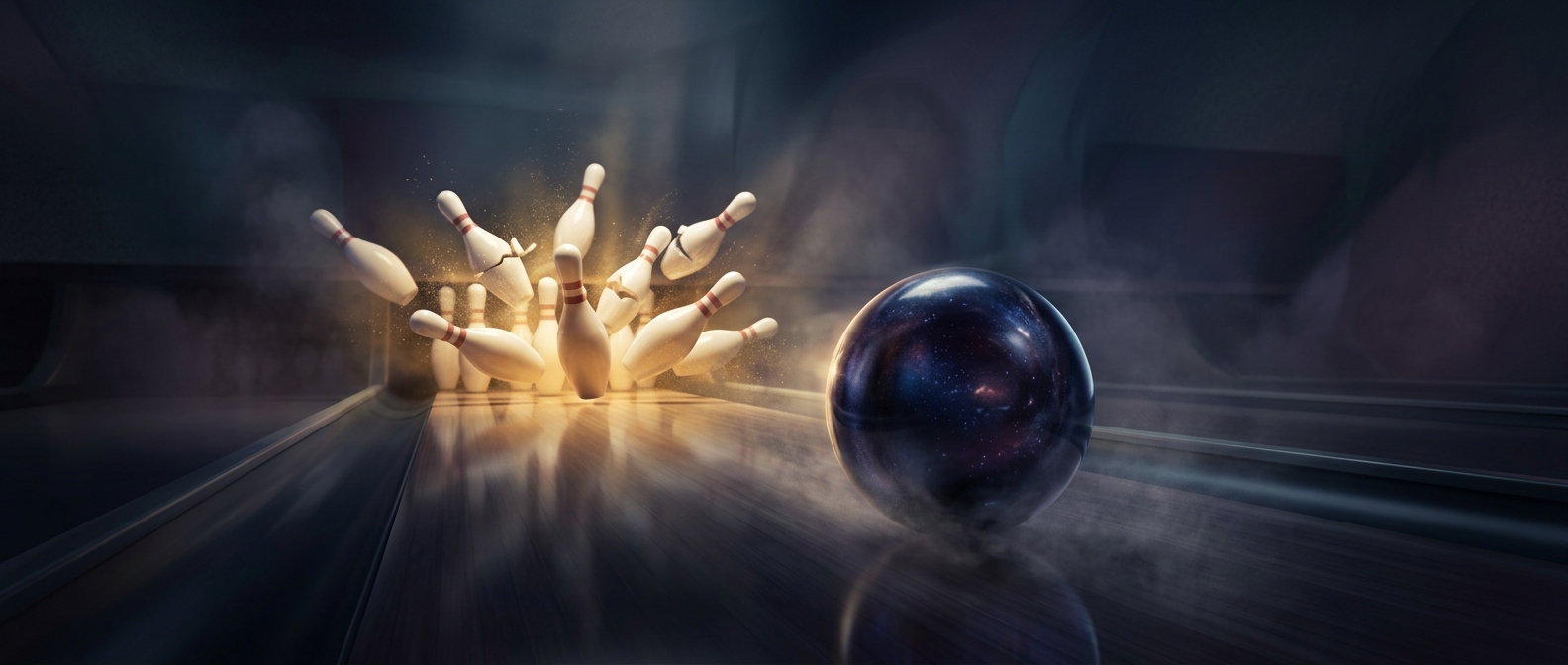
When a ball hits the front pins, their motion carries through the rack: falling pins knock into others, spreading the collision across the lane. The wooden mass helps make those impacts substantial, while the familiar shape lets pins tip and scatter. The shiny finish is only the outermost layer of a piece of equipment designed to survive that chain of crashes.