A controller cable set the room’s playing distance
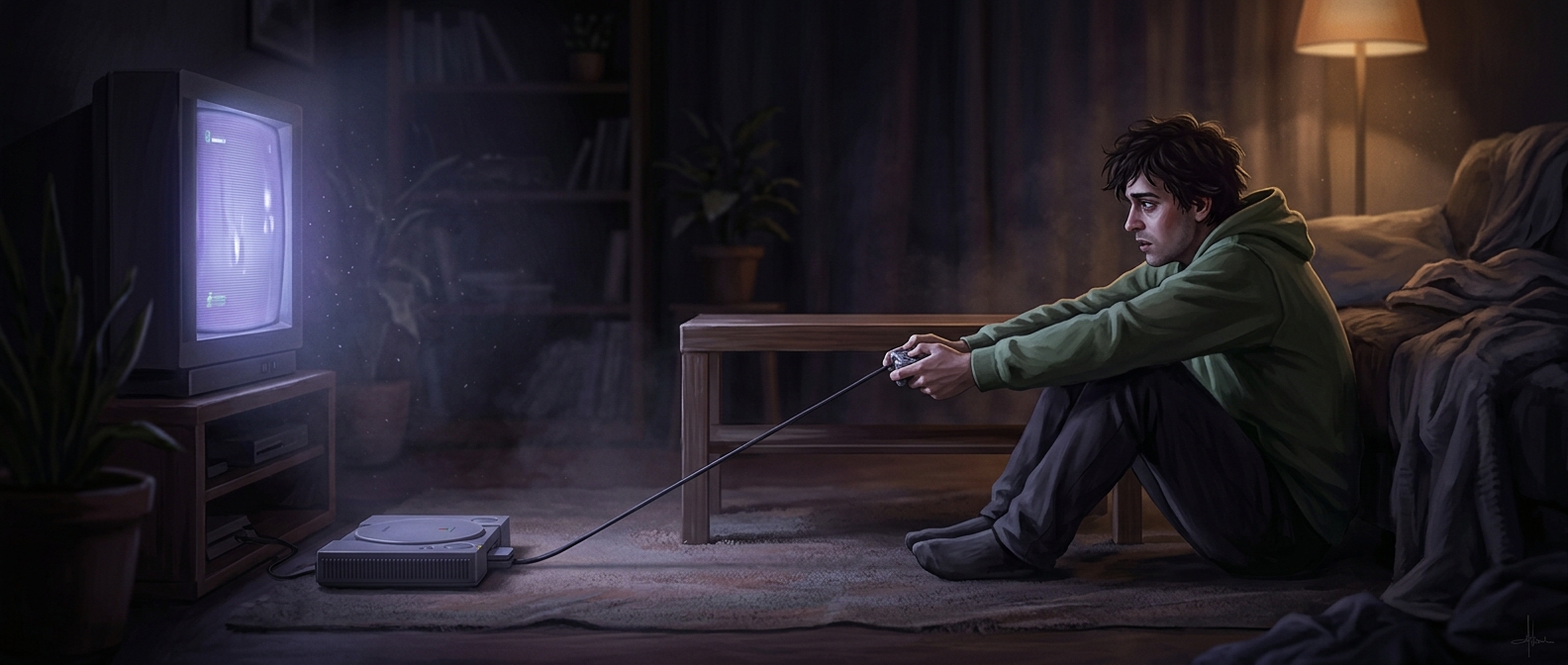
The PlayStation’s wired controller tied the player physically to the console: the cord had to reach from a front-facing controller port to wherever someone sat. In a compact setup, that was easy. In a living room where the console sat beside the television and players settled onto a sofa farther away, the same cord could dictate where they had to sit—or where the console had to be moved.
That constraint came with a straightforward benefit. A wired controller drew power and sent button inputs through its cable, so players could plug it in and play without charging a battery or pairing a wireless connection. The tradeoff was that the cord became part of the room’s layout, not just a detail of the controller.
The wire shaped multiplayer, too
With two players, each controller needed a clear path back to the console. Cords could cross the floor, catch on furniture, or tug if someone shifted position. The practical result was a play area clustered around the machine, especially when the television and console were arranged for watching rather than gaming.
That made the short reach memorable: the PlayStation could bring a game to the living room, but its controllers still drew an invisible boundary around the console. To sit farther away, players had to change the setup or use a longer cable—not simply lean back.