How a chart is assigned to a sect
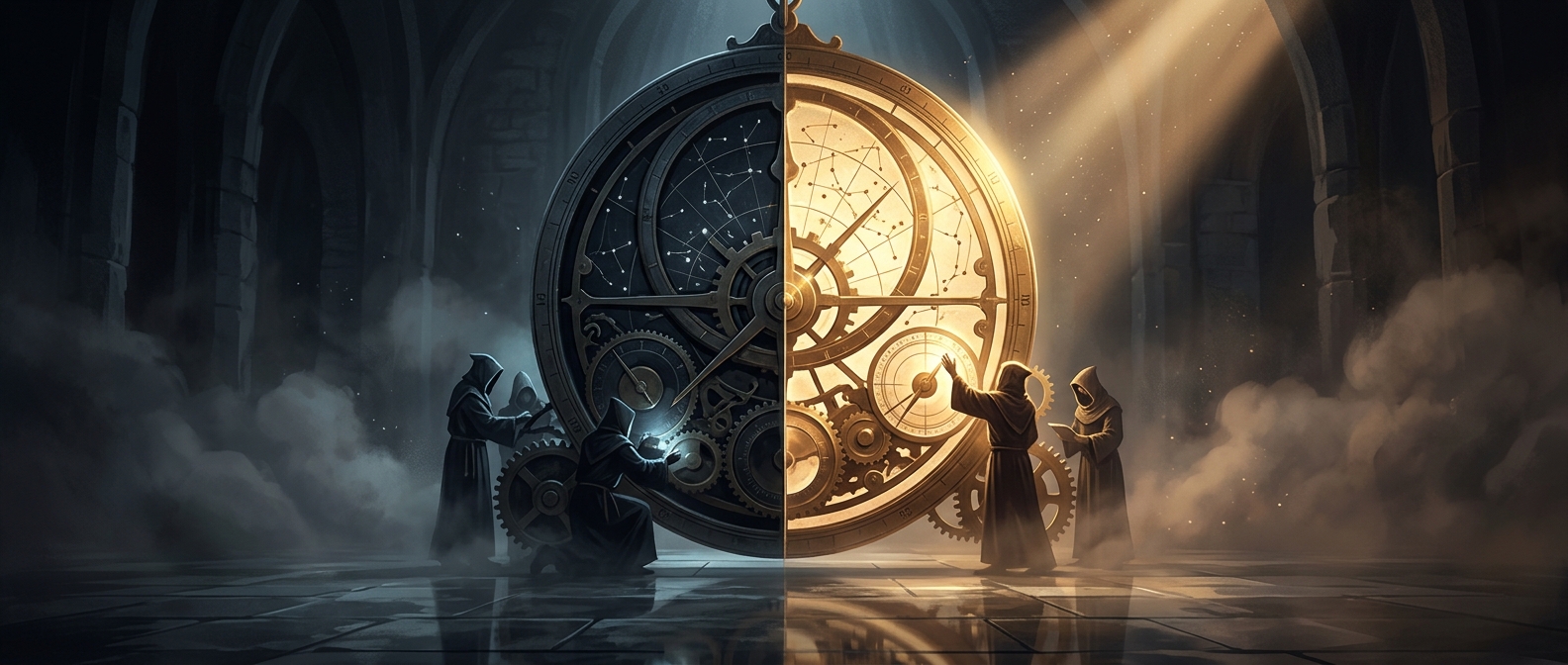
In traditional astrology, sect means a chart’s day-or-night category. The key is not simply the clock time: astrologers look at whether the Sun was above the local horizon at the moment of birth. If it was, the chart is diurnal; if it was below, the chart is nocturnal. That makes the same clock time count differently depending on location and season.
The horizon acts as the dividing line because it separates the visible, sunlit part of the sky from the hidden, nighttime part. Astrologers use the birth time and place to position the Sun in the chart, then assign the chart to one of these two groups.
Why the distinction matters
Sect determines which planets are considered more in tune with the chart’s conditions. In the traditional scheme, the Sun, Jupiter, and Saturn belong to the daytime group; the Moon, Venus, and Mars belong to the nighttime group. Mercury’s grouping can vary with its relationship to the Sun.
This is not just a label for whether someone was born in daylight. It changes how astrologers interpret planetary roles and relative ease or difficulty: a planet is generally treated as better suited to act when it belongs to the chart’s sect. So a chart’s dividing line is literal—the local horizon at birth—but its consequence is interpretive, shaping how the rest of the chart is read.