A Playable Memory Inside Uncharted 4
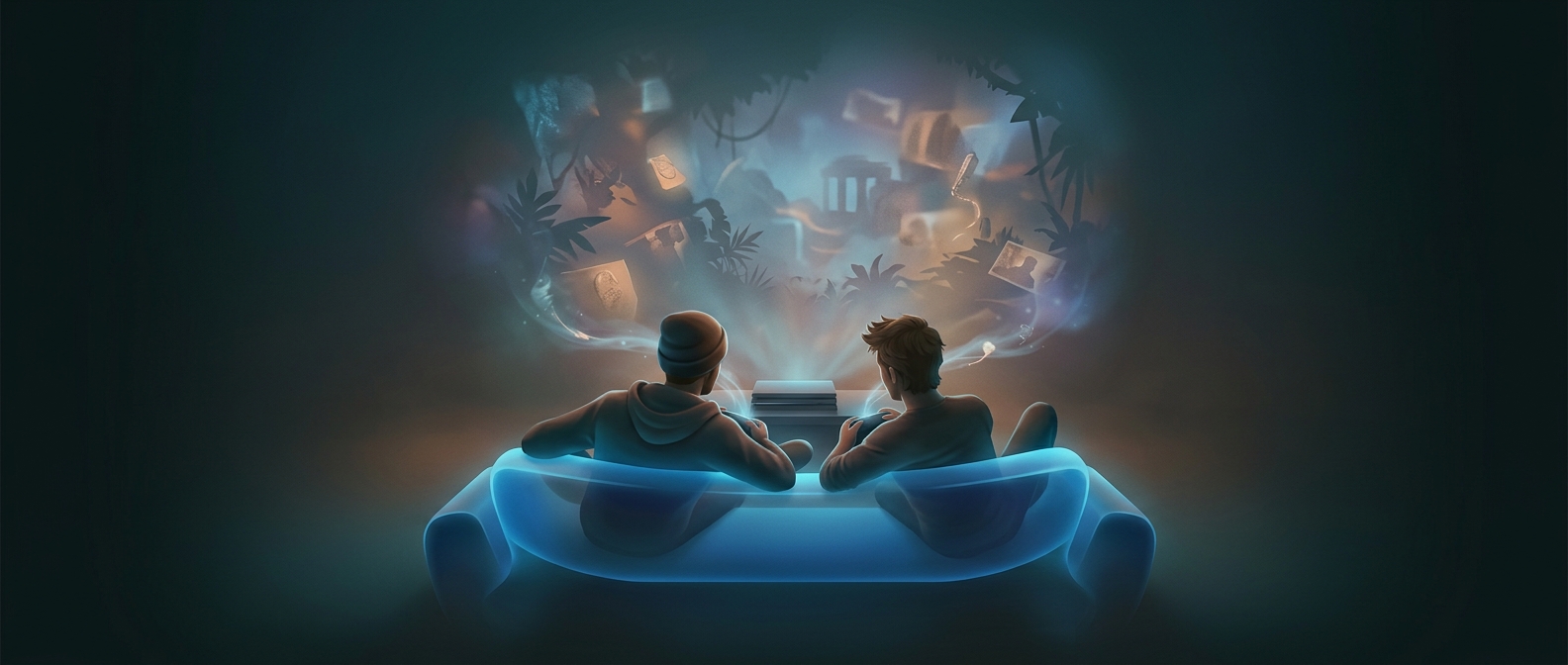
The sequence works because the game briefly changes what “playing” means. Nathan Drake is not simply shown holding a controller while a cutscene supplies the action: the player takes control of a Crash Bandicoot level within Uncharted 4. The couch and television frame the moment, but the familiar platforming is an actual interactive sequence.
Two Games, One Set of Controls
To make that switch legible, Uncharted 4 places a recognizable version of the older PlayStation game on the television and hands the player control of Crash. The controls and action temporarily follow the platformer’s logic—moving through a level and responding to its obstacles—rather than Drake’s usual third-person adventure controls.
That is a small but deliberate design challenge. A reference to an old game can be delivered as a picture or a joke; making it playable requires the player’s input to produce the expected kind of action. The sequence therefore has to work both as a scene in Drake’s story and as a short game with its own rules.
Why the Cameo Feels Different
Because the player performs the reference instead of merely watching it, the scene can evoke the experience of picking up an older game, not just recognizing its imagery. It also turns a pause in the adventure into an unexpected change of genre: for a little while, the game asks you to play as the character on Drake’s screen.
The result is more than a visual Easter egg. It is a compact demonstration of how a game can make nostalgia interactive—by giving the player the controller, even when the character already has one.