Why tooth care fell outside a doctor’s status
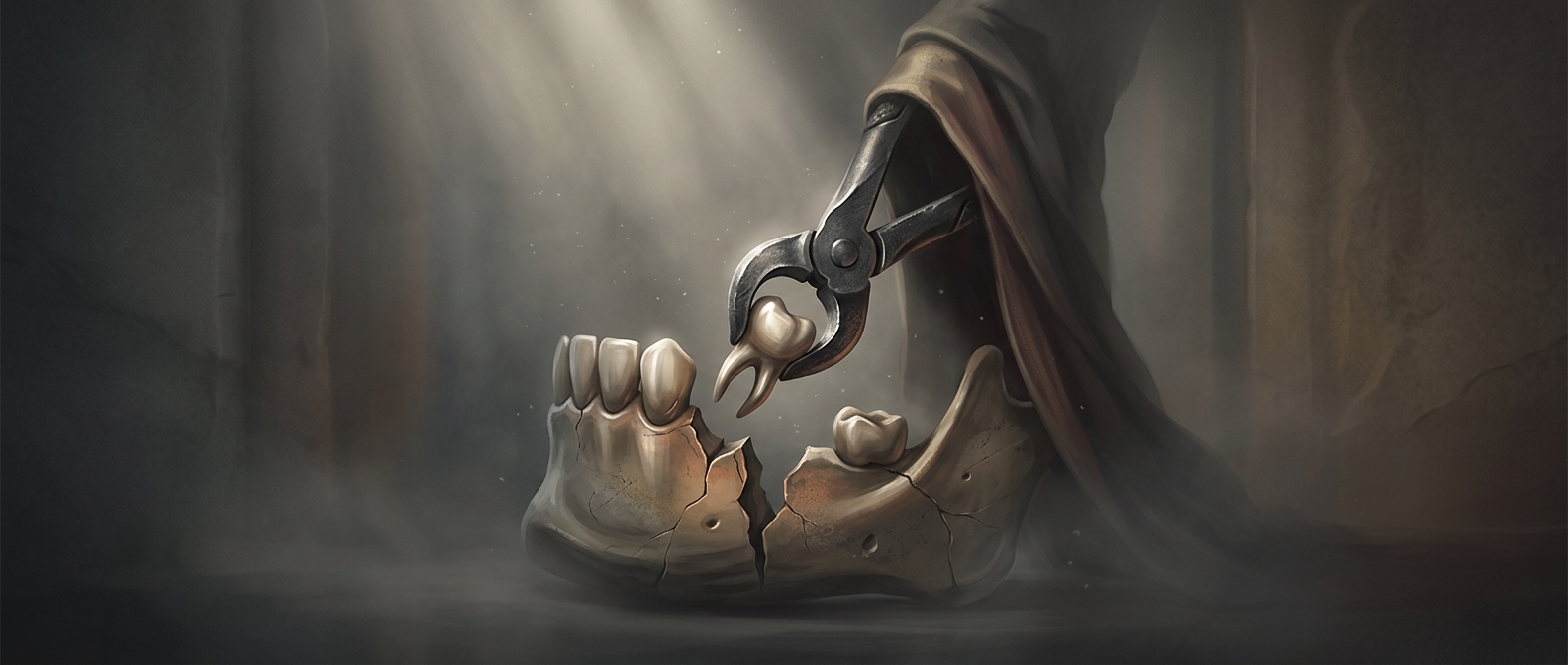
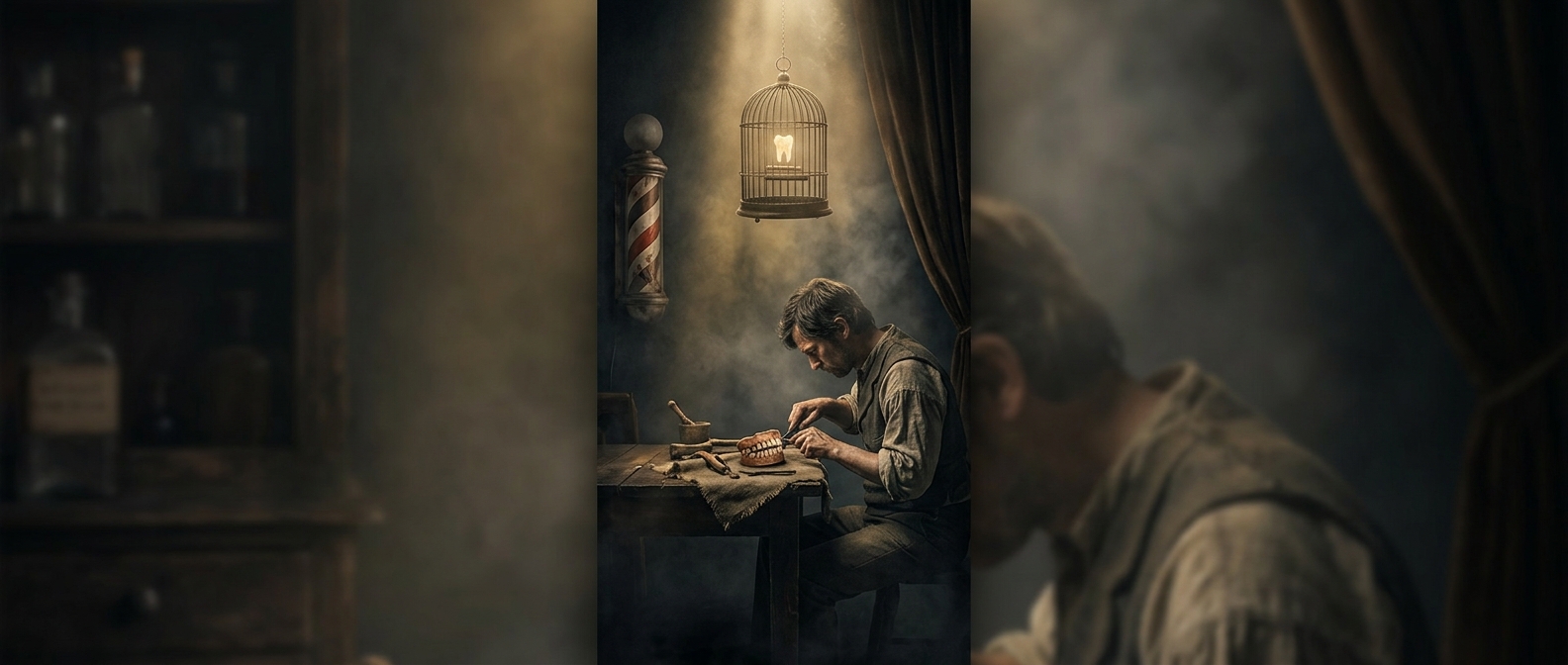
For much of history, learned medicine and hands-on treatment occupied different social ranks. Physicians were associated with book learning and diagnosing illness; pulling a tooth was physical, painful work that required instruments and practiced hands. Many doctors therefore left it to people classified as tradesmen—not because teeth were unimportant, but because the task carried low prestige.
That divide shaped who treated dental pain. A tooth-puller could acquire practical skill without belonging to the educated medical profession. Yet extraction was often the most direct way to address a badly damaged or painful tooth. Before modern pain control and restorative dentistry, the treatment itself could be an ordeal.
The square as a treatment room
Some tooth-pullers worked in public, turning an extraction into a visible event. Drums could mask the patient’s cries, but they also reveal the conditions of the work: the operator had to act amid an audience, with little privacy and no quiet clinical setting. For someone in pain, the public performance could make a frightening procedure more bearable—or simply make it harder to hear what was happening.
The arrangement also exposed the gap between skill and status. A person might depend on a tooth-puller’s steady hand while still regarding the work as beneath a physician. Dentistry’s later professional standing had to overcome that inherited boundary: care of the mouth was not merely a rough trade, but a specialized part of health care.