How the autonomic nervous system adjusts the body
The autonomic nervous system is a network of nerves linking the brain and spinal cord to organs, glands, and blood vessels. It continually adjusts body functions in response to what is happening inside and around you. When you step into bright light, for example, nerves trigger the pupils to narrow; when your body needs to shed heat, signals activate sweat glands.
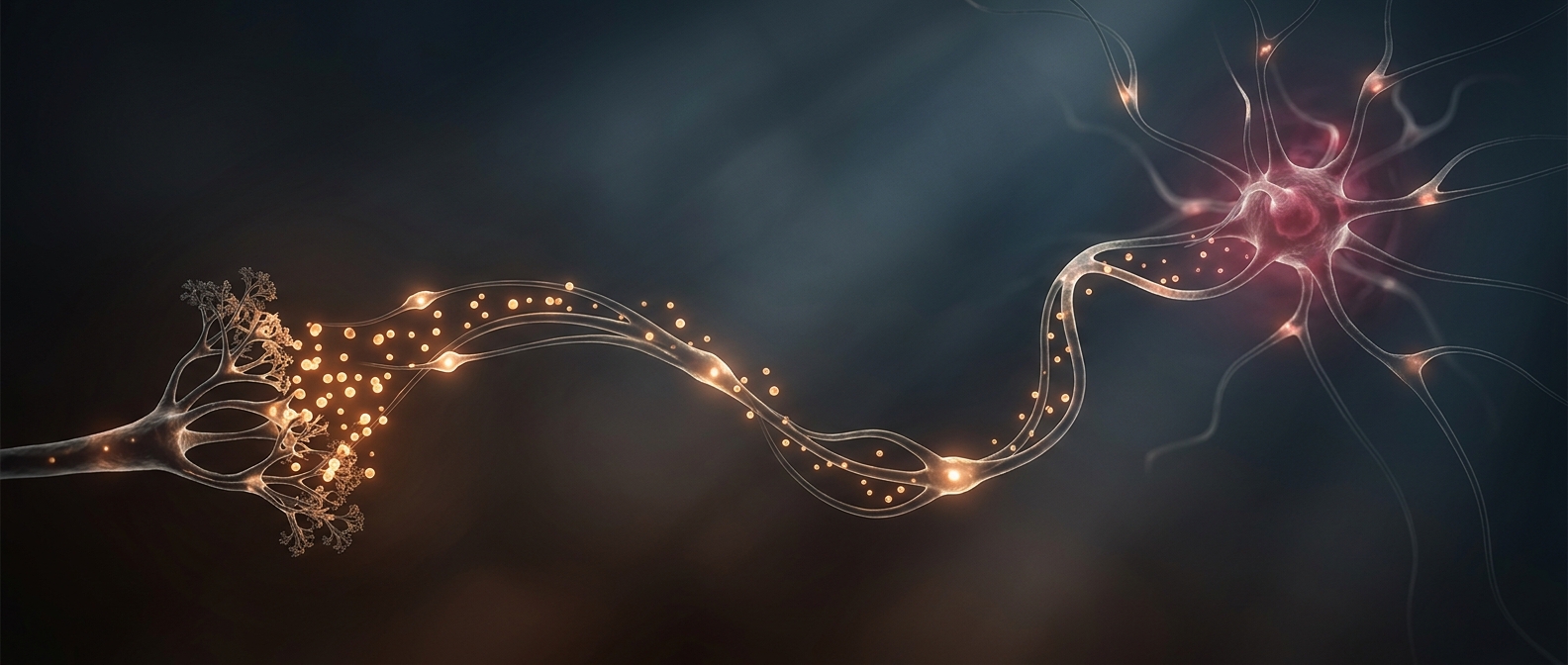
These signals travel along nerve pathways to their targets. Many pathways use a relay: one nerve cell carries a message from the central nervous system to another, which delivers it to an organ or gland. The pattern and chemical signal help determine the effect. Pupils can widen or narrow, while sweat glands receive signals that increase sweating.
Two branches, coordinated adjustments
The system is often described through two branches. The sympathetic branch helps prepare the body for action, while the parasympathetic branch supports functions such as digestion and recovery. They are not simply an “on” switch and an “off” switch: their activity can vary by organ, and their effects may work in opposition or complement each other.
Because these adjustments run continuously, you do not need to consciously manage each heartbeat, pupil response, or burst of sweating. That leaves deliberate attention available for tasks such as reading or speaking. The system’s work becomes noticeable mainly when its automatic changes affect what you feel or see—like damp skin on a hot day or pupils adjusting as you move from bright sunlight indoors.