How glutamate brings a neuron closer to firing
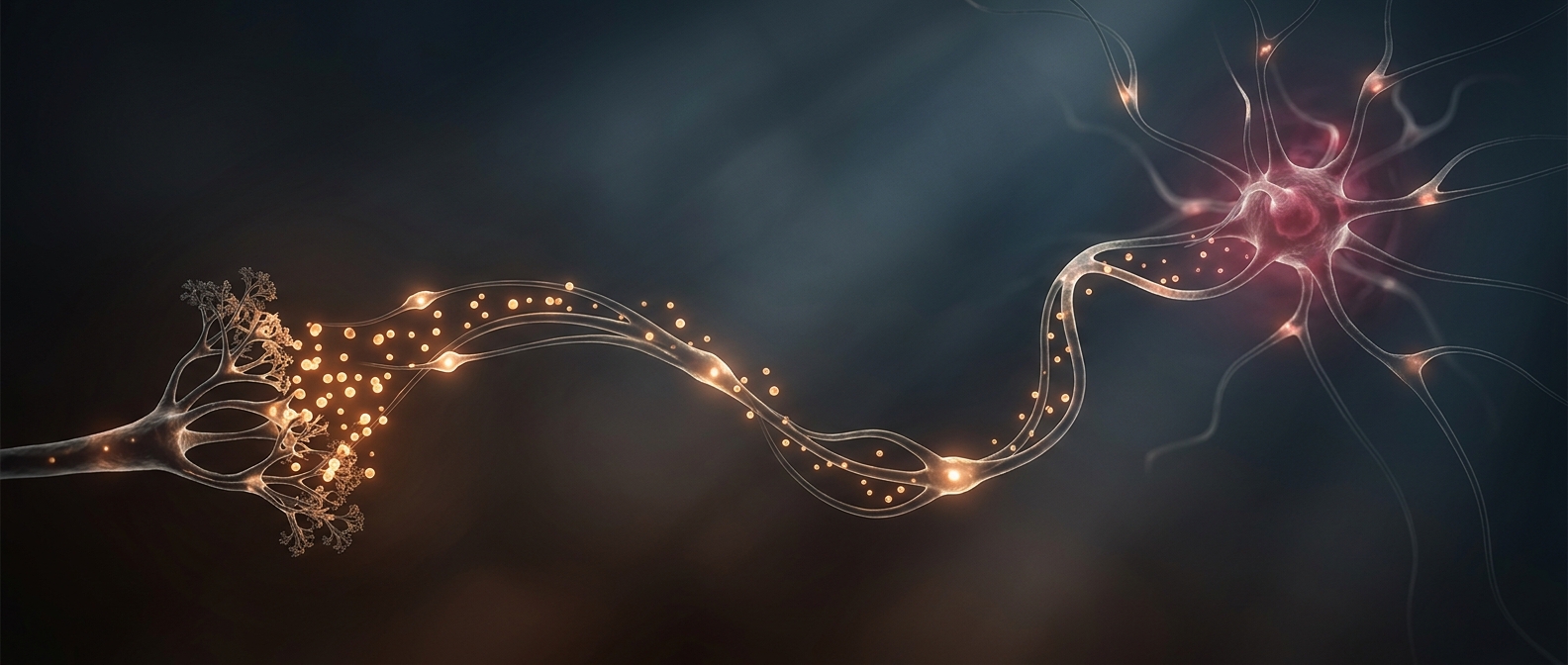
Glutamate’s effect begins when it crosses the microscopic space between neurons and attaches to receptor proteins on the receiving cell. Many of these receptors open channels in the cell membrane, letting electrically charged particles flow in. The resulting shift in voltage is called depolarization: it moves the neuron closer to the threshold at which it sends its own electrical impulse.
One glutamate signal usually does not make a neuron fire by itself. The cell combines incoming signals from many connections. Excitatory inputs such as glutamate push it toward firing; inhibitory inputs, often involving other chemical messengers, push in the opposite direction. Whether the neuron fires depends on the balance of those inputs and where they arrive on the cell.
Why the signal must be cleared
Glutamate also helps connections change their strength. When activity repeatedly links particular neurons, glutamate receptors can contribute to adjustments in how readily those cells influence one another—a process involved in learning and memory. The same powerful signaling system needs careful control, however: glutamate left outside cells for too long can overstimulate neurons and harm them.
Nearby support cells help remove glutamate from the gap after it has done its work, ending the signal and recycling the molecule. That cleanup lets glutamate carry rapid messages without leaving the receiving neuron under constant pressure to fire.