A messenger that keeps the alarm going
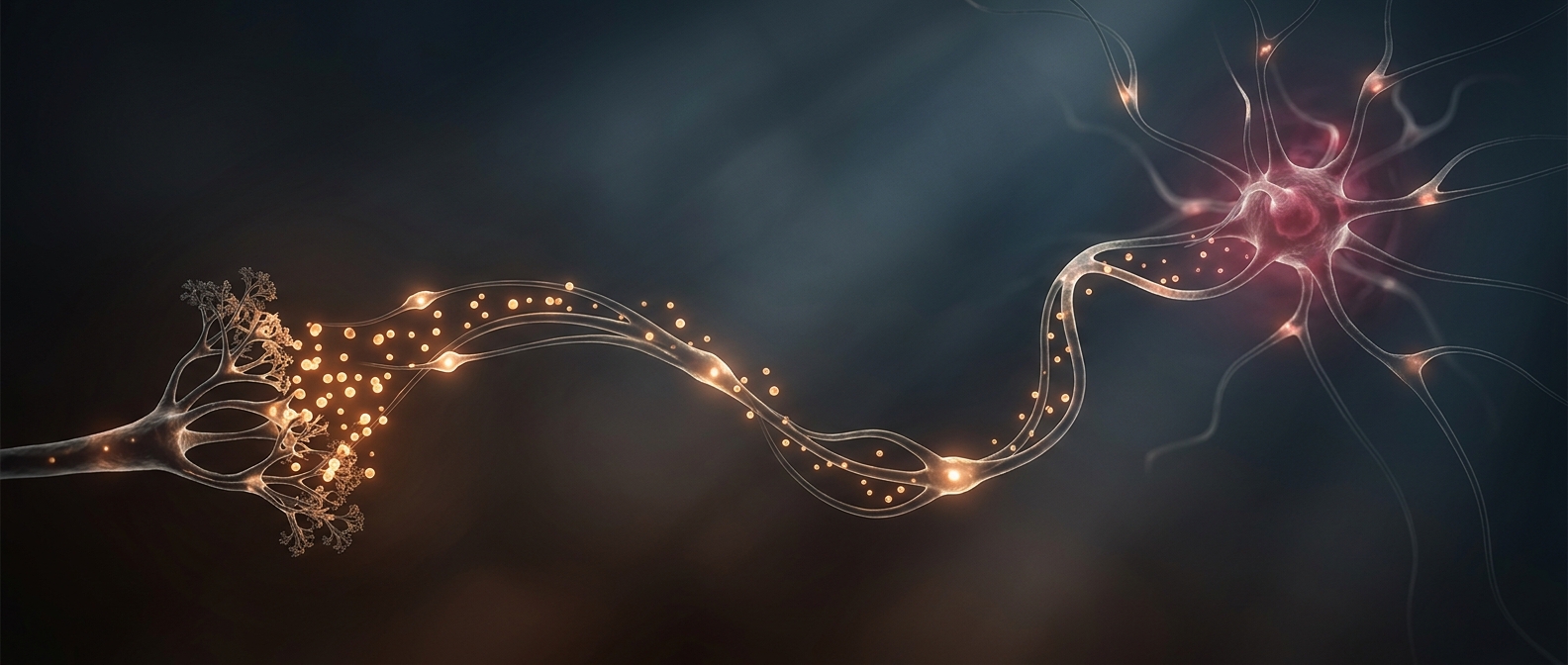
Substance P is a small protein-like chemical messenger made by certain sensory nerve cells, including nociceptors—the nerves that detect potentially damaging heat, pressure, or chemicals. When tissue injury activates these nerves, they carry electrical signals toward the spinal cord. At the spinal cord’s dorsal horn, their endings release Substance P into the tiny gap between nerve cells.
There, it binds to NK1 receptors on receiving cells. This helps pass the signal onward into pathways that reach the brain, where the activity contributes to the experience of pain. Substance P works alongside other messengers, including glutamate; it is one part of the relay, not a self-contained packet of pain.
Why the signal can linger
Compared with fast-acting messengers, Substance P can support a slower, more sustained response in spinal circuits. That matters when an injury continues to threaten tissue: the nervous system needs to keep the warning active long enough to prompt protection, rather than register only a brief flash of sensation.
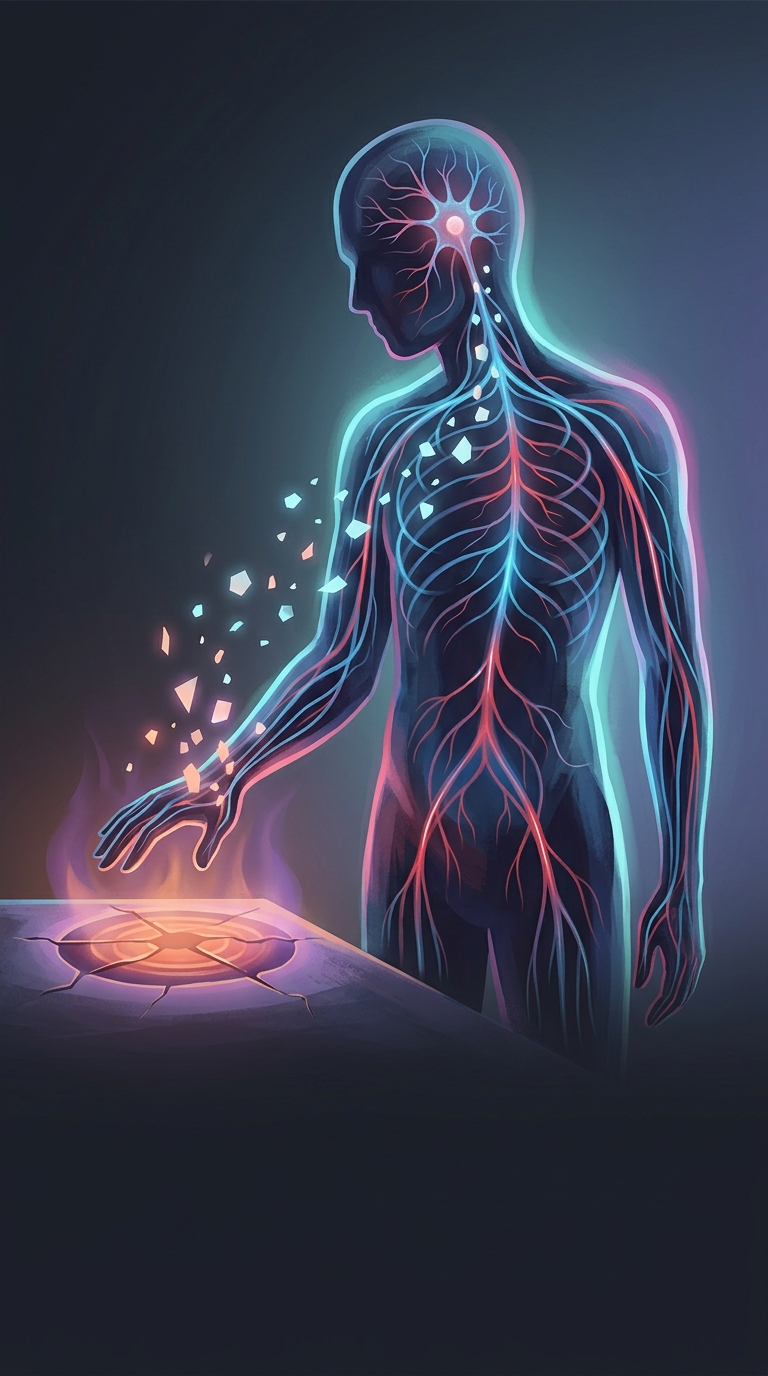
Substance P also acts near the injury. Released from sensory nerve endings in the tissue, it can widen small blood vessels and make them leakier, helping produce local swelling and redness. This is one way pain signaling and inflammation become linked: the messenger helps carry an alarm toward the brain while also influencing the area that triggered it.
The result is not that Substance P creates agony by itself. It helps shape and sustain the body’s warning system—one chemical link between damaged tissue, the spinal cord, and the brain.