Why a tiny cut can hurt so much
Pain depends less on how much tissue is damaged than on where the damage occurs and which nerves are affected. Fingers—especially the pads—are packed with sensory nerve endings that help detect texture and pressure. A shallow cut there can activate many nearby pain-sensing nerves without reaching deep enough to cause the more obvious bruising or crushing that might accompany a larger injury elsewhere.
The wound stays in the action
A cut can also keep announcing itself. Fingers bend constantly, and their skin is repeatedly pressed against objects. That movement can tug at the injured edges, while ordinary contact exposes the area to friction. The cut is small, but it sits on a busy, highly sensitive part of the body.
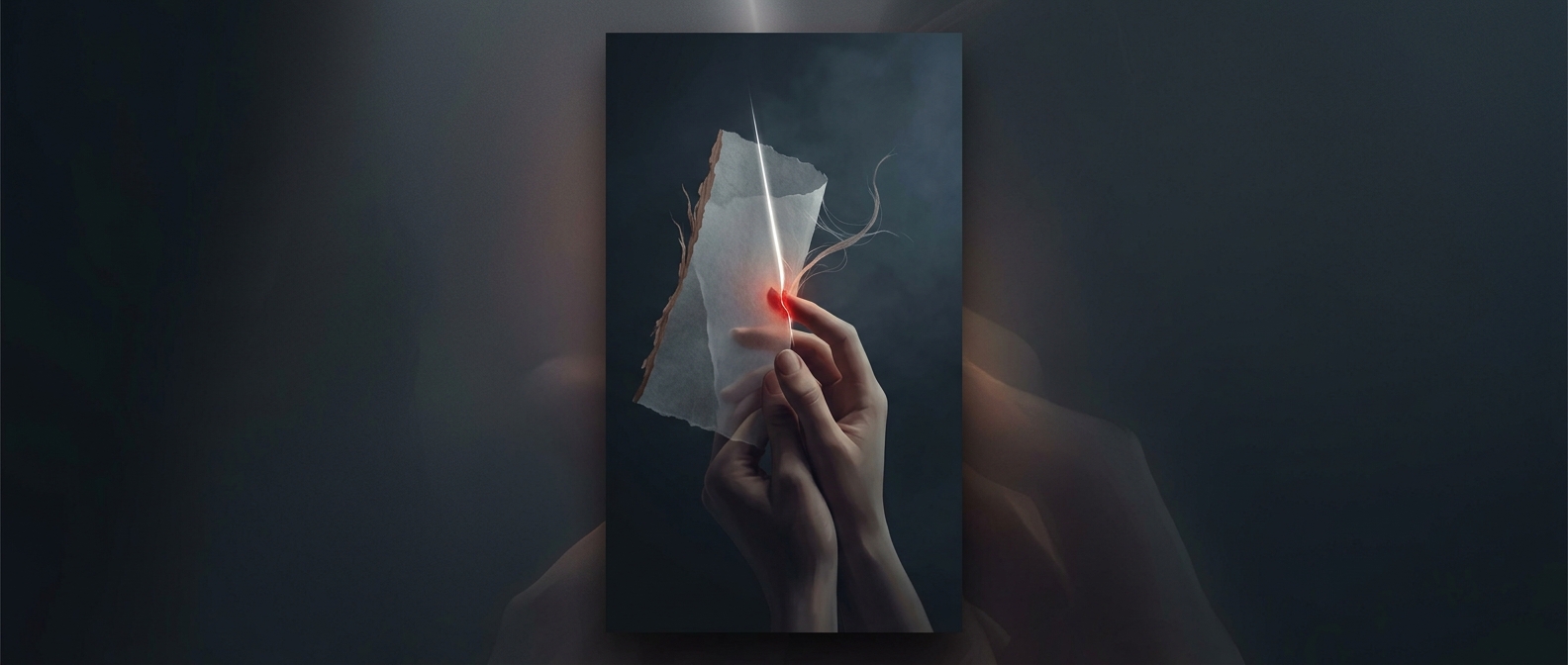
Paper’s edge is not necessarily as smooth as it looks. Its fine fibers can make contact less like a perfectly clean incision and more like a tiny scrape-and-split. The result is a narrow break in the skin that may sting sharply even though it removes very little tissue.
The mismatch is the memorable part: a light object can cause a painful injury when its edge concentrates force on a nerve-rich patch of skin.