How a Bar Bike Turns Pedaling Into Motion
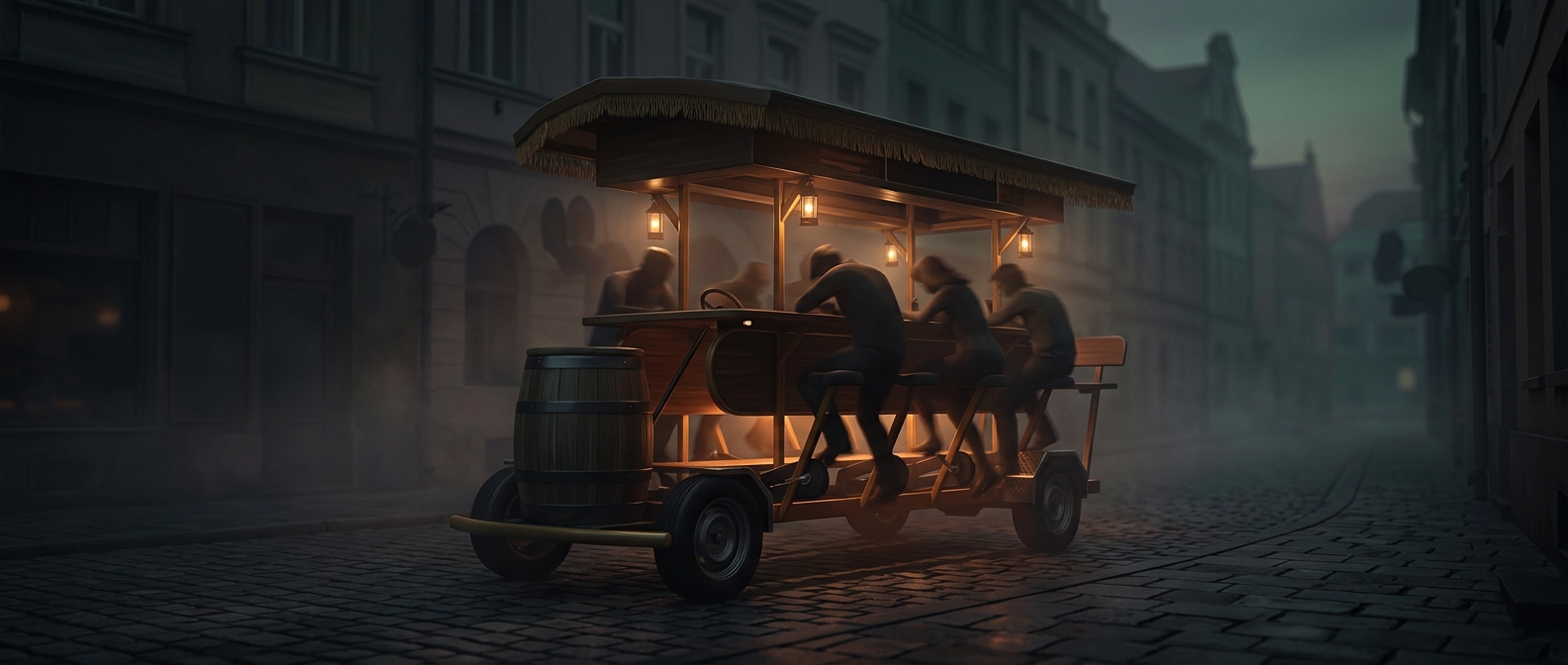
Each passenger’s pedals are part of the vehicle’s drive system: pushing a pedal turns a crank, and the mechanism carries that rotation to the wheels. The bike moves when the group’s combined effort overcomes resistance from the vehicle, its occupants, and the road. More riders contributing can make that effort easier to share, though the power still comes from people rather than from the bar itself.
The driver has a separate job. Steering and braking stay in the driver’s hands, so passengers can supply motion without each needing to control the vehicle’s direction or stopping. That division of labor makes the ride less like a collection of individual bicycles and more like a small, human-powered vehicle with one person at the controls.
Why the Group Changes the Ride
Pedaling is not just a novelty: it affects whether and how quickly the bike moves. If passengers ease off, the group supplies less power; if they push together, they help keep the vehicle rolling. The driver must still manage its movement and bring it to a stop, while the riders provide the effort that makes the trip possible.
That creates an unusual bargain for a moving bar: the ride itself depends on participation. The first round may arrive before everyone has found a rhythm, but getting anywhere means turning the group into the engine.