A flying idea without a workable power source
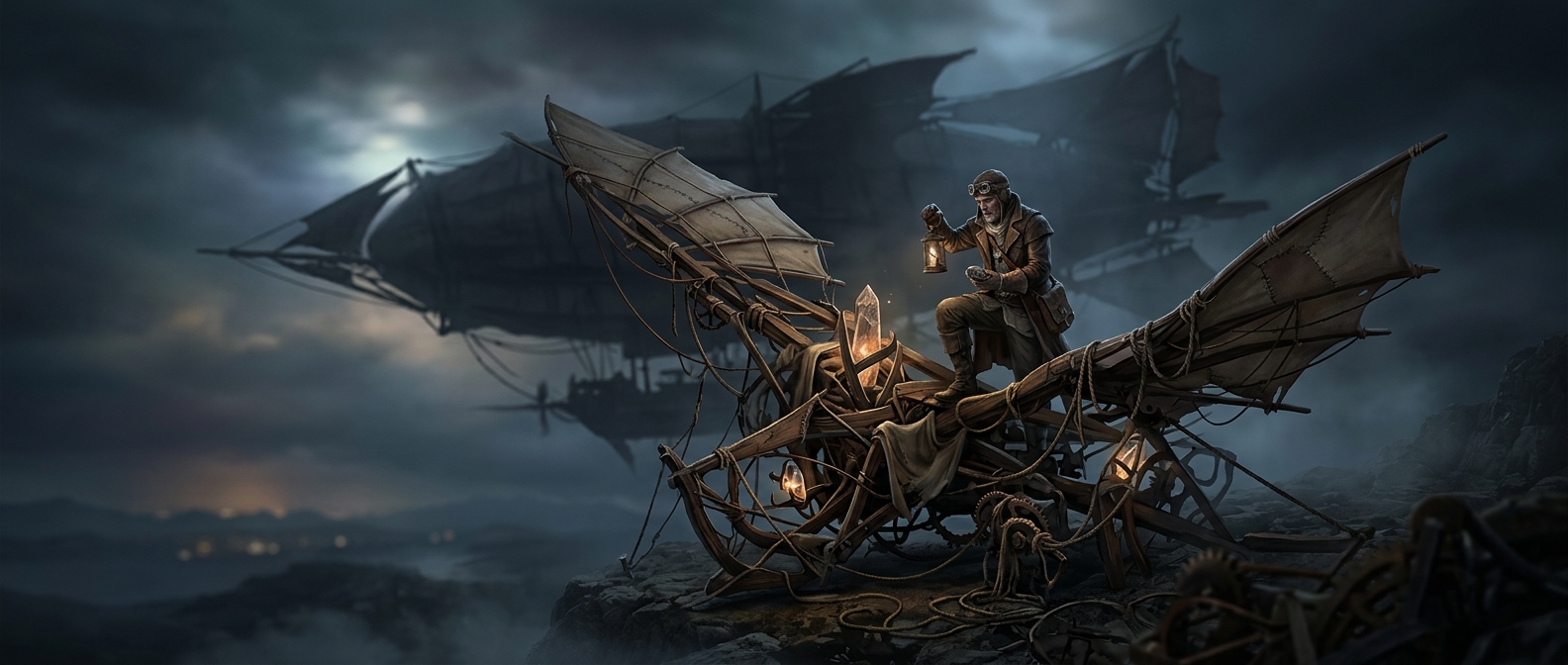
Swedenborg’s design imagined a person driving a pair of large wooden wings by flapping them. The drawing tackled a visible part of flight—wings moving through the air—but left a harder problem unresolved: how to make that motion produce enough lift to raise the whole machine and its pilot.
A wing does not lift simply because it is broad or moves up and down. It must push air in a useful direction on each stroke, while the frame stays light enough to be lifted. The pilot would have had to supply the energy to move the wings and overcome the weight of the wooden structure at the same time.
Why human-powered flapping was the obstacle
Human muscles can move limbs forcefully, but a full-size machine demands sustained power. Large, heavy wings would take considerable effort to accelerate and reverse with every flap. If the pilot could not keep them moving fast enough—or if the wings’ motion did not generate lift efficiently—the machine would remain on the ground.
That gap between a plausible shape and a functioning aircraft is what makes the plan revealing. It turned the dream of personal flight into a mechanical proposal, but the proposed mechanism could not deliver the power flight required. In Swedenborg’s design, the pilot was not merely steering the machine; the pilot was also its engine.