Why the séance cabinet mattered
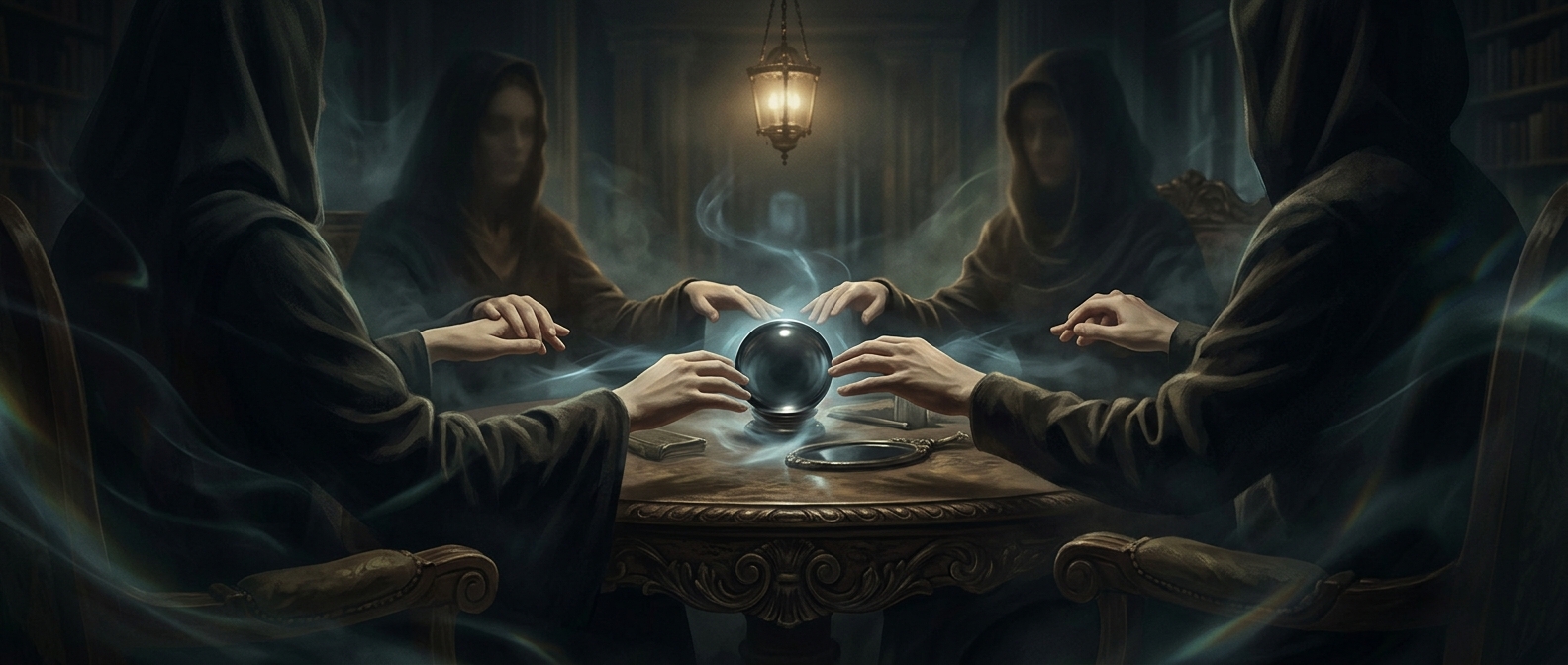
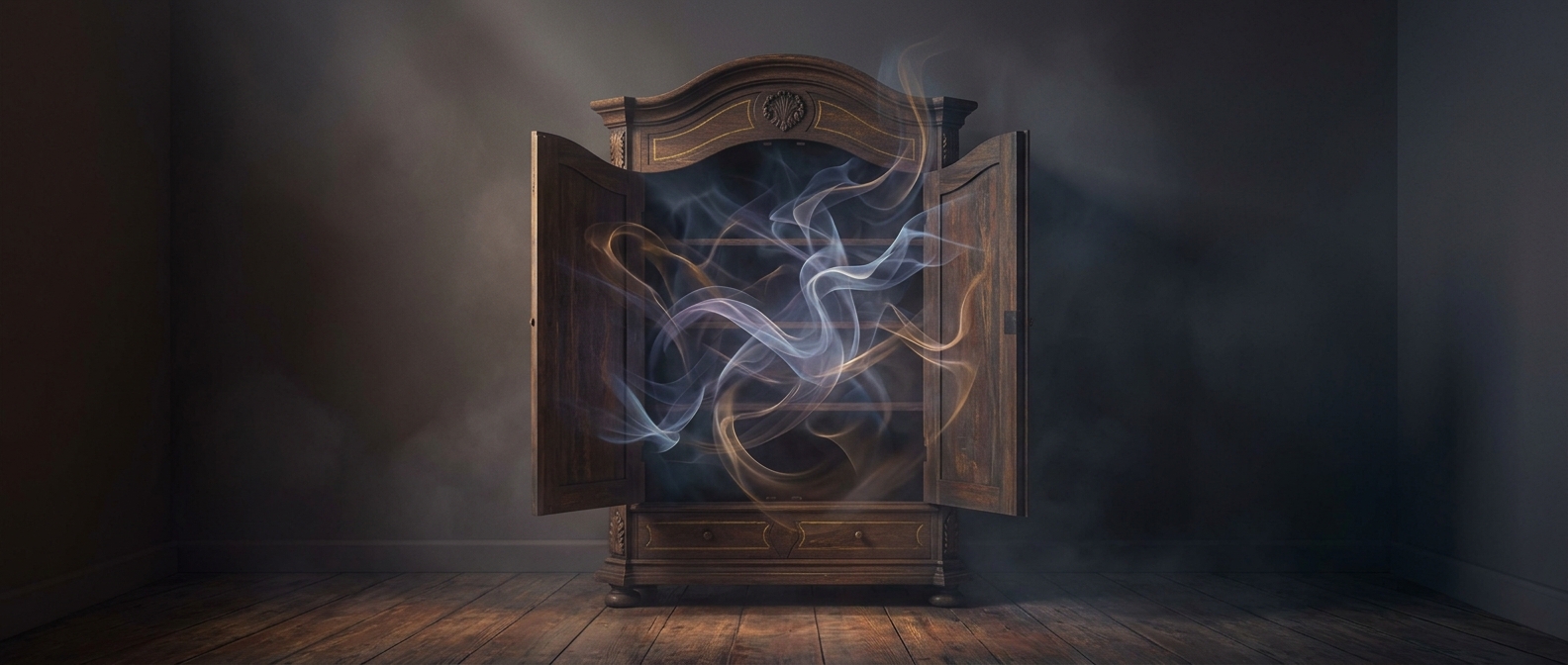
A spirit cabinet was a small, enclosed space used during some séances, gatherings where participants tried to communicate with the dead through a medium. Its darkness was part of the explanation: believers said it helped spiritual forces gather, while the cabinet also gave the medium a place where movements could not be watched clearly.
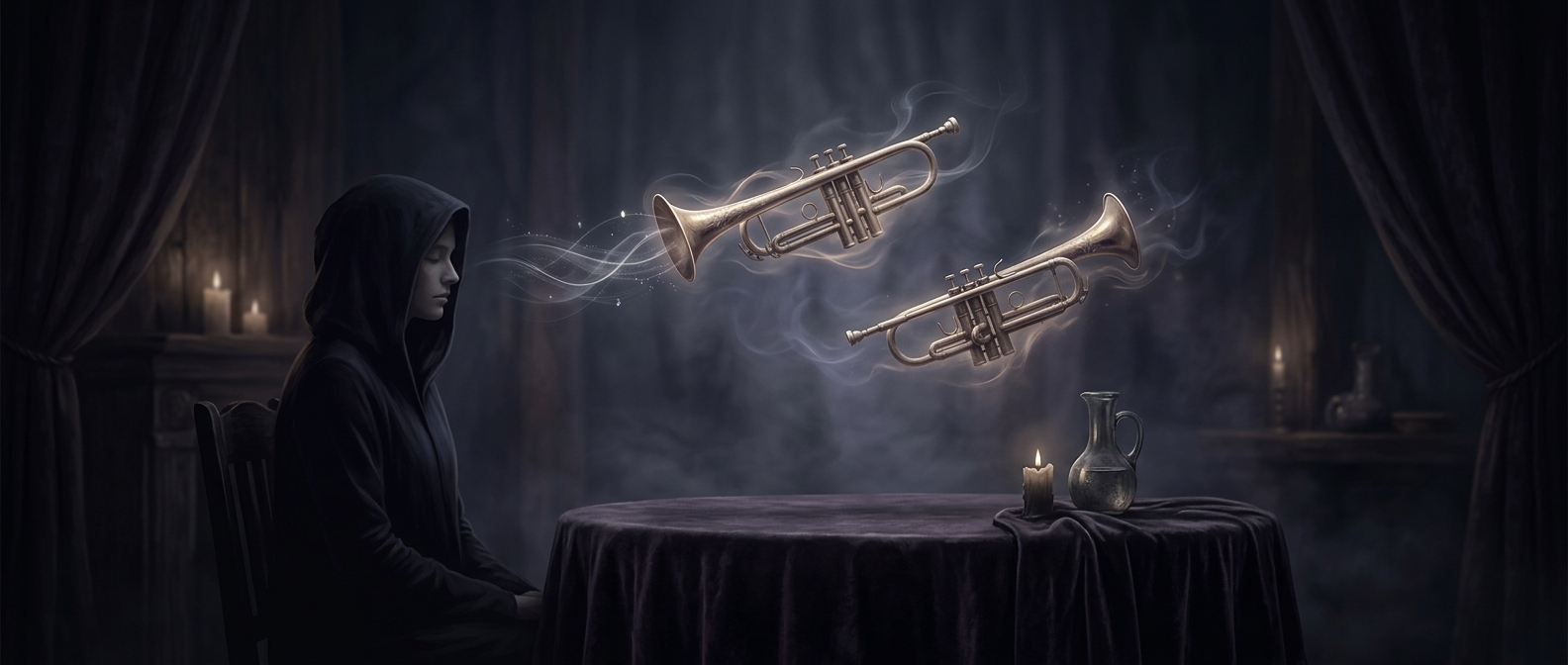
That arrangement shaped what the audience could judge. The medium might be tied to a chair inside, and the cabinet’s opening or curtain offered a boundary between the visible séance room and the unseen space where supposed manifestations occurred. A sound, a touch, or a fleeting shape could therefore seem to come from beyond ordinary reach—without giving sitters a clear view of how it happened.
A built-in tension between proof and concealment
Restraints were meant to reassure spectators that the medium could not simply move about. But they did not make the cabinet transparent: darkness and limited sightlines still concealed what happened inside. The same setup could thus support two competing interpretations. To believers, it created the conditions for spiritual activity; to skeptics, it made concealed physical actions easier to pass off as supernatural.
The cabinet’s power was not only theatrical. It turned uncertainty into part of the séance: the less clearly anyone could see, the more room there was for a mysterious event to feel convincing.