How a Bound Pair of Slates Became a Message
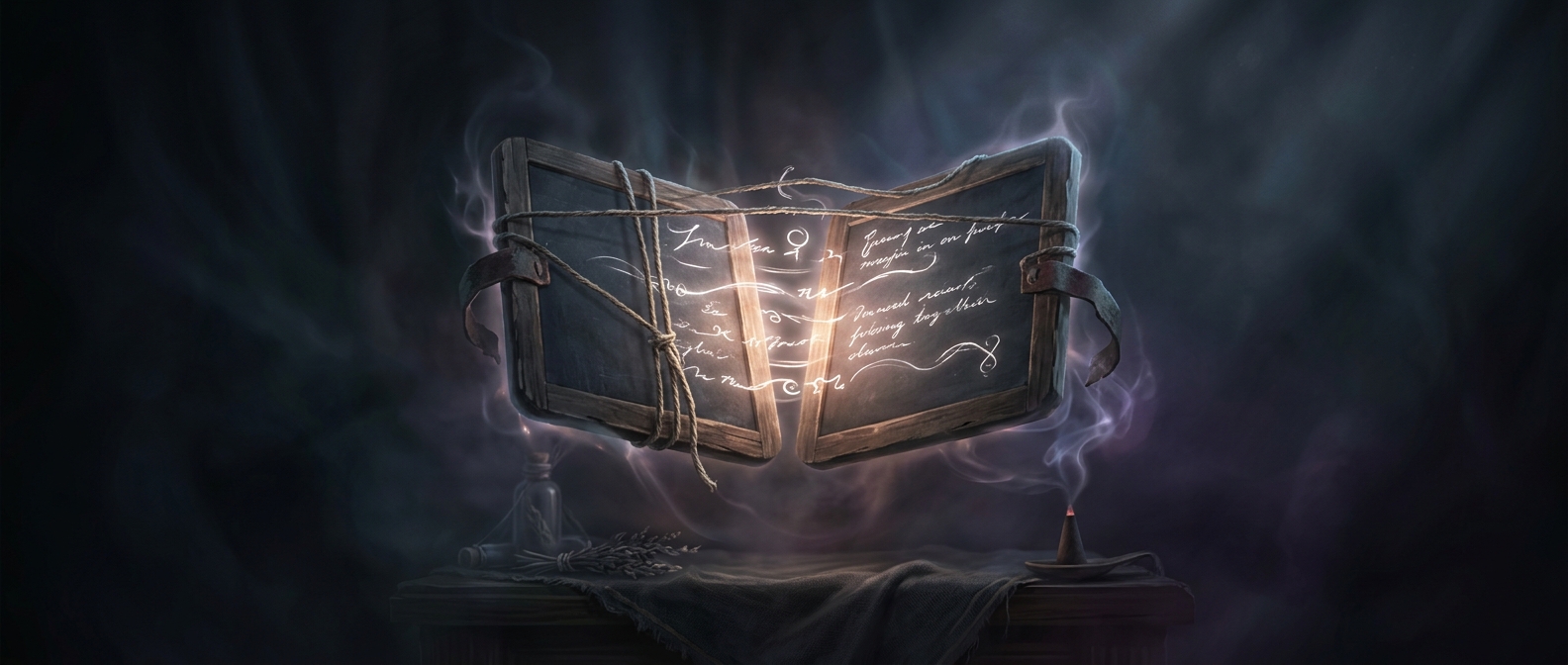
In slate-writing demonstrations, two small writing slates were placed face to face, sometimes with a piece of chalk or slate pencil between them. The pair was tied or otherwise held shut. When opened, writing appeared on an inner surface, presented as a message made while the slates were closed.
The binding was important to the effect: it gave the audience a visible reason to believe the writing could not have been added unnoticed. But a tie is not the same as a seal. The demonstration depended on what spectators could see, how closely they watched the slates, and whether the performer could control their handling.
The Gap Between Appearance and Proof
There was no single method behind every slate-writing performance. In stage and séance settings, performers could use concealed writing, prepared surfaces, or deft handling; the exact approach depended on the apparatus and routine. The central theatrical problem was to make the slates seem inaccessible until the reveal, then let the audience inspect a message that looked freshly produced.
For spiritualists, that reveal could feel like contact with the dead. For skeptics, it was a puzzle about access and attention. The tied slates made the claim visible; they did not, by themselves, establish who—or what—had written the words.