Why teacups can feel worse than a simple spin
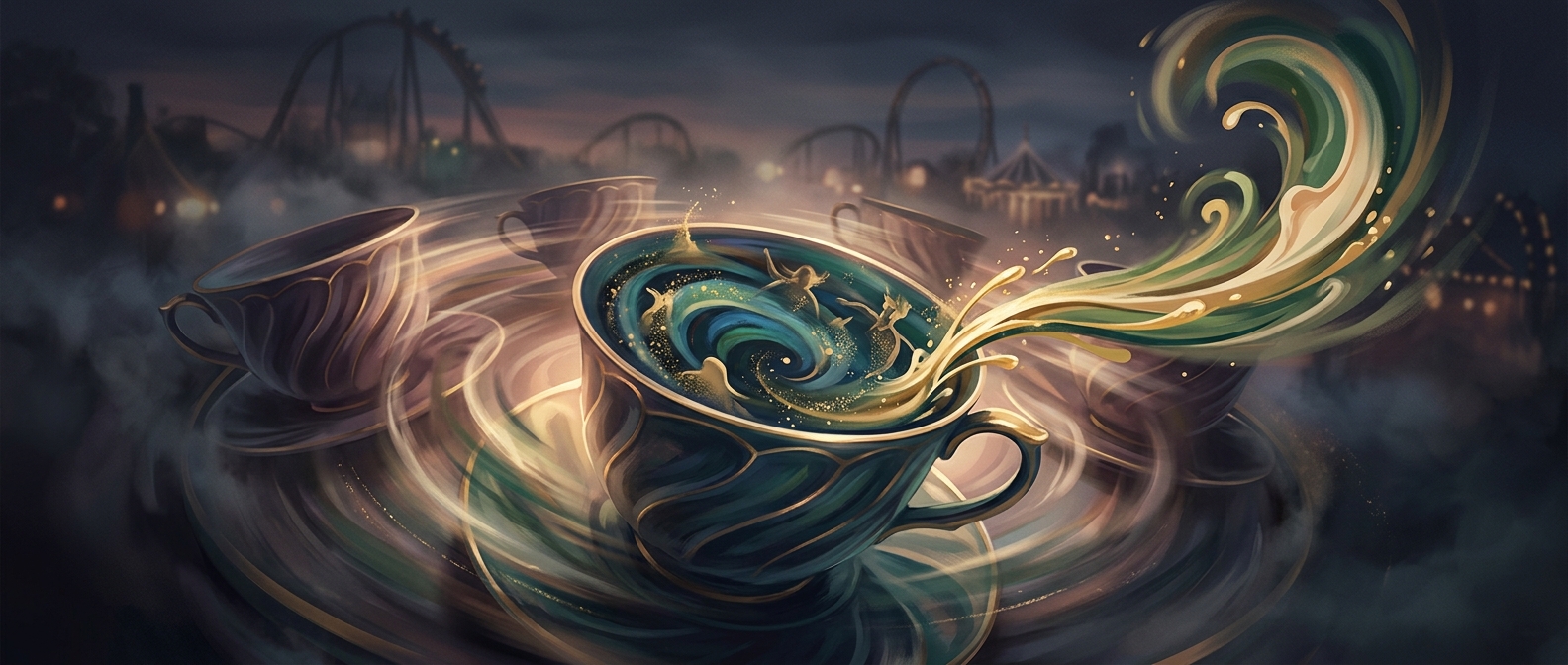
A teacup ride combines two rotations: the platform carries each cup around a central point, while the cup can swivel on its own axis. Riders can speed up that second motion by pushing or pulling the wheel in the middle. Because the cup is already moving with the platform, its spin is layered onto the ride’s larger circular path—not substituted for it.
That means the direction and speed of the cup’s turn can keep changing as it travels around the platform. Each change in speed or direction brings a new shove to the body, especially when riders actively crank the wheel rather than letting the cup coast.
The inner ear has to sort out the motion
The inner ear contains fluid-filled balance organs that sense rotation. When the head turns, the fluid shifts and bends tiny sensors; the brain uses those signals, along with information from the eyes and body, to estimate how the head is moving.
On a teacup ride, those signals can become difficult to reconcile. The eyes may see the platform and nearby cups sweeping past, while the head is turning with the cup at a different rate. The inner ear also registers repeated changes in rotation. That mismatch can make the brain’s sense of motion feel unstable, producing dizziness and nausea in susceptible riders.
More control can mean more motion
The hand wheel gives riders a way to influence their own cup, but it does not make the ride’s movement simpler. Turning it harder can add speed and make the motion less predictable from moment to moment. For someone prone to motion sickness, letting the cup spin gently—or keeping the head steady and looking at a fixed point—can reduce some of the sensory confusion. The same mechanism that lets riders make the ride more exciting can also make their stomachs register the extra turns.