How a Ship Holds Its Position Without an Anchor
A dynamically positioned ship does not simply aim its thrusters at one fixed point. Its control system continually compares where the vessel is with where it is supposed to be, then adjusts thrust to reduce the difference. This ongoing correction matters because wind, currents, and waves keep pushing the ship off course.
Satellite positioning provides a reference, while onboard instruments measure the vessel’s movement and heading. The computer uses those readings to decide how much thrust to apply and in which direction. Because the ship can rotate as well as drift sideways, the system must manage both its location and its orientation.
A Continuous Push Against the Sea
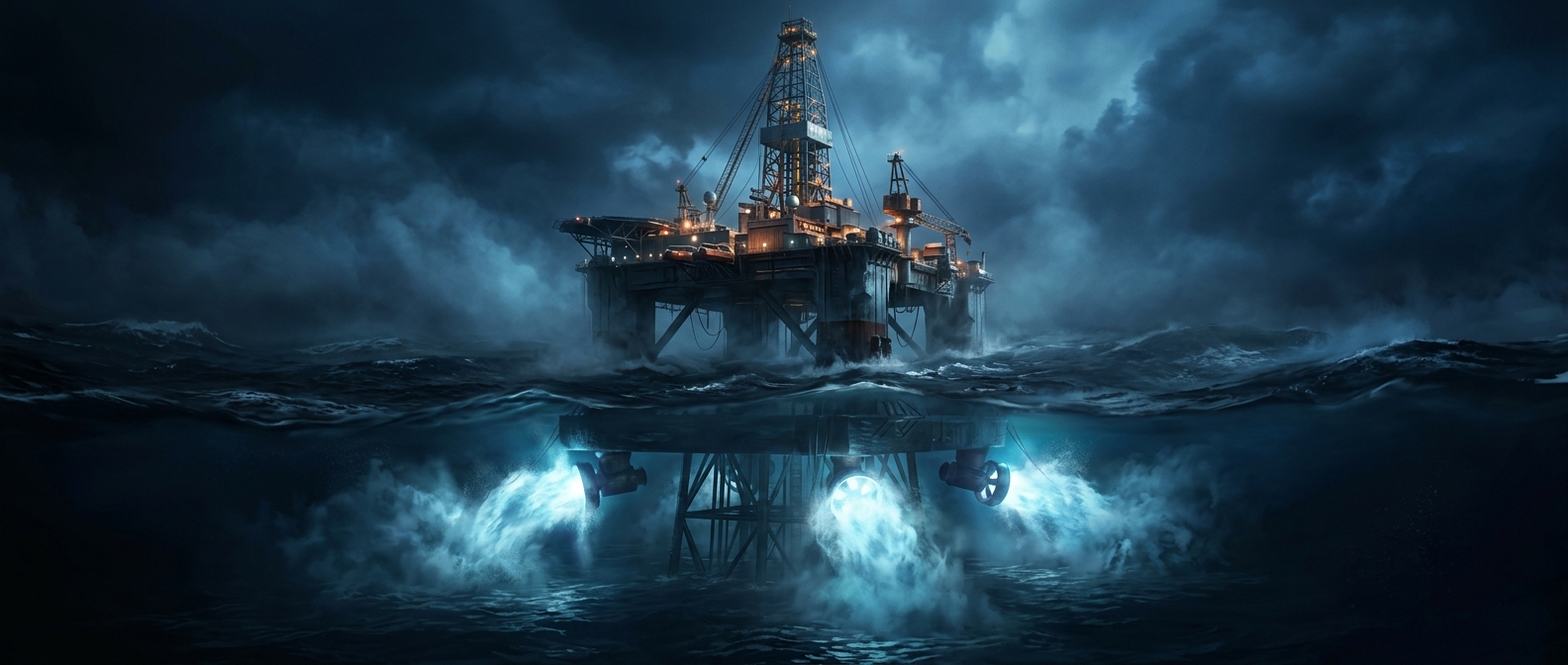
Thrusters mounted around the vessel can direct force in different directions. The control system combines their output: one may counter a sideways current while another helps keep the bow pointed where it needs to face. As conditions change, the system revises its commands, making small adjustments rather than relying on a chain fixed to the seabed.
That gives a ship room to work over deep water, where anchoring may be impractical, or above a precise spot where a large anchor pattern could interfere with nearby equipment. It is especially useful for vessels doing offshore work that requires them to remain close to a structure while people or machinery operate between ship and sea.
The tradeoff is that position-keeping depends on functioning control systems and available power. Instead of resisting the sea with a physical connection to the bottom, the ship uses a steady stream of measurements and thrust to keep correcting its drift.