From jet-style airflow to electric power
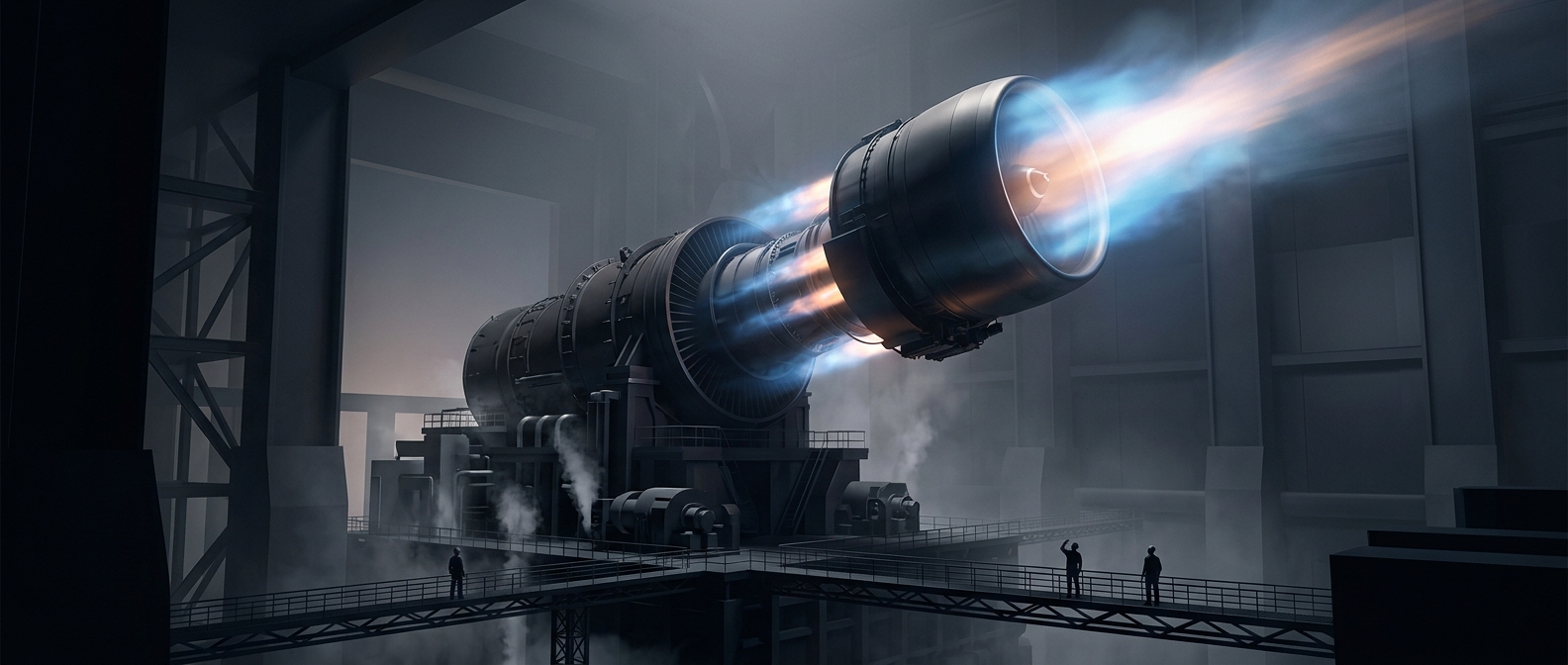
A gas-turbine power plant turns a rapid flow of hot gas into rotation. First, a compressor squeezes incoming air, raising its pressure. Natural gas is mixed with that compressed air and burned; the expanding hot gases then spin turbine blades. The turbine shaft drives a generator, which converts the rotation into electricity.
The machinery resembles a jet engine, but the useful output is different. A jet engine uses its exhaust to produce thrust. In a power plant, the turbine’s rotation is the point: it turns the generator, while the exhaust leaves through a stack.
Why use one for a demand spike?
Electricity demand can climb faster than slower-running plants can respond—for example, when many air conditioners switch on during hot weather. Gas turbines can be brought online relatively quickly, so utilities may use them to supply extra power during those high-demand periods. Plants used mainly for these short bursts are often called peaker plants.
That flexibility comes with a tradeoff. In a simple-cycle plant, the hot exhaust is not used to make additional electricity, so the plant generally converts less of its fuel into power than a combined-cycle plant, which captures exhaust heat to produce steam and run another turbine. The result is a machine suited to being ready when the grid needs a quick boost, even if it is not the most fuel-efficient choice for running all day.