Why shale needs artificial pathways
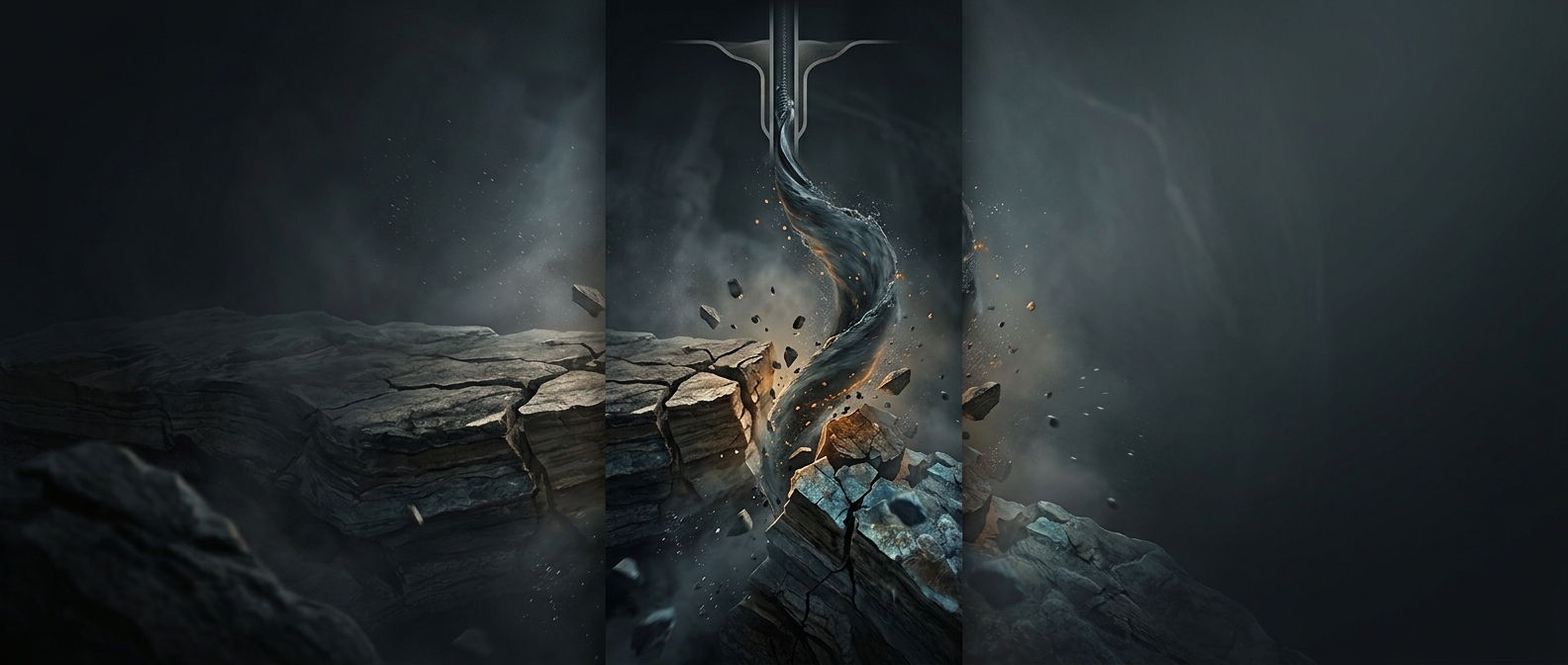
Shale can contain natural gas in tiny pores, but the rock is so difficult for gas to pass through that simply drilling into it may yield little. A well therefore reaches the gas-bearing layer and directs pressurized fluid into selected sections. The pressure pushes against the surrounding rock until it opens narrow fractures.
These cracks do not make the whole formation porous. They create connected routes from gas-bearing rock toward the well, extending the area that can drain into it.
Sand keeps the cracks from closing
Pressure alone is not enough. Once pumping stops, the weight and stress of the surrounding rock tend to squeeze the fractures shut. Sand carried in the fluid lodges in the openings and acts as a proppant—a material that holds a gap open while still leaving space for gas to move through.
Gas can then travel from the shale into the fractures and onward to the well. The useful result depends on both parts of the process: pressure creates pathways, and the grains keep those pathways from collapsing as the pressure falls.
That is why the sand is not merely mixed into the fluid as filler. Its placement inside the new cracks helps determine whether the rock continues to release gas after pumping ends.