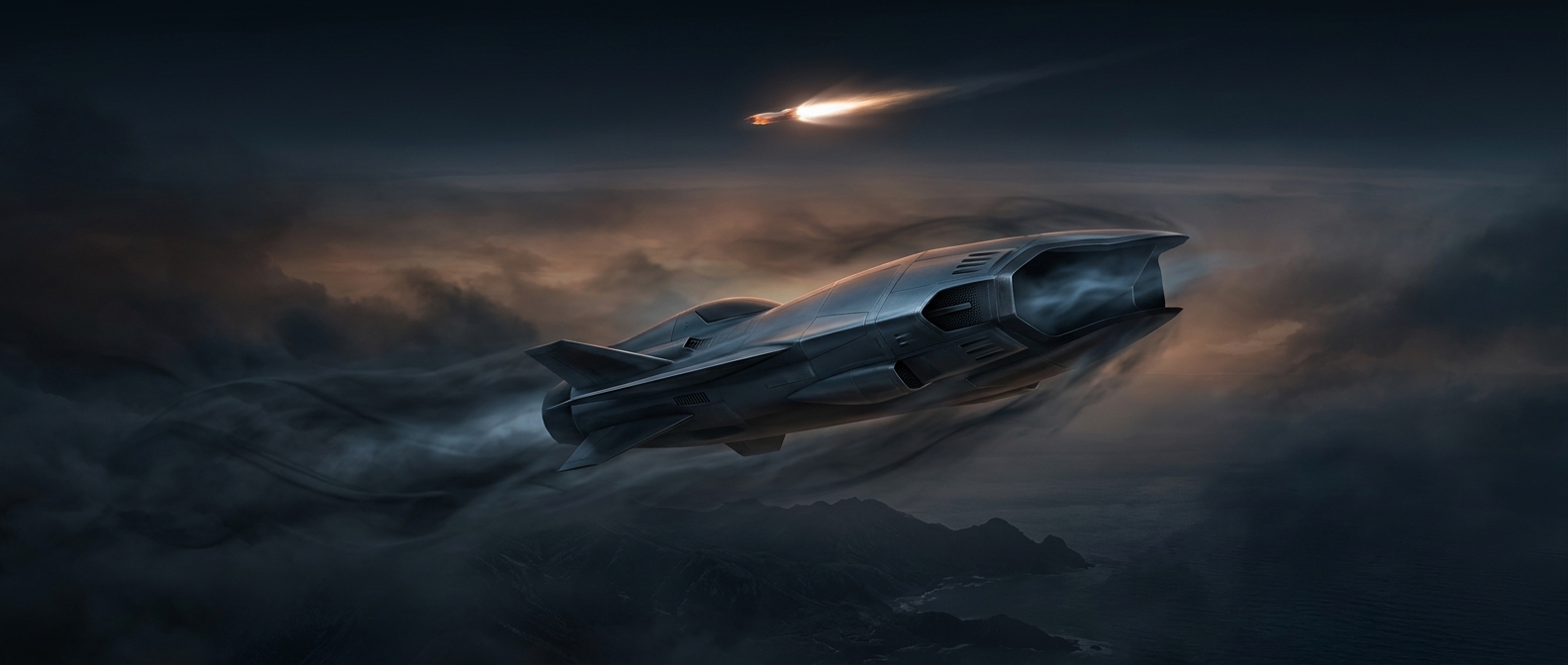
Why a scramjet needs a running start
A conventional jet engine uses a compressor to squeeze incoming air before burning fuel. A scramjet has no compressor blades. Instead, the aircraft’s forward motion forces air through a shaped inlet, where shock waves—pressure waves formed at very high speed—compress and heat it.
That makes the vehicle’s speed part of the engine. At low speed, the inlet cannot deliver the intense, high-pressure airflow the scramjet needs. The aircraft must first be accelerated by another propulsion system, such as a rocket, before the scramjet can take over.
Keeping the flame alive in a rushing stream
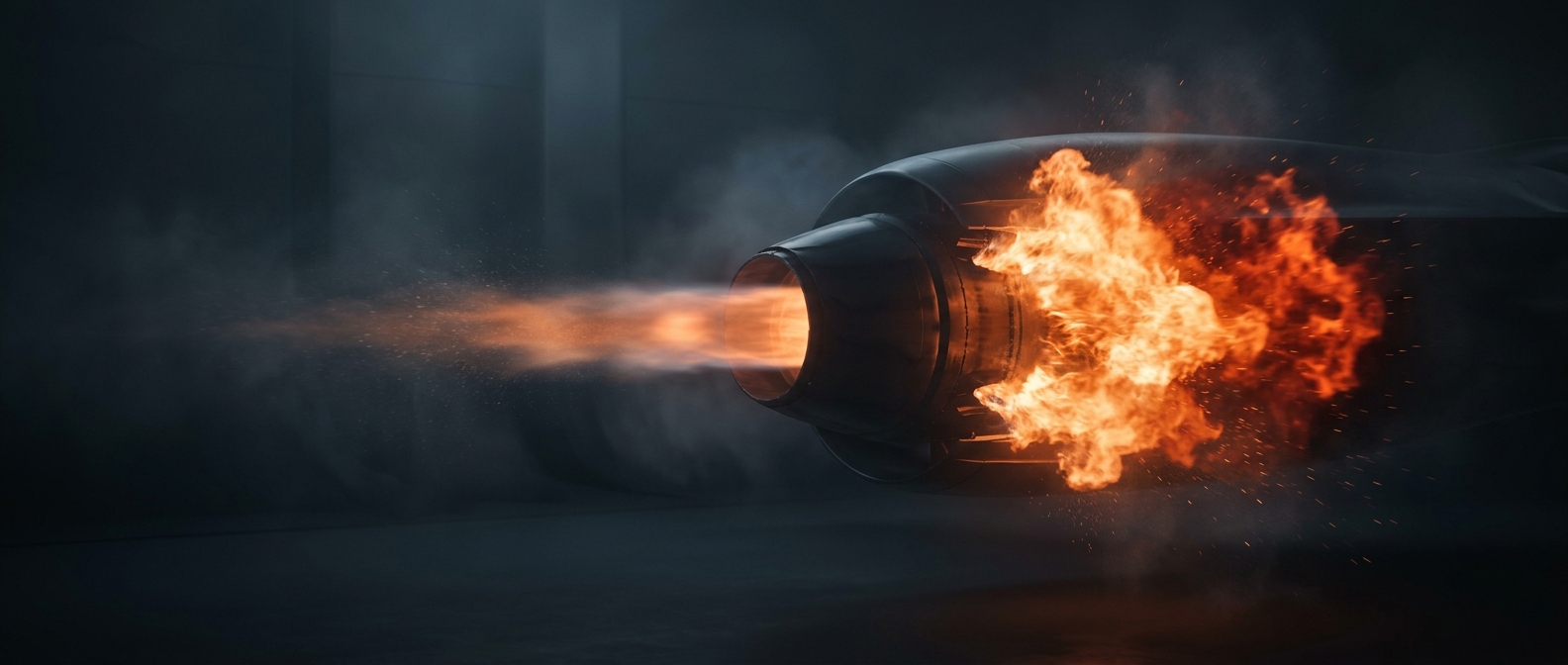
In a scramjet, the air continues moving faster than sound through the combustion chamber. The name means “supersonic-combustion ramjet”; a related ramjet slows the air below the speed of sound before burning fuel. Keeping the flow supersonic avoids slowing it as much, which matters at the extreme speeds scramjets are designed for.
But the air passes through the chamber so quickly that fuel has little time to mix and burn. The engine must inject fuel into that fast stream and hold a stable flame without blocking the flow. Its lack of rotating machinery therefore does not make the design easy: the inlet, fuel system, and heat-resistant structure must all work under severe conditions.
An engine that depends on the vehicle
A scramjet cannot propel a stationary aircraft—or even provide useful thrust at ordinary jet speeds. It works only after another engine has brought the vehicle into the right flight regime. The unusual tradeoff is that the scramjet’s simplicity in moving parts is purchased with a demanding launch: the aircraft must already be moving extraordinarily fast for its engine to begin doing its job.