Why an Afterburner Can Add Thrust So Quickly
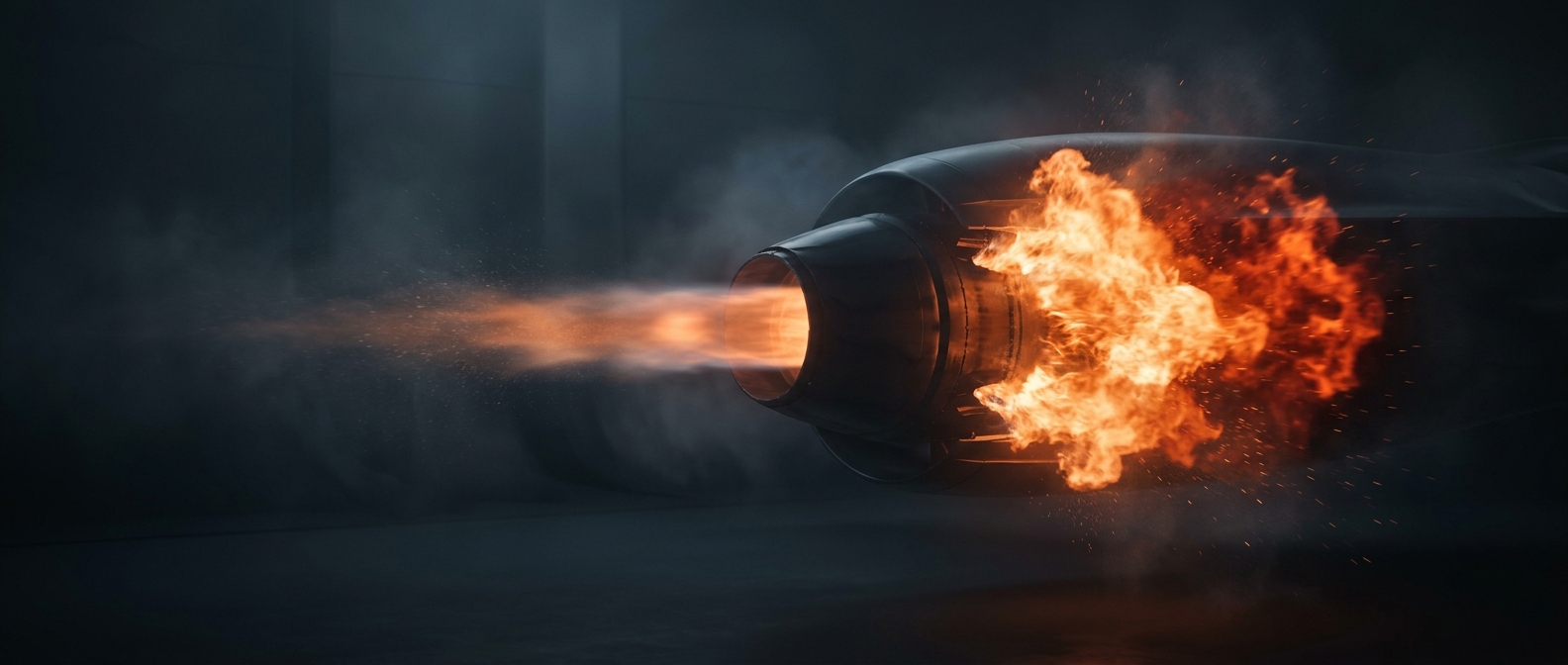
A jet engine’s turbine extracts some energy from burning fuel to drive the compressor, but the exhaust still contains hot gas and unused oxygen. An afterburner takes advantage of both: it injects more fuel into the stream after it has passed through the turbine, then ignites that fuel in the engine’s tailpipe.
Flame holders—small structures in the exhaust path—create sheltered pockets where the flame can stay lit despite the fast-moving airflow. The added combustion heats the exhaust sharply, making it expand. A variable-area nozzle at the rear opens wider to let this larger volume escape without choking the flow.
More Exhaust Speed, More Thrust
Thrust comes from pushing exhaust backward; the engine is pushed forward in return. By adding energy to the gas late in the engine, the afterburner sends it out faster and produces a strong increase in thrust. Because the extra burning happens downstream of the turbine, the turbine does not have to pass through that added heat—though the afterburner and nozzle themselves must withstand intense temperatures.
The tradeoff is that an afterburner adds fuel without making the engine equally efficient. It is useful when a jet needs a short burst, such as during acceleration or a rapid climb, but not as a steady operating mode. The nozzle’s sudden change in size is part of the boost: it gives the expanding exhaust room to turn extra heat into a faster jet of gas.