Why plain ice cracks so easily
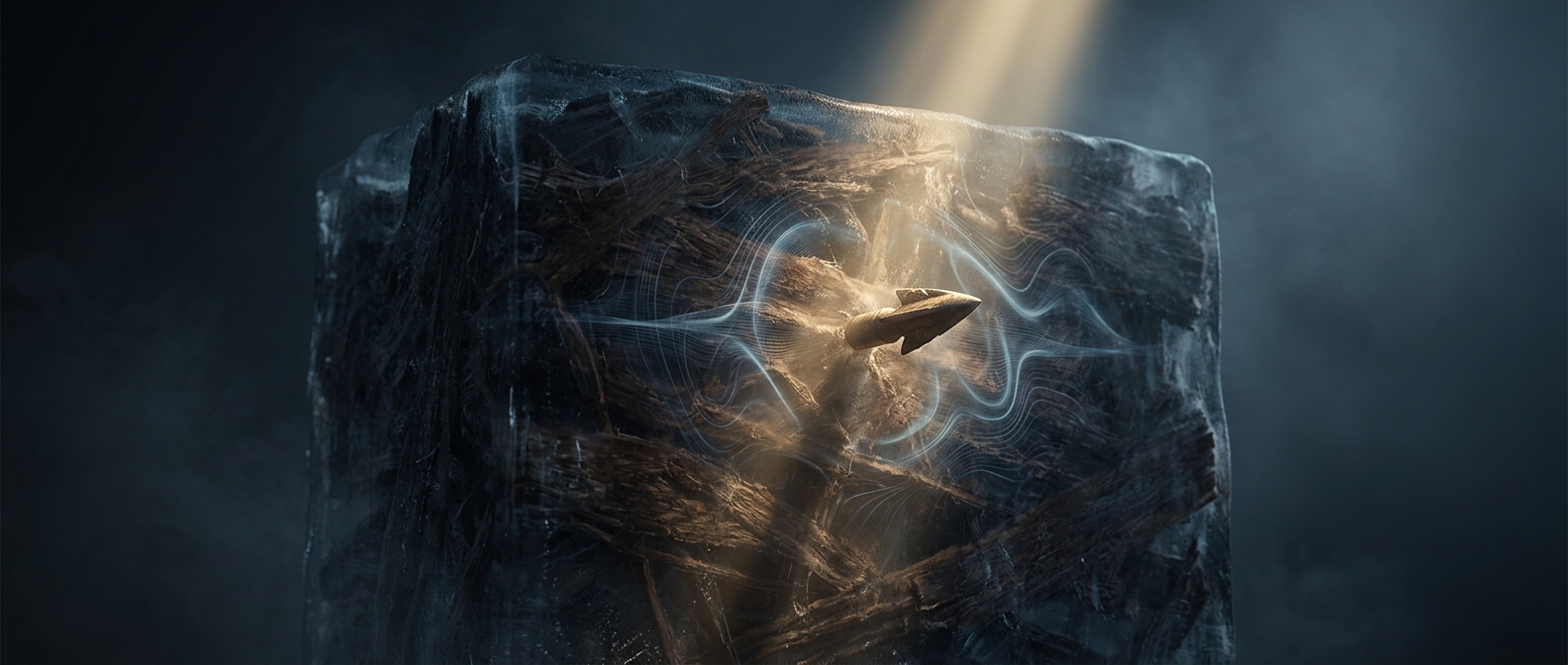
Ice can bear substantial weight when loads are spread across it, but a flaw or impact can concentrate stress at one point and send a crack racing through the material. Pykrete changes what happens after that crack starts. Its wood fibers cross the ice matrix, interrupting cracks and helping hold fractured pieces together—much as reinforcing bars help concrete resist breaking apart.
The fibers also alter how the material handles heat. Sawdust contains trapped air and conducts heat poorly, so mixed into ice it slows the flow of warmth inward. That insulation can delay melting, though it cannot make the material independent of cold conditions.
A composite with a cold-weather catch
To make pykrete, the fibers must be distributed through water before it freezes. The result is not simply a layer of wood laid over ice: the reinforcing material is embedded throughout, where it can bridge cracks as they form. Its toughness comes from combining two materials with different jobs—the frozen water provides bulk, while the fibers help resist fracture and heat.
That combination made pykrete intriguing during World War II, when it was considered for large floating structures. But a material that depends on freezing temperatures brings an obvious engineering constraint: it must be built and kept cold, and its behavior changes as it warms. Pykrete is therefore a striking example of how reinforcement can make a brittle material tougher, not a way to turn ice into ordinary, climate-proof armor.